A Return to the RCEP? Analysing India’s Options
Posted on : September 19, 2025Author : Sagnik Sarkar
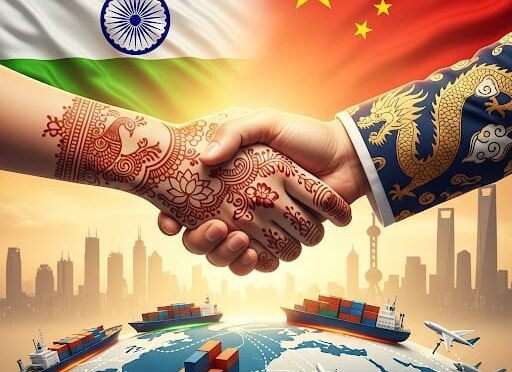
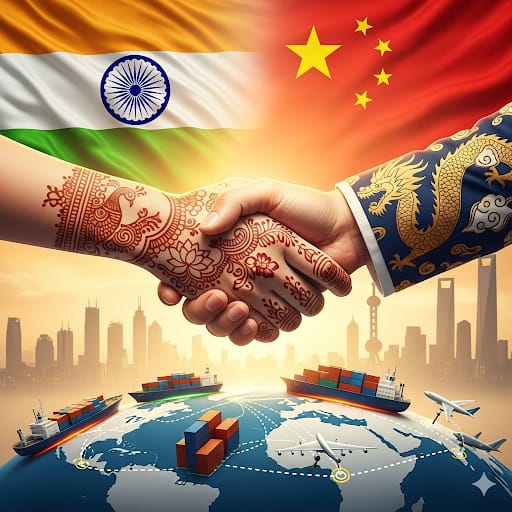
Amid rising trade tensions with the United States and a somewhat sort of improving trajectory of relations with China, India is likely to rejoin the Regional Comprehensive Economic Partnership (RCEP), an eastern trade grouping that it left nearly five years ago.
The RCEP is considered the world’s largest free trade pact, estimated to account for 32.6% of global GDP in 2025. Moreover, it is home to more than 2.35 billion people. This trade club has 15 member nations, including all ASEAN members such as Brunei, Cambodia, Indonesia, Laos, Malaysia, Myanmar, the Philippines, Singapore, Thailand, and Vietnam. China, Japan, South Korea, Australia, and New Zealand are all members of the bloc. Notably, Japan and Singapore had incorporated a specific clause permitting India to rejoin the bloc at any point.
India is now considering joining the trade group, two senior government sources familiar with the situation told Mint on the condition of anonymity. The report mentioned that the government is considering a “deeper embrace of the East”. In November 2019, New Delhi exited the group, citing worries over market access, rising trade imbalances, and hazards to farmers, local industry, and small enterprises. Previously, India’s opposition to the RCEP was based on key concerns such as an unfavourable trade balance with China, fears that Chinese goods would flood Indian markets via third countries, and New Zealand’s plan to supply milk and milk products to India, which would harm India’s small farmers and dairy cooperatives.
China had been utilizing Cambodia, Laos, Vietnam, and other ASEAN countries as platforms to redirect shipments to India under existing free trade agreements, prompting accusations of unfair trade practices. Out of the almost 14,000 tariff lines granted to China under its trade agreement with India, Beijing increasingly used indirect channels, which became a major source of concern for New Delhi. Currently, India’s greatest export industries, such as medicines and IT services, suffer severe constraints in China and do not have market access there.
Now, however, the Centre is reassessing the costs and advantages of RCEP participation in light of global supply chain realignments, tariff disputes, and the need to diversify export markets. The new approach is being considered as part of a larger effort to strengthen India’s commercial ties with neighbouring nations, particularly in light of tense trade discussions with the United States. According to analysts, hefty US tariffs are driving eastern economies to make RCEP a more appealing platform. The US under President Donald Trump has imposed tariffs of 15-20% on several ASEAN economies, with higher duties of 40% on Laos and 19% on Cambodia. Such tariff restrictions have rendered exports unprofitable, forcing these nations to reassess their trade alternatives within the RCEP framework.
On the other hand, Trump placed the maximum 50% tariffs on India, including a 25% penalty for acquiring Russian oil. The first set of duties went into effect on August 7, with the remaining 25% slated to take effect on August 27th.According to Dattesh Parulekar, assistant professor of International Relations at Goa University, “Since both China and India are among the largest markets in the region, it is essential that they work out a more workable arrangement to make effective use of the RCEP platform. Without mutual understanding between the two, the benefits of such a mega trade pact will remain underutilized”.
The Research and Information System for Developing Countries (RIS), an autonomous body under the Ministry of External Affairs, has been entrusted to conduct an impact assessment of India’s membership in RCEP, especially since the Trump tariffs are expected to remain in place for an extended period. India is claimed to be pushing for written assurances from China and ASEAN nations to ensure greater market access for Indian products in order to make the pact a more balanced agreement.
India’s re-entry into the RCEP must be considered in light of its long-term economic plans, such as the “Make in India” and “Atmanirbhar Bharat” projects. While critics argue that greater integration with the RCEP may expose domestic industries to increased competition from Chinese manufacturing and ASEAN agricultural exports, supporters argue that participation could provide Indian producers with access to some of the world’s fastest-growing markets. This, in turn, may help India enhance its industrial base by integrating into regional value chains, particularly in areas such as electronics, textiles, and autos, where supply networks are becoming more regionalised. The task will be to strike a balance between protecting vulnerable sectors and maximizing prospects for further integration.
Furthermore, India’s choice to joining the RCEP would have considerable geopolitical ramifications. Beyond economics, it would signify New Delhi’s intention to strengthen ties with East and Southeast Asia at a time when global commerce is growing more fragmented. With the United States adopting protectionist measures and China strengthening its economic influence in Asia, India’s participation in RCEP might serve as a stabilizing force and provide an alternative partner for smaller ASEAN countries. By integrating its trade tactics with its Act East Policy, India might minimize its reliance on Western markets while simultaneously establishing itself as a key participant in defining the Indo-Pacific’s growing trade architecture.
At this moment, the focus is primarily on the potential that an FTA can offer, and India has already implemented certain adjustments. Looking at trade compatibility and scope, the ambit within which two- or three-tier tariff systems were initially considered, and the increased impetus seen in India-China trade ties, both would have to be evaluated. Then, a framework for assessment should develop.
With a Prime Ministerial visit to China coming up soon, and the increasing closeness between the two Asian powerhouses, as clear from Beijing’s agreement to supply rare earth magnets, fertilizers and resume direct flights with India, an interesting set of developments are sure to follow. Such measures reflect both parties’ readiness to decrease friction and explore possibilities of collaboration beyond trade. If India’s re-engagement with the RCEP is combined with renewed bilateral dialogue, it may pave the path for a more stable and predictable framework of interaction in Asia.
At the same time, New Delhi’s cautious navigation would be critical, as over-reliance on Beijing may raise concerns among other Indo-Pacific countries. Thus, the forthcoming visit is more than just a diplomatic exercise; it has the potential to redefine India’s role in the regional order. The actual effect of India’s return to the RCEP will be determined by how well it takes use of this chance to construct a balanced relationship that protects domestic concerns while embracing the benefits of broader economic integration.
Outlook Business Desk. (2025, August 21). India may consider re-joining RCEP: What’s pushing india’s comeback to the trade bloc after 5 years? Outlook Business. https://www.outlookbusiness.com/economy-and-policy/india-may-consider-re-joining-rcep-whats-pushing-indias-comeback-to-the-trade-bloc-after-5-years
Moneycontrol News. (2025, August 21). India weighs rejoining RCEP after Trump tariff concerns: Report. Moneycontrol. https://www.moneycontrol.com/news/india/india-weighs-rejoining-rcep-after-trump-tariff-concerns-report-13474643.html
Sagnik Sarkar,
Adjunct Researcher, Asia in Global Affairs
The views and opinions expressed in this book review are those of the author and do not necessarily reflect the official policy or position of Asia in Global Affairs. The review is intended for academic and informational purposes only. It is not an endorsement of any particular viewpoint, nor is it intended to malign any individual, group, organization, company, or government