Power of Words The Evolution and Impact of Political Slogans in Contemporary India
Posted on : August 12, 2025Author : Adarsh Prasad

In the world’s largest democracy, political slogans have long served as potent instruments of persuasion, encapsulating complex ideologies into memorable catchphrases that resonate with the masses. From the fervent cries of independence to the digital age’s viral hashtags, slogans have evolved, reflecting the nation’s socio-political transformations. This article delves into the historical evolution, contemporary relevance, and nuanced impact of political slogans in India, analysing their role in shaping voter behaviour and political discourse. As India prepares for major elections in 2024–2025, political slogans once again occupy a central position in the rhetorical terrain, having morphed into multi-platform phenomena.
From Independence to Economic Liberalization
Political slogans in India have mirrored the nation’s journey, evolving to reflect changing priorities and sentiments. During the pre-independence era, slogans like “Vande Mataram” and “Quit India” galvanized masses against colonial rule. Post-independence, the focus shifted to nation-building, with slogans such as “Jai Jawan, Jai Kisan” emphasizing national pride and agrarian concerns. Indira Gandhi’s “Garibi Hatao” in the 1970s underscored a commitment to poverty alleviation, aligning with the socialist policies of the time.
The 1990s marked a shift towards economic liberalization, with slogans like “India Shining” reflecting optimism about the country’s economic prospects. These slogans not only encapsulated political ideologies but also played a crucial role in mobilizing public sentiment and shaping electoral outcomes.
The Digital Era and Personalized Politics
The advent of digital media transformed the landscape of political communication. Slogans became more personalized and targeted, aiming to connect with specific demographics. The Bharatiya Janata Party’s “Abki Baar, Modi Sarkar” in 2014 projected decisive leadership, while the Aam Aadmi Party’s “Paani Bill Half, Bijli Bill Half” addressed urban voters’ concerns. In the 2022 Uttar Pradesh elections, the Indian National Congress introduced “Ladki Hoon, Lad Sakti Hoon” to empower women and address gender inequality.
As Arjun Appadurai aptly puts it, the digital landscape enables the proliferation of aspirational politics, where slogans function not only as vehicles for political ideology but also as catalysts for emotional and political investments.
The Semiotics of Slogans: Language, Power, and Emotion
Political slogans function as semiotic tools, distilling complex ideologies into simple, emotionally resonant phrases. They serve as cognitive shortcuts, enabling voters to associate parties or candidates with specific policies. George Lakoff’s theory of framing suggests that the way information is presented significantly influences perception. Slogans like “Achhe Din Aayenge” (“Good days will come”) evoke hope and optimism, while “Chowkidar Chor Hai” (“The watchman is a thief”) leverages irony to question credibility.
The success of slogans like “Make in India” (2014) and “Beti Bachao, Beti Padhao” (2015) lies in their appeal to emotion and national pride. However, as Tejaswini Niranjana notes, such language often seeks to obscure deeper issues, flattening complex realities into slogans that simplify contentious issues for mass consumption.
Slogans also play on nostalgia and collective memory, building connections with the electorate that transcend policy substance. The “Abki Baar, Modi Sarkar” slogan, for instance, evoked a sense of change, but it also tapped into anxieties about political status quo, offering a promise of a ‘decisive’ leadership.
The Digital Ecosystem: Slogans, Memes, and Hashtags
In the digital age, political slogans are not confined to posters and rallies; they have been transformed into viral entities that circulate across social media platforms. The age of memes, WhatsApp forwards, and hashtag politics means that slogans are now also viral content. The BJP’s “Modi Hai Toh Mumkin Hai” (“If Modi is there, it’s possible”) gained substantial traction on Twitter and WhatsApp during the 2014 elections, reinforcing narratives of strong leadership.
Political parties have effectively embraced these digital dynamics by using social media to disseminate slogans, ensuring their resonance with young voters who engage with politics online. Slogans have become not just tools of persuasion but also forms of digital populism, circulating within algorithmic visibility where they are amplified by political algorithms and digital influencers.
The Paradox of Promise and Performance
While slogans are effective tools for mobilization, they often oversimplify complex issues, reducing nuanced policy discussions to catchy phrases. For instance, “Abki Baar 400 Paar” set an ambitious electoral target but offered little policy substance. Critics argue that slogans like “Make in India” and “Beti Bachao, Beti Padhao” were more symbolic than substantial, relying on emotive appeal rather than concrete policy change.
Ajay Maken criticized “Make in India” for failing to provide the necessary infrastructure or incentives to foster manufacturing growth. Similarly, the “Beti Bachao, Beti Padhao” campaign faced criticism for focusing on publicity rather than addressing the root causes of female disenfranchisement. These slogans often operate in the realm of symbolic gestures rather than tangible commitments, leaving large sections of the population disillusioned.
Case Studies: Symbolism vs. Substance
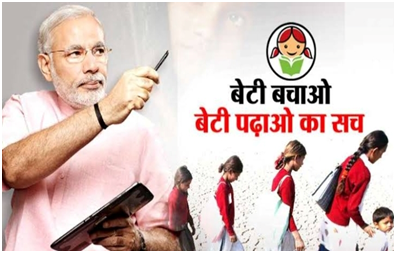
“Beti Bachao, Beti Padhao (Save the Daughter, Educate the Daughter)”
Launched in 2015, this slogan-based scheme aimed to address the declining child sex ratio. However, government data revealed that 56% of funds were spent on publicity, and only 25% reached districts. The scheme, critics argue, functioned more symbolically than substantively, offering catchy rhetoric but failing to make a measurable impact.
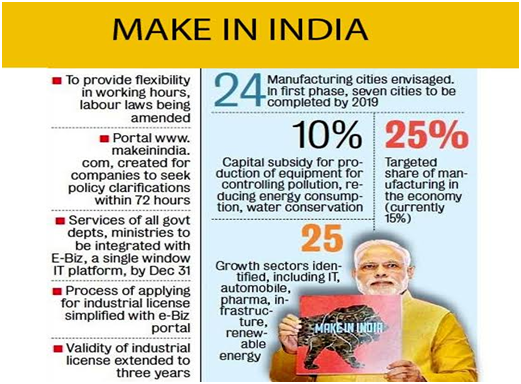
Launched in 2014, this campaign aimed to promote manufacturing and foreign investment. However, critics like Ajay Maken have called it a hollow slogan, pointing to insufficient infrastructure, lack of competitive edge, and environmental concerns. Despite its grand ambitions, the campaign failed to deliver on its promises of job creation and economic revival, leading many to view it as a symbolic gesture rather than a sustainable policy initiative.
Achhe Din Aayenge” (Good Days Will Come)– BJP, 2014
One of the most iconic slogans of the 2014 general elections, “Achhe Din Aayenge”, was central to Narendra Modi’s campaign. It promised better governance, economic revival, and reduced corruption. The slogan capitalized on public discontent with the Congress-led UPA government, especially after high-profile scams like 2G and Coalgate. Though the slogan succeeded electorally, critics argue that it overpromised. Unemployment, economic inequality, and agrarian distress persisted. While certain reforms like the Insolvency and Bankruptcy Code and GST were introduced, the narrative of achhe din began to lose credibility in subsequent years, becoming a subject of satire and memes. The Hindu, in a 2019 editorial, noted that the slogan had “morphed from a promise into a punchline.”
“Chowkidar Chor Hai” (The Watchman is a Thief) – Congress, 2019
Coined by Rahul Gandhi during the 2019 election campaign, this slogan was aimed at Narendra Modi in the context of the Rafale deal controversy. It sought to flip the BJP’s earlier portrayal of Modi as a vigilant ‘chowkidar’ guarding the nation’s resources. While it gained media attention and trended briefly on social media, it backfired politically. Modi responded with a counter-campaign: “Main Bhi Chowkidar”, turning the attack into a badge of honor. BJP supporters adopted it widely, making it a collective identity movement. This counter-narrative showed how slogans could be subverted and reappropriated in India’s dynamic political space.
“India Shining” – BJP, 2004
Used during Atal Bihari Vajpayee’s tenure, “India Shining” projected an optimistic image of India’s economic growth, urban development, and technological progress. Despite an overall upward economic trajectory, the slogan failed to resonate with rural voters and those affected by growing inequality. It was criticized for ignoring agrarian distress and unemployment. The Congress-led UPA capitalized on this gap, launching the Aam Aadmi (common man) campaign. The BJP lost the election, demonstrating that slogans perceived as elitist or disconnected from ground realities can alienate large voter bases.
“Ladki Hoon, Lad Sakti Hoon” (I’m a Girl, I Can Fight) – Congress, UP Elections 2022
Spearheaded by Priyanka Gandhi Vadra, this slogan aimed to appeal to women voters in Uttar Pradesh by promising 40% representation for women in party tickets and a women-centric manifesto. While it was praised for highlighting gender issues in mainstream politics, the slogan failed to convert into electoral gains. Congress won only two seats. Analysts like Yogendra Yadav argued that the slogan lacked organizational follow-through and concrete grassroots mobilization, highlighting the limits of identity-based slogans without structural backing.
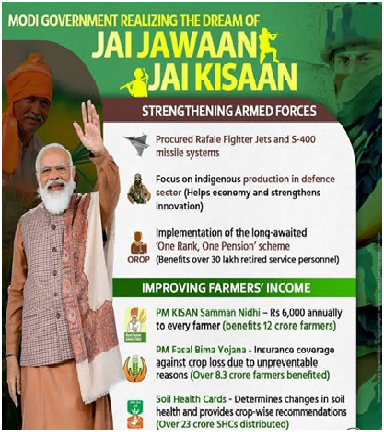
“Jai Jawan, Jai Kisan” (Hail the Soldier, Hail the Farmer) – Lal Bahadur Shastri, 1965
This iconic slogan, coined during the Indo-Pak war of 1965, underscored the importance of national defence and agricultural productivity. It remains one of the most revered slogans in Indian political history. Unlike modern slogans often rooted in electioneering, this phrase shaped national identity and policy direction. It led to the strengthening of India’s food security framework and reinforced respect for the armed forces. Its legacy persists in rural discourse and public memory, often invoked in protests and policy speeches.
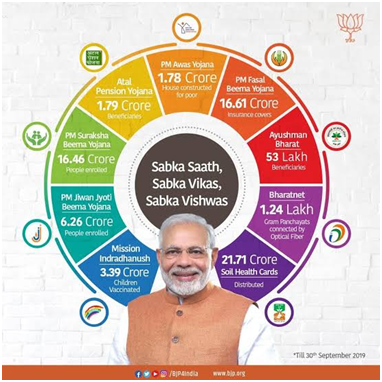
Sabka Saath, Sabka Vikas, Sabka Vishwas” (With All, Development for All, Trust of All)– BJP, 2019
An evolution of the earlier Sabka Saath, Sabka Vikas slogan from 2014, the 2019 version added “Sabka Vishwas” to underscore inclusivity and trust. The slogan projected a pan-Indian, secular development narrative, countering allegations of majoritarianism. However, incidents of communal violence, mob lynching, and the Citizenship Amendment Act (CAA) protests led critics to question the sincerity of the slogan. Scholars like Christophe Jaffrelot argue that this was a rhetorical attempt to soften the international image of the BJP rather than a real policy shift.
“Mandir Wahi Banayenge” (We Will Build the Temple There) – BJP/VHP, Late 1980s–1990s
This slogan emerged during the Ram Janmabhoomi movement, promising the construction of a Ram Temple at the disputed site in Ayodhya. Unlike many slogans that remain symbolic, this one eventually materialized, culminating in the 2024 consecration of the Ram Mandir. The slogan not only shaped decades of religious-political discourse but also redefined the BJP’s core voter base and ideological identity. It represents how slogans, when tethered to deeply emotive and identity-based narratives, can transform into long-term political projects.
“Har Haath Ko Kaam, Har Khet Ko Paani” (Jobs for Every Hand, Water for Every Field)– Congress, 2009
This UPA-era slogan was part of a broader focus on inclusive growth. It emphasized rural employment (via MGNREGA) and agricultural support through irrigation and subsidies.
The slogan was complemented by robust policies and legislation like MGNREGA, the Forest Rights Act, and the Right to Education Act. It contributed to the Congress’s re-election in 2009. However, critics noted poor implementation in some states and rising fiscal burdens. Nonetheless, it remains one of the few slogans that had a parallel in real, large-scale policy delivery.
Conclusion
Political slogans are powerful tools in the democratic arsenal, functioning as instruments of mobilization, emotional connection, and ideological assertion. However, as India approaches its 2024–2025 elections, it is crucial to recognize the limitations of slogans in fostering substantive political change. The increasing dominance of slogans in political discourse, particularly in the digital age, raises critical questions about the quality of democratic dialogue. When slogans replace nuanced debates and are used to mask policy failures, the very essence of democracy is at risk. In the words of Partha Chatterjee, “Political society, especially in post-colonial states, has always had a deeper connection to popular memory and emotion than to policy or governance.” As slogans continue to morph and evolve, the challenge remains: will these rhetorical devices ultimately empower the electorate, or will they obscure the truth of what is promised versus what is delivered?
References–
Appadurai, A. (2013). The Future as Cultural Fact: Essays on the Global Condition. Verso Books.
Chatterjee, P. (2004). The Politics of the Governed: Reflections on Popular Politics in Most of the World. Columbia University Press.
Lakoff, G. (2004). Don’t Think of an Elephant! Know Your Values and Frame the Debate. Chelsea Green Publishing.
Niranjana, T. (2008). Mobilizing India: Women, Music, and Migration between India and Trinidad. Duke University Press.
Maken, A. (2015). Make in India initiative just a slogan. The Economic Times.
NDTV Profit. (2021). Truth of Beti Bachao, Beti Padhao: 56% of Funds Spent on Publicity.
Sardesai, R. (2019). 2019: How Modi Won India. HarperCollins.
Sharma, K. (2022). How Congress Tried to Win UP With ‘Ladki Hoon’ Slogan. The Print.
Vanaik, A. (2019). The Rise of Hindu Authoritarianism: Secular Claims, Communal Realities. Verso Books.
Adarsh Prasad
M.A. Political Science
St. Xavier’s College (Autonomous), Kolkata
Intern, Asia in Global Affairs
Disclaimer: The views and opinions expressed in this film review are those of the author and do not necessarily reflect the official policy or position of Asia in Global Affairs. The review is intended for academic and informational purposes only. It is not an endorsement of any particular viewpoint, nor is it intended to malign any individual, group, organization, company, or government.