Shifting Global Supply Chains: A Case Study of Post-Pandemic Scenarios
Posted on : May 5, 2025Author : Lahari Bandyopadhyay
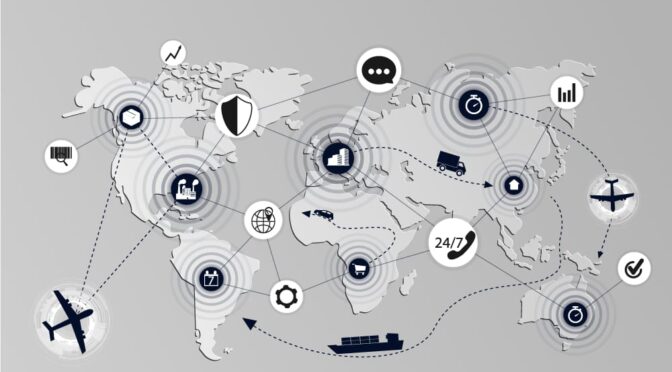
Supply-chain disruptions caused by the COVID-19 pandemic are of unparalleled magnitude because of a confluence of circumstances: a sudden spike in demand for certain products, unexpected changes in demand points, supply shortages, a logistical crisis, and an exceptionally rapid recovery in major economies—the COVID-19 pandemic has caused supply-chain disruptions of an unprecedented scale. The global supply chain that was impacted by the COVID-19 pandemic has yet to fully recover from the setbacks, which include delays and disruptions. All forms of production, distribution, and consumption were disrupted by national lockdowns, which slowed or even momentarily stopped the flow of raw materials and completed goods.
The pandemic has accelerated problems and vulnerabilities, but not necessarily created irreversible challenges or damage to the supply chains. Global supply chain reorganization opens up new opportunities for nations and areas to benefit from this realignment. South Asian economies stand a good chance of gaining some of this international attention, especially from businesses looking for labour-intensive, low-cost manufacturing alternatives to China. However, in order for South Asian nations to benefit from this restructure as a group, they would need to think about significant reform, regional harmonization, and the removal of policy obstacles. The centripetal force in global supply chains is China, given its dominance in global manufacturing and its position as the world’s largest supplier of key raw materials and intermediate inputs. But one of the main pillars of continuous efforts to realign global supply networks is the “China Plus One” approach, whereby companies have aimed to diversify their supply chains in order to reduce the risks associated with depending solely on China.
A survey conducted by Ernst & Young LLP (EY US) conducted in September, 2022, gave some findings on the global supply chains and the respondents were primarily senior supply chain executives. The survey found that enterprises plan to shake up their supply chain strategies to become more resilient, sustainable, and collaborative with customers, suppliers, and other stakeholders. To do that, they will increase investment in supply chain technologies like AI and analytics, robotic process automation, and control towers while retraining workers. Initially, the pandemic had substantial negative effects on supply chains. 57% were impacted by serious disruptions, and 72% said they had a negative impact. However, 92% of them continued to invest in technology during the COVID-19 pandemic. This demonstrates how beneficial a digital supply chain is for assisting businesses in navigating disruptive forces and reacting more quickly to fluctuations in supply and demand. Within the South Asian region, India has been a key player and an active participant in global supply chain networks through backward and forward linkages. With a global share of 1.9 percent in 2021, it is responsible for the vast majority of South Asia’s exports of intermediate goods.
There were some clear winners by industry during the pandemic. These businesses were primarily in the life sciences industry, and some life sciences businesses were also forced by the pandemic to intensify their efforts in developing vital new goods, such COVID-19 testing or vaccines. Some sectors were hit particularly hard, however. Among survey respondents, all automotive and nearly all (97%) industrial products companies said the pandemic has had a negative effect on them. In addition, 47% of all companies reported the pandemic disrupted their workforce. Many workers were asked to work from home, but others, particularly those in factories, had to adjust to new regulations requiring greater personal protective equipment (PPE), contact tracking, and physical distance. To lessen worker exposure to COVID-19 in labor-intensive industries, industrial products and high-tech manufacturing businesses are heavily investing in technology.
Least Developed Countries (LDCs) experienced a substantial decline in manufacturing exports during the pandemic. For instance, Bangladesh, where manufacturing accounts for over 95% of exports, saw a 30% reduction in orders, with brands paying approximately 10–12% less for the same products compared to the previous year. In Tanzania, the lead time for imported health commodities doubled during the pandemic—from one month to two months—due to decreased shipping activities and customs delays. As of April 2020, only 17% of individuals on the African continent were fully vaccinated, compared to 59% globally. Nevertheless, the interruption has had some benefits. For instance, the supply chain received much-needed funding for technical skills like resilience and real-time visibility, as well as a voice at last. The pandemic also forced supply chains to develop new agility to carry forward. And as a result, a high-performing supply chain is now perceived as a competitive necessity.
According to the World Economic Forum, supply chains have changed in the following ways-
1) Business continuity more important than cost- Before the pandemic, cost reduction and productivity enhancement were driving supply chain process improvements, digitization and investment. These factors are still crucial, but the extraordinary instability brought on by COVID endangered many businesses’ ability to compete and even their ability to survive as they discovered they could no longer satisfy their customers.
2) Buyer-supplier relation has been altered- Original equipment manufacturers (OEMs) and suppliers have formed new partnerships and joint development projects in several industries as a result of the breakdown of vital supply chain connections. More generally, it is acknowledged that without the willingness of customers, suppliers, and other stakeholders throughout a value chain to cooperate and exchange data, resilience is unachievable.
3) Supply chain workarounds are now standard- Courageous businesses are purchasing warehouses because they don’t want to wait for supply lines to straighten out. Companies that are unable to make reservations with ocean carriers are chartering vessels, shippers who are unable to locate containers are building their own, and those who are dissatisfied with their online sales are purchasing e-commerce fulfillment operations.
Persistent and diverse labour shortages have characterized the last five years. According to the International Labour Organization, the Asia-Pacific region itself experienced an estimated loss of 81 million jobs due to the pandemic. The impact of labour shortages has manifested in several key ways:
• Emphasis on Workforce Resilience: Companies are now developing strategies to build a more resilient, flexible and adaptable workforce, including cross-training and contingency planning to mitigate the impact of future disruptions.
• Intensified Talent Acquisition and Training: Due to ongoing labor shortages, especially in skilled positions, businesses are making significant investments in hiring and training new employees.
• Rising Labor Costs: Labor shortages, coupled with inflation and heightened competition for skilled workers, have led to a significant increase in salaries.
CONCLUSION
It may be safe to assume that because of COVID-19 pandemic, companies put their sustainability goals on hold in order to manage through the pandemic. Conversely, according to the 2022 survey, 80% of respondents are more concerned with environmental and sustainable growth issues. The main drivers for enhancing supply chain sustainability were cost reductions, adherence to regulations, and pressure from suppliers and employees. Sustainable supply chain practices are undoubtedly here to stay, as evidenced by the growing demand for sustainability from customers and the desire of employees to work for companies that have sustainability ingrained in their mission statement. The Global South has taken more deliberate steps to make supply chains resilient and ecologically sustainable. The pandemic highlighted vulnerabilities in global trade, overreliance on imports, and the environmental costs of long, carbon-intensive supply chains. In response, many countries in the Global South have adopted policies, technologies, and partnerships aimed at making supply chains greener and more inclusive.
References:
1) Harapko, S. (2023). How Covid-19 impacted supply chains and what comes next. EY. https://www.ey.com/en_us/insights/supply-chain/how-covid-19-impacted-supply-chains-and-what-comes-next
2) Sultan, T. (2022). 5 ways the Covid-19 pandemic has changed the supply chain. World Economic Forum. https://www.weforum.org/stories/2022/01/5-ways-the-covid-19-pandemic-has-changed-the-supply-chain/
3) Strouther, D. (2025). 5 years later: 3 things Covid-19 changed in supply chain and 2 it didn’t. BlueYonder. https://blog.blueyonder.com/5-years-later-3-things-covid-19-changed-in-supply-chain-and-2-it-didnt/
4) Singh, S. (2025). Can South Asia capitalise on global supply chain restructuring? South Asian Voices. https://southasianvoices.org/ec-m-in-n-south-asia-global-supply-chain-restructuring-03-20-2025/
Lahari Bandyopadhyay
Intern, Asia in Global Affairs
The views and opinions expressed in this book review are those of the author and do not necessarily reflect the official policy or position of Asia in Global Affairs. The review is intended for academic and informational purposes only. It is not an endorsement of any particular viewpoint, nor is it intended to malign any individual, group, organization, company, or government