Political Utility of Confucianism in Korea
Posted on : October 9, 2025Author : Ritwika Dutta Roy
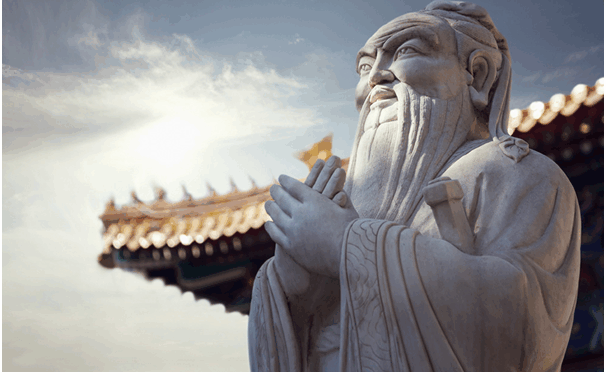
Image courtesy of Weaver R; 5 Confucian virtues to understand for business success in South Korea. Trade Ready, 2014; June 16. Available from: https://www.tradeready.ca/2014/trade-takeaways/5-confucian-virtues-understand-business-success-in-south-korea/
The Korean peninsula, situated between civilizational giants of China and Japan, has historically been part of larger spheres of influence. Modern Korea has been a post-colonial setting – Korea, having suffered under Sino-Japanese rivalry and Japanese occupation (since the Russo-Japanese War, 1905) till 1945. A proxy in the Cold War, Korea came to be partitioned along the 38th Parallel, with puppet autocrats: communist Kim Il-Sung of the north and nationalist Dr. Syngman Rhee of the south, both claiming democratic mandates in separate elections. Four million lives lost (Lowe, 21.1, 2018, p. 450), the prolonged and sponsored scourges of the Korean War (1950-53) divided the minds of a people – who were one, except for by happenstance, separated by a so called de-militarized zone.
The political border does little to remove the cultural continuities in the peninsula. Sino-influenced, Confucianism has penetrated deep into the Korean psyche, having an embedded role in the society and polity. Confucian values persist as an underlying character to aspects of everyday life, including work, education, and family, especially politics.
Confucianism not only provides an underlying cultural continuity but has also seen utilization as a socio-political force by power elites. In the Democratic People’s Republic of Korea (DPRK), the centralized political culture around the Kim dynasty, of the Korean North, harmonizes the communist narrative with Confucian values, making themselves the principal actors (and perpetrators) of the political discourse (Lee et al, 2009). While separated by circumstance, the South Korean society has widely been considered to be the most Confucian society, with deep rooted particularism despite modernization efforts in South Korea – illuminated, under readily negative overtones, by the chaebol-politics nexus, extreme wealth inequalities, hierarchy, patriarchy, organizational loyalty, military authoritarianism, bureaucratic discretion, and the reliance on a virtuous ruler as against a consistent system of checks and balances and accountability (Rozman, 2002).
In case of North Korea, the sheer longevity and continuity in the closed, aggressive North Korean regime, without any pertinent need to adapt (as for Chinese state capitalism), or threats of crises (like the dissolution of USSR), begs intrigue into the political merit of the Confucius-communist convergence. The hybrid North Korean state is a response to the indigenous cultural compulsions (Kihl, 1994) of the Korean society and culture, retaining its ancient Sino-import of Confucian values (Weiming, 2000) – seeking a moral justification to the totalitarian order: a police state, closed economy with failing standards of living, isolationism, immobile, stagnant and surveillance society, adherence to authority, state secrecy, and continuity under a hereditary leadership.
As a result of the seeming needs to maintain equidistance from both the USSR and PRC following their fallout in the 1960s (Koh, 1969), coupled with the apprehension in incorporating ‘alien’ influences from either, led to revision of socialism to-taste into the original, pure chuch’e ideology (David-West, 2011), giving the Kim dynasty exclusive voice over the character of the party and state (Widjaja, 2021). The modern revival of Chosen neo-Confucian orthodoxy (1392-1910) is a political phenomenon , that extends itself to provides the cultural background to North Korean institutions and relations, with state emphasis on familial origins and extensive kinship ties of patrimonial clans) that has created an anti-modern ‘family-state,’ distinct from “Confucian capitalism” of South Korea (Kang, 2011, pg. 63).
Kimilsungism or chuch’e, as the party-state belief system posits an uncanny intense, rhetoric-centric nationalism, antithetical to the faith of international communism held by the socialist Cold War camp. At the same time, chuch’e relays tactical acumen of the Kim leadership in innovating “subjective” communism (Kihl, 1994, pg. 144), where the emphasis on the working class in Marxism had shifted to the party-state in Leninism, chuch’e places the suryong(leader) as the supreme tenant of the revolution and national unity, and thereby the center of ideological conscience – final recipient of the loyalty of comrades. In this manner, chuch’e is not a mere ideal but the Kim-designed and Kim-designated philosophy of state power and governance (Kihl, 1994, pg. 144). Dawning the realization that two millennia of Confucian legacy is seamless from popular culture, the DPRK made haste in assimilating traditional Confucian values into socialist moral, in turn integrating the newly-made nuclear families into the taegojong: the socialist ‘big family’, forming the basis of communist nationalism (Kang, 2011, pg. 69).
Moreover, Confucius’ stratified view of society premised on relation-specific duties than on rights or liberties; preaching that people must “Let the ruler, be a ruler; the minister, a minister; the subject, a subject; the father, a father; the son, a son…” (Analects XII: 11) – promotes political passivity towards authority. Further, Confucian insistence on superior-subordinate hierarchy and obedience,‘…as the relationship between grass and wind, the grass must bend when the wind blows…’ (Analects XII: 19), provides for a stable social order, that justifies inequality (Patterson, 2017; Taylor & Arbuckle, 1995). This provides an anti-democratic character to a Confucian political culture which inbuilds a tendency for political passivity and collectivism over individual autonomy. Confucianism, being essentially an oriental philosophy is duty-centric rather than rights based liberal, essential to western models of citizen produced constitutional democracy. Confucianism as philosophy of social conservation prioritizes collective value in society live over individual.
This sense of social conduct that Confucianism entrenches power institutions in society idealizing the idealizing the traditional image of king-teacher-father. This entrenched sense of tradition has also enhanced a sense of ethnic nationalism. This has been identified as one of the causes for South Korea’s sustained economic success, dubbed the “Confucian capitalism” (Chang, 1998) and the expansion of Korean popular culture, including “K-pop” and competitive gaming. While post-war South Korea, modeled after the liberal West, and the regimented regulation of the and subsequent military rule, may appear to be a context of declining Confucian culture’s influence on political culture. The Confucian model of centralized government with the tradition high-hand of the state over the ‘subject-ry,’ rendering habitual obedience. This feature of political passivity was especially evoked during the authoritarian rule of military leaders prior to the 1980s. The social engineering through education institution by President Park Chung‑Hee to create ‘loyal citizens’ against the communist threat from the North.
The reinvention and manipulation of selective-Confucianism in the post-war regime by autocrats both north and south of the 38th Parallel draw testament to the strength of Confucianism in molding public opinion and subservience to a state-centric governance model. The DPRK’s stable socialist system is a vision of a totalitarian state built on Confucian society, premised on communist narrative, and sustained through dynastic and deterministic rule. However, it is not merely a cultural outcome but an ideological outcome as well. For equal reasons as Leninism in USSR, the feudal Korean society was infertile to the class-conscious worker’s revolution. An agrarian economy with an expansive serfdom and traditional values makes for less-than-suitable grounds for the Marxist revolution. While in regard to Marxism, the socialist state is a brief transitory phase, an outcome of the collapse of the industrial-capitalist order of exploitation and inequalities, and is characterized by the dictatorship of the proletariat and the collectivization of resources, in case of its incomplete execution into the “withering of the state” to give way to classless, stateless communism, the socialist state is left without guidance to any tangential scenarios (Paige & Lee, 1963). While the USSR and PRC opted for rapid state-sponsored industrialization as a means to create the ‘worker’ for Bolshevism, in contrast to erstwhile flagbearers, the DPRK choose to use the already disposed Confucian cultural capital for this political exercise. Thus, despite being ‘contradictory,’ the amalgamation has provided stability (Dimitrov, 2013) to Noth Korea.
This also converges with Huntington’s argument that East Asian polyarchy, a characteristic of Confucianism, supports a centralized strong state with low democratic institutionalization. The rooted Confucian principles of hierarchy perpetuated by superior-subordinate relations impedes democratic practices, by entrenching stratified social relations. However more contemporary research, this relation is not unilinear in the manner that new social forces, such as urbanization and Protestantism, harmonize the two, with Confucianism conversely promoting democratic behavior (Chung, 2013). While inferences to Confucian philosophy in the chuch’e ideology is more explicit, in contrast to implicit social behavioral norms in case of South Korea. While the inverse relation between Confucian invocation and authoritarianism in the North is evident, in case of the South, the relation is more contested rather than a clear cut and unidirectional relation with democracy; yet features of Confucianism remain permeated in the socio-political culture in the Korean society and has been a prominent instrument for political control in both the North and the South.
References
- Chang, C. S. (1998). The Confucian capitalism: Impact of culture and the management system on economic growth in South Korea. Journal of Third World Studies, 15(2), 53–66. http://www.jstor.org/stable/45193763
- Chung, C. (2013). Confucian values and democracy in South Korea. The Review of Korean Studies, 16(2), 151–178. https://doi.org/10.25024/review.2013.16.2.006
- Cumings, B. (2012). The Kims’ three bodies: Communism and dynastic succession in North Korea. Current History, 111(746), 216–222. https://doi.org/10.1525/curh.2012.111.746.216
- Dimitrov, M. K. (Ed.). (2013). Why communism did not collapse: Understanding authoritarian regime resilience in Asia and Europe (pp. 317–362). Cambridge University Press. https://doi.org/10.1017/CBO9781139565028.018
- Górska–Szymczak, J., & Machowski, A. (2022). Confucianism in the current society of South Korea. International Journal of Public Administration, Management and Economic Development, 7(1), 85–91. https://doi.org/10.23943/princeton/9780691195995.003.0001
- Kang, J. W. (2011). Political uses of Confucianism in DPRK. The Journal of Korean Studies, 16(1), 63–87. https://doi.org/10.1353/jks.2011.0000
- Kihl, Y. W. (1994). The cultural dimension and context of North Korean communism. Korean Studies, 18, 139–157. http://www.jstor.org/stable/23720091
- Kim, A. E., & Park, G. S. (2003). Nationalism, Confucianism, work ethic and industrialization in South Korea. Journal of Contemporary Asia, 33(1), 37–49. https://doi.org/10.1080/00472330380000041
- Kim, H. H. (2023). Juche in the broader context of Korean philosophy. The Philosophical Quarterly. Advance online publication. https://doi.org/10.1111/phil.12345
- Kim, S. (2023). The hidden mechanism of the North Korean Confucianism. Inmungwahagyeon’gu (Dae’guga’tolligdaehag’gyo). Advance online publication. https://doi.org/10.46270/ssw.48.8
- Lee, A.-R., Lee, H., Lee, J.-Y., & Kim, I.-G. (2009). The paradox of North Korea’s ideological radicalism: Shaky social basis of strengthening ideological campaigns. North Korean Review, 5(1), 46–61. http://www.jstor.org/stable/43910261
- Lew, S.-C., Choi, W.-Y., & Wang, H. S. (2011). Confucian ethics and the spirit of capitalism in Korea: The significance of filial piety. Journal of East Asian Studies, 11(2), 171–196. https://www.cambridge.org/core/journals/journal-of-east-asian-studies/article/confucian-ethics-and-the-spirit-of-capitalism-in-korea-the-significance-of-filial-piety/4A343607EAF994C1D43B88041C7C9194
- Lutz, T. (2015). Cult of personality: North Korea under Kim Il-Sung [Senior thesis, Arcadia University]. Arcadia ScholarWorks. https://scholarworks.arcadia.edu/senior_theses/
- Mitu, B. (2015). Confucianism and the contemporary Korean society. Romanian Journal of Sociological Studies, New Series, 1, 31–38. https://journalofsociology.ro/wp-content/uploads/2015/08/Full-text-pdf.2.pdf
- Myers, B. R. (2014). Western academia and the word “Juche.” Pacific Affairs, 87(4), 779–789. http://www.jstor.org/stable/43592450
- Palais, J. B. (1984). Confucianism and the aristocratic/bureaucratic balance in Korea. Harvard Journal of Asiatic Studies, 44(2), 427–468. https://doi.org/10.2307/2719038
- Park, I. H., & Cho, L.-J. (1995). Confucianism and the Korean family. Journal of Comparative Family Studies, 26(1), 117–134. http://www.jstor.org/stable/41602370
- Rozman, G. (2002). Can Confucianism survive in an age of universalism and globalization? Pacific Affairs, 75(1), 11–37. https://doi.org/10.2307/4127239
- Selman, A. (2010). Confucianism, authoritarianism, and democratization in South Korea. BYU Asian Studies Journal, 3, Article 6. https://scholarsarchive.byu.edu/asj/vol3/iss1/6
- Seth, M. J. (2020). A Confucian society. Oxford University Press. https://doi.org/10.1093/actrade/9780198830771.003.0003
- Śleziak, T. (2013). The role of Confucianism in contemporary South Korean society. RocznikOrientalistyczny, 66(1), 27–46.
- Taylor, R., & Arbuckle, G. (1995). Confucianism. The Journal of Asian Studies, 54(2), 347–354. https://doi.org/10.2307/2058740
- Trifoi, B. (2017). Kim was Korea and Korea was Kim: The formation of Juche ideology and personality cult in North Korea [Master’s thesis, Florida International University]. FIU Digital Commons. https://digitalcommons.fiu.edu/etd/3275
- Vaddi, S. (2024). The role of Confucian values in Korean administrative culture: A cultural-contextual perspective. Asia Pacific Journal of Public Administration, 1–20. https://doi.org/10.1080/23276665.2024.2396301
- Chang, C. S. (1998). The Confucian Capitalism: Impact of Culture and the Management System on Economic Growth in South Korea. Journal of Third World Studies, 15(2), 53–66. http://www.jstor.org/stable/45193763
- Rahman, A. F. M. S. (1999). The Struggle for Democracy in South Korea and the Nexus of Big Business and Authoritarian Government, 1948-1998. Pakistan Horizon, 52(3), 15–35. http://www.jstor.org/stable/41394427
- Levi, N. (2012, August 28). The importance of Confucian values to Kim Jong Il’s system: Nicolas Levi on North Korean ideology. https://sinonk.com/2012/08/28/confucian-values-kim-jong-il/
- Beauchamp, Z. (2018, June 18). Juche, the state ideology that makes North Koreans revere Kim Jong Un, explained. https://www.vox.com/2018/6/18/17450918/juche-kim-jong-un-north-korea-ideology

Leave a Reply