Gender and Disaster: How Asian Women Bear a Disproportionate Burden in Natural Calamities
Posted on : April 23, 2026Author : Koushiki Sarkar
Natural disasters do not discriminate, but the societies they strike invariably do. Across Asia, floods, earthquakes, and cyclones claim millions of lives, displace entire communities, and erode decades of development progress each year. Yet the burden of these disasters falls with striking unevenness upon women. From the low-lying coastlines of Bangladesh to the seismic zones of Nepal and the typhoon corridors of the Philippines, women consistently suffer higher mortality rates, deeper economic losses, and more protracted recovery timelines than their male counterparts. This disparity is not rooted in biological vulnerability. It is, rather, the product of deeply entrenched gender inequalities that disasters expose and dramatically intensify, transforming ostensibly natural events into profoundly gendered catastrophes.
The Mortality Gap
The differential in disaster mortality constitutes perhaps the most stark quantitative measure of this inequality. Research conducted in the aftermath of the 2004 Indian Ocean Tsunami, one of the deadliest natural disasters in recorded history revealed that in several affected communities across Sri Lanka, India, and Indonesia, women accounted for approximately 70 to 80 percent of fatalities. A comparable pattern was documented following Cyclone Gorky, which struck Bangladesh in 1991, killing an estimated 140,000 people, of whom roughly 90 percent were women. These figures are not coincidental. They are the direct consequence of social norms that govern mobility, physical training, and access to public information. In many South and Southeast Asian communities, women are far less likely to know how to swim, are culturally discouraged from climbing trees or scaling structures during floods, and are frequently the last to receive evacuation warnings, which are often disseminated through male-dominated public networks. When disaster strikes without warning in the early morning hours, women who are confined to domestic spaces and encumbered by the responsibility of gathering children and elderly relatives are systematically disadvantaged in their capacity to flee.
Structural Vulnerabilities and Pre-Existing Inequalities
To understand why women are disproportionately affected by Asian disasters, one must first understand the structural inequalities that precede them. Gender disparities in land ownership, education, income, and political representation do not emerge at the moment of a flood or earthquake, they are pre-existing conditions that disasters ruthlessly exploit. In rural Bangladesh and coastal Odisha, the majority of women do not hold legal title to land or property. This means that when floods submerge farmland or cyclones destroy homes, women lack the formal documentation necessary to access government relief, insurance claims, or reconstruction loans. Men, as the primary property holders, are positioned as the default recipients of institutional aid, while women must negotiate access through male relatives, a negotiation that is rarely conducted on equal terms.
Educational disparities compound this vulnerability. Lower female literacy rates across disaster-prone regions of South Asia and Southeast Asia limit women’s access to printed emergency advisories, government relief application forms, and information disseminated through digital platforms. The gender digital divide, which remains pronounced across rural Asia, further marginalises women during and after disasters, as early warning systems increasingly migrate to mobile and internet-based channels. A woman who cannot read a government circular or access a flood alert on a smartphone is, structurally speaking, more exposed to disaster mortality than a man with equivalent economic status but greater informational access.
Displacement, Shelter, and Gender-Based Violence
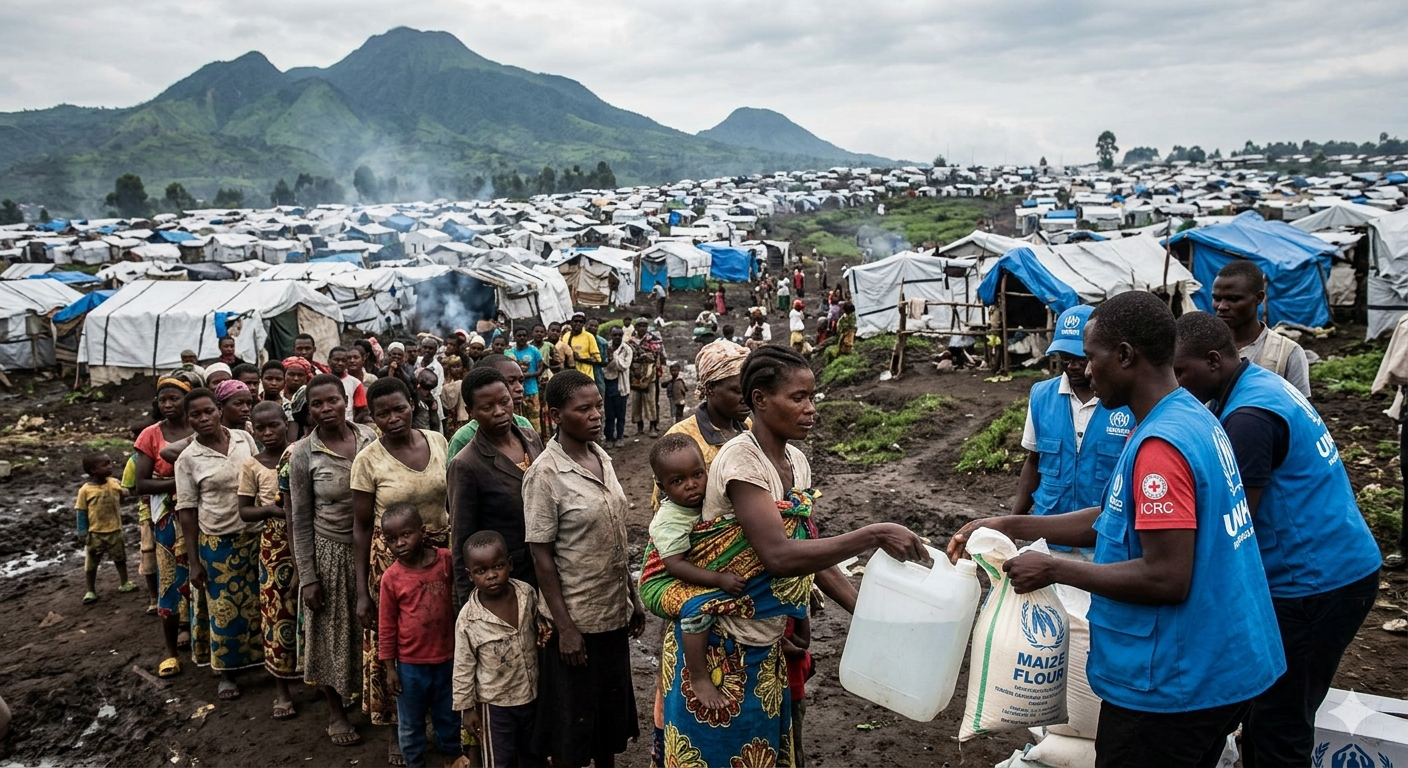
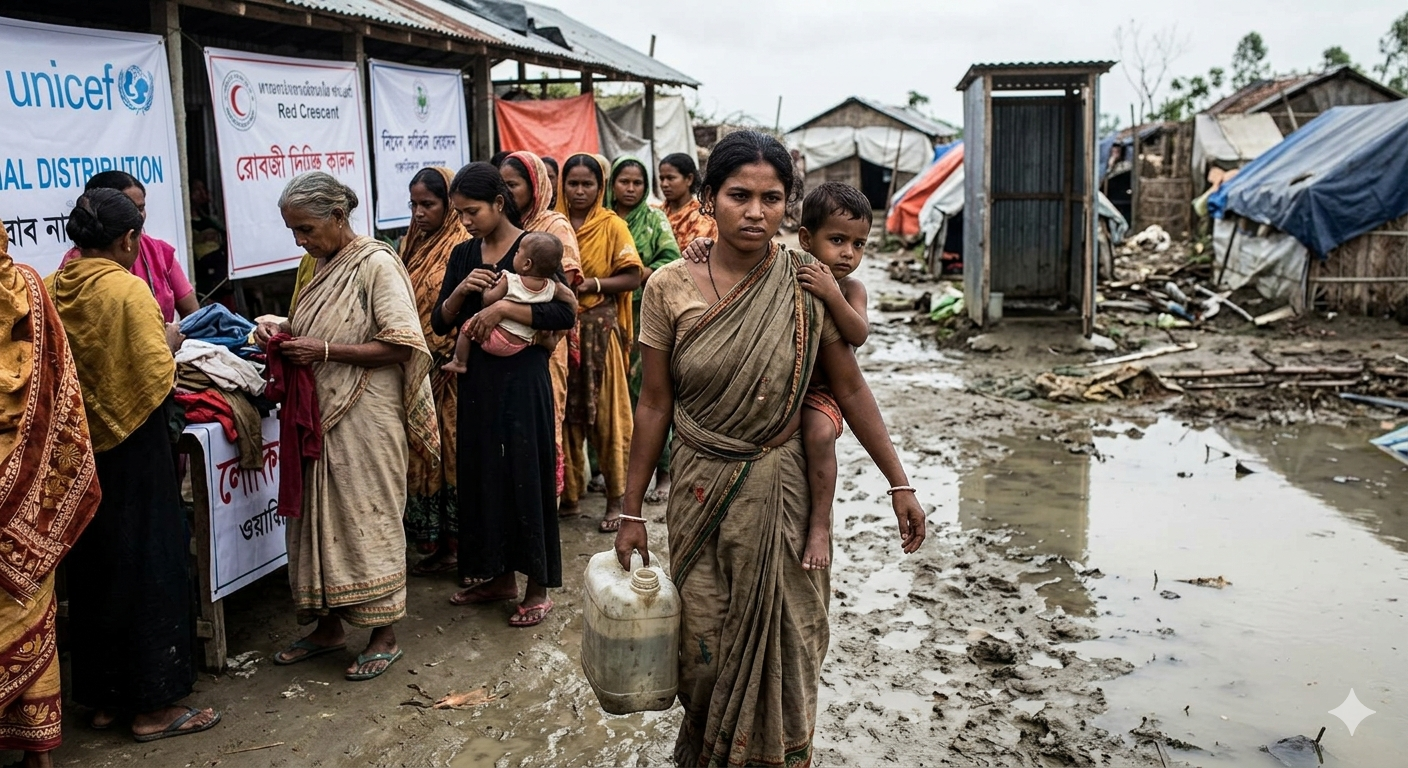
The aftermath of disaster introduces a distinct but equally severe set of gendered vulnerabilities. Displacement into emergency shelters and temporary camps creates conditions in which women and girls face sharply elevated risks of sexual violence, harassment, and exploitation. Studies conducted following the 2015 Nepal earthquake, Typhoon Haiyan in the Philippines in 2013, and repeated flooding cycles in Bangladesh consistently document increased rates of gender-based violence in displacement settings. Overcrowded shelters lacking private sanitation facilities force women to navigate unsafe environments, while the collapse of community oversight structures and the trauma of displacement create conditions that perpetuate abuse. Adolescent girls in displacement camps are particularly vulnerable to early and forced marriage, as economically desperate families perceive marriage as a means of reducing financial burden in the immediate post-disaster period.
Reproductive health needs, which do not pause for disasters, are routinely deprioritised in emergency response frameworks. Pregnant women and new mothers in displacement settings frequently lack access to skilled birth attendants, prenatal care, and safe delivery facilities. Following the 2004 Tsunami, reports from Aceh in Indonesia and Tamil Nadu in India documented alarming gaps in reproductive health services, with women experiencing obstetric emergencies in wholly inadequate conditions. This neglect reflects a broader tendency within disaster response architecture to treat the universal affected population as implicitly male, rendering women’s specific health and safety needs invisible at the policy level.
Recovery, Labour, and the Burden of Reconstruction
The gendered dimensions of disaster do not conclude with the emergency phase. Recovery processes are frequently structured in ways that entrench, rather than alleviate, pre-existing inequalities. In post-disaster economies, women bear a disproportionate share of unpaid care labour, caring for injured family members, managing disrupted households, and sustaining children through prolonged displacement, while simultaneously being excluded from the paid reconstruction workforce. Cash-for-work programmes initiated after major Asian disasters have repeatedly demonstrated a strong male bias in recruitment, leaving women without independent income during the period of greatest economic precarity.
The disproportionate impact of floods, earthquakes, and cyclones on Asian women is neither inevitable nor natural. It is the measurable consequence of gender inequality embedded within land tenure systems, educational access, emergency response protocols, and post-disaster governance frameworks. Addressing this disparity demands that gender-disaggregated data be treated as a non-negotiable component of disaster risk assessment, that women be meaningfully included in disaster preparedness planning at the community and national level, and that humanitarian response frameworks explicitly centre the needs of women and girls. Until the structural conditions that render women more vulnerable are addressed with the same urgency as the disasters themselves, natural calamities will continue to function as amplifiers of the inequalities that already define their daily lives
REFERENCES
- Ayeb-Karlsson, S., Kniveton, D., & Cannon, T. (2020). When the disaster strikes: Gendered (im)mobility in Bangladesh. Climate Risk Management, 29, Article 100237.
- Bradley, T., Martin, Z., Upreti, B. R., Subedu, B., & Shrestha, S. (2023). Gender and disaster: The impact of natural disasters on violence against women in Nepal. Journal of Development Studies, 59(3), 1–18
- Chowdhury, A. M. R., Bhuyia, A. U., Choudhury, A. Y., & Sen, R. (1993). The Bangladesh cyclone of 1991: Why so many people died. Disasters, 17(4), 291–304.
- Frankenberg, E., Gillespie, T., Preston, S., Sikoki, B., & Thomas, D. (2011). Mortality, the family and the Indian Ocean tsunami. The Economic Journal, 121(554), F162–F182.
- Ikeda, K. (1995). Gender differences in human loss and vulnerability in natural disasters: A case study from Bangladesh. Indian Journal of Gender Studies, 2(2), 171–193.
- Kappes, M. M., Karmacharya, P. B., Thapa, N., Shrestha, B., & Karki, H. (2017). Humanitarian response to reproductive and sexual health needs in a disaster: The Nepal earthquake 2015 case study. Reproductive Health Matters, 25(51), 67–77.
- Neumayer, E., &Plümper, T. (2007). The gendered nature of natural disasters: The impact of catastrophic events on the gender gap in life expectancy, 1981–2002. Annals of the Association of American Geographers, 97(3), 551–566.
- Nguyen, H. T. (2019). Gendered vulnerabilities in times of natural disasters: Male-to-female violence in the Philippines in the aftermath of Super Typhoon Haiyan. Violence Against Women, 25(4), 421–440.
- Rezwana, N. (2020). Lived-experience of women’s well-being in the cyclone shelters of coastal Bangladesh. Prehospital and Disaster Medicine, 37(4), 512–519.
- Standing, K., Basnet, S., Parker, S., & Sharma, S. (2022). Violence against women and girls in humanitarian crisis: Learning from the 2015 Nepal earthquake. South Asian Journal of Law, Policy, and Social Research, 1(2).
- Sultana, F. (2014). Gendering climate change: Geographical insights. The Professional Geographer, 66(3), 372–381.
Koushiki Sarkar
Intern, Asia in Global Affairs
The views and opinions expressed in this article are those of the author and do not necessarily reflect the official policy or position of Asia in Global Affairs. The review is intended for academic and informational purposes only. It is not an endorsement of any particular viewpoint, nor is it intended to malign any individual, group, organization, company, or government