Revisiting Kyrgyzstan, a year after protests

Posted on : January 12, 2022
Author : AGA Admin

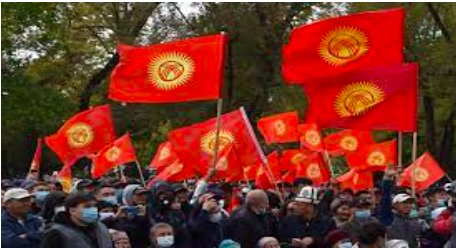
With this October a year has passed since protests and demonstrations took place in Kyrgyzstan and changed the entire political scenario. Last year in October Sooronbay Jeenbekov, the then President, declared that an early presidential election would take place on 10 January 2021. The reason behind this sudden announcement was the on-going protests and demonstrations and this ultimately led to the downfall of Jeenbekov, as he resigned soon after. The protesters alleged corruption during the parliamentary elections. He was succeeded by Sadyr Japarov who rose to power with the promise of an improvised democracy. The narrative in the region has changed a lot since then.


Sadyr Japarov was introduced in politics post Tulip revolution in 2005. He was in favour of the revolution and was elected as an MP in the successive elections. However, in 2007 he chose to become advisor to the then, President Kurmanbek Bakiyev. In 2012 he was charged under Article 295 of the Criminal Code of the Kyrgyz Republic and was later released in 2013.

In 2017 he was detained at the Kyrgyz-Kazakh border and was jailed again. During that time in jail he founded his political party Mekenchil and the party gained popularity throughout 2018-19. In January 2021, Sadyr Japarov became President with a massive victory and got almost 80 percent vote. 


Since then there have been many alterations in the government. Sadyr Japarov gained Presidency with a lot of assurances to the public and a new constitutional referendum. Though his new constitution was approved in the referendum in April, but has been criticised severely by Human Rights groups for undermining the role of electoral system and increasing the abuse of power in the region. His top-heavy political system is also being questioned by the international community. They criticize this form of government in which there is hardly any encouragement of civic dialogue or questioning the government.


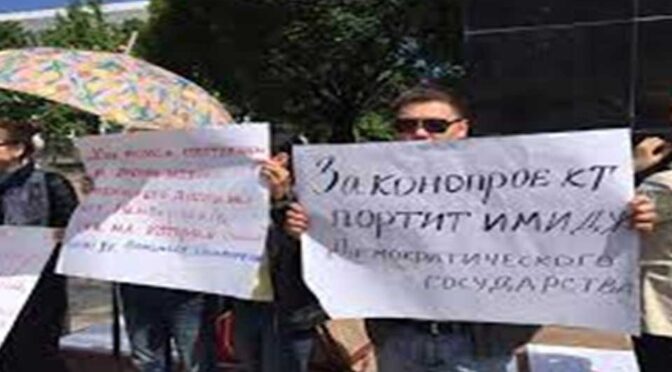
The concentration of power by the government has raised doubts about the status of democracy in the country. The referendum gives major power to the President instead of parliament. Japarov has got his allies with him in the government. And together they impose that their government is working towards anti-corruption. A year has gone by but the concerns that motivated the events last year remains unanswered. The huge promises of the new government are not very visible till this time. Since Japarov gained presidency he has been making new laws and passing bills but the reception of these are not very smooth by the people. His fake news law was highly disapproved by the civil society. On 28 of July, the government sanctioned the legislation to tackle false information. The civil society highly condemns this law as it enhances the power of the government to regulate the information on social media. They believe that this will hamper the freedom of speech and expression in the country. This law among many others have been disapproved by the civil society. Also according to the Fact-Checking Network (IFCN), this law is very similar to Russian legislation of 2014 that controls the usage of information and telecommunication systems. 


Freedom House, a civil right institution, assessed in March this year, that modifications in the constitution to such level, “could reshape Kyrgyzstan’s political system in the mould of its authoritarian neighbours.” Notably this year Kyrgyzstan has slipped to not free score by the institution from being partly free last year. However the government does not seem very interested to look back in the past and rectify from there. Back to back this year there have been laws and policies that may have repercussions for the civil society. Another bill has been passed for impeding the functioning of the non-governmental organisations in the region. This year in June, government passed a law that puts certain amount of restrictions on the freedom of the civil society and impedes the work of Non-Governmental Organizations (NGO). The civil society views this as a deliberate attempt to hamper its progress towards corruption and inculcate fear among the independent activists.  Media Policy Institute, a human rights institution from Kyrgyzstan, analyse this as rigid use of power and say that these bills have been brought out to “protect the authorities from public criticism”.


Now Kyrgyzstan has gone back to presidential system after being a parliamentary democracy for ten years. Also parliamentary elections are scheduled for November this year, but the issues that inspired the protests last time remains mostly unanswered this year as well. But not everyone is critical of the government and Japarov has also been working constantly towards pleasing people. During elections his one major promise was about nationalization of the Kumtor gold mine. The mine was nationalized on 8 May. Also to negate the criticism the government is trying to project the image of the region being in transitional period.


The upcoming elections are significant. The number of MPs in the parliament has been reduced this time. Out of the ninety remaining seats, 36 will be voted from single-seat districts and the rest 54 seats will be elected by national party lists. There is a lack of clarity in the elections and this concerns political analysts and observers. Also before elections the government has been trying to target both Kyrgyz civil society and the opposition. The November elections will be reflective of the nature of the future government in Kyrgyzstan.


Source:

Civil society development in Central Asia, M. H. Ruffin and D. C. Waugh, 2011.

The Challenges to de-localising constituencies through electoral reform in Kazakhstan and Kyrgyzstan, Esther Somfalvy, 2020.

Uncertainty Perpetuated? The pitfalls of a weakly institutionalized party system in Kyrgyzstan, Central Asian Affairs,  Asel Doolotkeldieva1 and Alexander Wolters, 2017.

Eurasianet: https://eurasianet.org/kyrgyzstan-tightens-control-over-ngos-taps-anti-western-sentiment

24kg:

Media Policy Institute, Kyrgyzstan: http://media.kg/

Freedom House, Kyrgyzstan: https://freedomhouse.org/country/kyrgyzstan


Nazia Jafri

Intern Asia in Global Affairs
/ Revisiting Kyrgyzstan, a year after protests

Social media and censorship in Kazakhstan

Posted on :
Author : AGA Admin

Recently Kazakhstan banned a social media group and removed their content for a few days. Although due to the immense pressure from civil society and international community they were forced to open the same after a while but this short event highlights the social media situation in the country. The human rights group, Nagys Atajurt Eriktileri, from Almaty found that their YouTube channel was suspended without any warning.  

This channel had been significant to the online protests in the country. Some of the videos here have more than 5 lakh views. This group has been working on videos of detention and torture of ethnic Kazakhs and other Turkic minorities in Xinjiang, China in contrast to the stories provided by the government. The authorities within the nation have been trying to stifle them through numerous ways and blocking website was a part of the same. 

Similarly in May, Temirlan Ensebek, who had a satirical Instagram page Qaznews24, was detained and thoroughly questioned for his satires on Nazarbayev. This page had gathered more than five thousand followers but ultimately Temirlan removed the page due to the pressure from the government. As the authorities say that his detention was based on the wrong information that he was publishing, the online community in the country refuse to believe. Also in July the government blocked LinkedIn, a Microsoft subsidiary over the argument of fake advertisements and bogus profiles, for a few days. Almost 720,000 citizens are the members of LinkedIn account in Kazakhstan. These recent incidents points towards the social media and human rights violations in the country.

Although it is not a new phenomenon in the region, social media have often been referred here as a carrier of extremism by the authorities. The Kazakh government has been imposing restrictions on freedom of speech and expression since a very long time. According to Human Rights Watch there is a serious lack of a sincere political opposition group in the country. 

Liberalisation of social media market in early 20s and later on its wide use in the neighbouring regions for protests alarmed the government to keep a tight check. There are provisions for strict monitoring and filtering in the region. The system is centralized and most of the content is filtered both officially and unofficially. There are very broad and unspecific media laws and many websites and journalists have been prosecuted on the same. According to Adil Soz, a Kazakh foundation for addressing corruption in Kazakh law and politics, between 2010 and 2015 every year five to nine independent websites and media organisations use to be banned for publishing content unfavourable to the government. The media landscape here mostly belongs to state owned groups or state subsidised media channels.

Banning of the group from Almaty or Instagram are not the first cases here, from time to time there are online protests and demonstrations but the government ensures to keep them at bay. In 2011 during the oil workers protest in Zhanaozen city, there was a wide use of both Facebook and twitter. The protests gained a lot of attention internationally but eventually it was fiercely supressed by the government. By 2014 they came up with a communication law that rules that prosecutor’s office can suspend any website that seems a threat to the interests of the nation. For this even court ruling will not be required. From that time common websites such as Twitter, Skype, Youtube and WhatsApp among others face frequent restrictions and shutdown in the region. 

Under the pretext of technical issues, major telecommunication companies in the region also back-out at the time of protests and demonstrations. Giant media platforms including Google are also not available at most of such times. For example during the 2016 nationwide anti-land reform rallies all the big telecommunications companies such as Beeline, Kcell and Kazakhtelecom along with the government displayed inability to provide internet and displayed technical problems. Same was the case in 2019 Presidential elections. On the day of election the internet was frequently shut down and the residents were asked to install a national security certificate, which led to the internet user’s online activities being intercepted by the government.

Now there are 40 types of clauses for the regulation of the media. And any violation can lead to suspension or shutdown of the website or organisation. Kazakhstan ranked 155th out of 180 countries in World Press Freedom Index 2021. There are 13 million internet users in the country. The internet penetration in the country is also relatively high than the neighbouring regions. The authorities in the region manipulate online systems and file criminal cases against those who are critical of the government. Over the years as internet has gained popularity as expression of dissenting voices in Kazakhstan there is also a rigid control of the governmental authorities. 

But, for now, despite of all the restrictions social media remains a flexible mode of communication for the people. Kazakhstani people have become accustomed to taking their views online and discussing social and political narratives over there. There are a large number of bloggers and netizens that are using different formats and coming out and expressing themselves against the government. Since 2018 there have been more than 1200 protests in the country which is far more than any neighbouring region has. These protests are mostly on issues of governmental policies and decisions and social welfare. Kazakhstan’s alternative media will keep on challenging the government or will it be supressed only the time can tell.

Readings:

Linked-Promo, https://linked-promo.com/en/ 

International Telecommunication Union (ITU), https://www.itu.int/en/Pages/default.aspx

BBC news, https://www.bbc.com/news/world-asia-pacific-15482614

Think before you post: Closing down social media space in Kazakhstan by Amnesty International, 2017.

Social media and the public interest, by Philip Napoli, 2019.

The Nazarbayev generation: Youth in Kazakhstan, by Marlene Laruelle, 2019.

The role of social media in Kazakhstani journalism by M Bulatova , 2017.

The status of media and the role of social media in Kazakhstan, Kyrgyzstan, Tajikistan and Uzbekistan by G. Ibrayeva, E. Turdubaeva, L. Olimova and N. Kosymova, 2018.


Nazia Jafri

Adjunct Researcher, Asia in Global Affairs

(The views, thoughts, and opinions expressed in the text belong solely to the author.)

/ Social media and censorship in Kazakhstan

New NGO Legislation in Kyrgyzstan

Posted on :
Author : AGA Admin

The celebration of this year’s Kyrgyz Independence Day was coupled with paradox about the freedom of the civil society in the nation. Within the country there is a debate about the policies and laws that the new President is implementing in the nation. Late in June this year, President Sadyr Japarov passed a law that puts certain amount of restrictions on the freedom of the civil society and impedes the work of Non-Governmental Organizations (NGO). The civil society views this as a deliberate attempt to hamper its progress towards corruption and inculcate fear among the independent activists.  The Kyrgyz government already burdened the NGO’s by making it necessary to provide a detail of their activities and report about the finances but this law takes a step forward.


Throughout the uprisings of 1990’s and 20’s Kyrgyzstan has managed to pull an image of the most democratic country in the entire Central Asian region but with this law there is a certain hindrance towards that way. There is a growing concern amongst Human Right organisations as well for this law and both International Partnership for Human Rights (IPHR) and the Coalition against Torture in Kyrgyzstan asked the governing authorities to reconsider this to ensure that this law does not impede the progress of NGOs within the nation.


The Kyrgyz government is using the pretext of monetary transparency and now the NGOs are required to submit yearly report on their source and expenditure of funds which includes another multiple level of details in between. The point to note here is that the procedures are very unclear and are fully in control of the governing authorities but consequences are made very much obvious. Those NGO’s that fail to follow these rules will suffer from penalties including a forceful shut down.


IPHR explains that this law, “requires NGOs, which carry out their work on the basis of grants and donations, to annually prepare and submit a report about their sources of funding, the expenditure of these funds, and their acquisition and use of property for publication on the website of the state tax service.” Throughout the law there is ample space for misuse of that can’t be ignored. IPHR hints at certain hidden concerns that could be related to this law as the country already had laws regarding the finances of NGOs.  Also the execution of law is quite uncertain and indicates only selective implementation. The sourcing of funds could be a potential point for the forced closure of many NGOs as there has been concern about Western funding.


Throughout the country this legislation received criticism for the approval and its biased implementation. From civil society to international community, there was harsh disapproval of the law but regardless of the fact the law came into force. Human rights associations are anxious about the adverse impact of the law on civil society units.


Sadar Japarov has been justifying this amendment under the name of transparency for NGOs. But since there is previously enough laws and rules for NGOs to provide detailed account of its financial status to the government this comes as an additional liability with ulterior motives. The NGOs already have to report their finances to state fiscal service, social fund, and the statistics committee. Under the existing laws the authorities also supervise the finances from time to time through tax audits and other ways. Many NGOs are just small scale organisations in the region and this new law will contribute to their woes with meagre employees and assets.


Also this law is precisely enforced to organisations registered as NGOs only. The law does not provide any explanation as why only these associations are picked for additional explanation of finances while leaving out other non-profit institutions such as commercial or political institutions. The law clearly points that this additional financial report is not required for non-commercial establishments that are associated with state or civic bodies. There is a clear depiction of a biased view under the law.


Critiques from the international community are also pointing out that this law might make those NGOs vulnerable that are mostly working against corruption and human rights issues in the region. Activists and NGOs that favour the fundamental rights and freedom of people can come directly under the scrutiny through this law. Moreover Sadyr Japarov in his April referendum passed a provision on “traditional values” without even clearly defining the concept. NGOs working on such issues have repeatedly been apprehensive over this as it may lead to unjust constraints on freedom of expression and other fundamental freedoms in the region. To avoid criticism media organisations are also not spared and have been encouraged to glorify the country internationally. Previously under the name of traditional values many NGOs in the region have been termed as propagators of western interests and a threat to national security due to their work on human rights violations and the depiction of the related issues in the country.


The establishment of NGOs began in Kyrgyzstan during the early 1990s but they entered in political arena by 20s. In 2004 a concept of cooperation came into being between governing authorities and NGOs. However, this concept was vague and did not cover finances. The joint unit worked in fields of consultation, information sharing, and addressing social issues. The authorities have been trying to limit their participation from time and again, mostly on superficial level. The NGOs eventually gained political weight after 2010 due to their role in stabilizing situation during the uprisings. The NGO sector has been active and working on various issues including politics since then. Kyrgyz NGOs have come a long way since their initiation. Apart from the active role in politics they lead to a responsible civil society and work on numerous social service issues. With this law will there be a hindrance towards their working or not only time will tell. As of now the law has been passed and the NGOs will have to follow.


Source:

International Partnership for Human Rights (IPHR), https://www.iphronline.org/civicus-kyrgyzstan-jan-apr-2021.html

Civil society development in Central Asia by M. H. Ruffin and D. C. Waugh, 2011.

The Development of Civil Society in Central Asia by J. Giffen, L. Earle and C. Buxton, 2005.

NGOs in Kyrgyzstan: Yesterday, Today, Tomorrow by A. Musabaeva, 2011.

Civil society and politics in Central Asia by Charles E. Ziegler, 2015

Where are all our sheep? Kyrgyzstan, a global political arena by B. Petric, 2015.

Eurasianet: https://eurasianet.org/kyrgyzstan-tightens-control-over-ngos-taps-anti-western-sentiment

24kg: https://24.kg/english/200199_President_of_Kyrgyzstan_signs_law_on_financial_reporting_by_NGOs_____/


Nazia Jafri

Adjunct, Asia in Global Affairs

/ New NGO Legislation in Kyrgyzstan

Rainbow Olympics: The Changing Dynamics of the Sporting Culture

Posted on : January 11, 2022
Author : AGA Admin

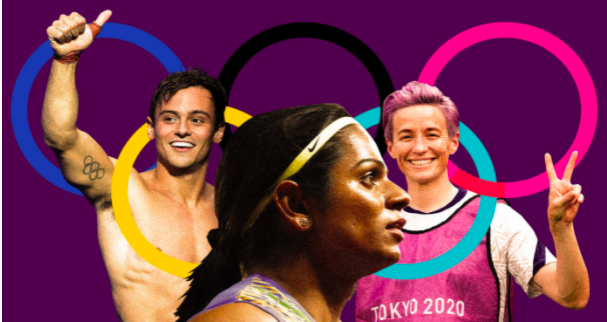
The Tokyo Olympics 2020 was nothing less than remarkable and revolutionary. It managed to garner large-scale attention not only because it was deferred for a year and conducted during the pandemic but also because it witnessed the first-ever gender-balanced Olympic games in history. A total of 185 openly gay, lesbian, bisexual, transgender, queer, and nonbinary athletes contested in the Summer Olympic Games in Tokyo, triple the number that competed in the 2016 Rio Games. Some well-known athletes, such as Megan Rapinoe of the FIFA Women’s World Cup, Brittney Griner of the Women’s National Basketball Association, and diver Tom Daley were joined by up-and-comers like Quinn, a Canadian soccer player, and Laurel Hubbard, a transgender weightlifter from New Zealand. 


The Olympics was not always very welcoming towards the LGBTQ+ community until the International Olympic Committee (IOC), in 2004, finally approved and recognized the inclusion of trans athletes who wish to participate. But, according to the 2004 regulations, trans athletes could only be eligible to compete if they underwent reassignment surgery followed by at least two years of hormone therapy. Although bottom surgery was no longer a mandate from 2015 onwards, Hormone Replacement Therapy (HRT) since remained a persistent eligibility criterion.  


The above mentioned “sex testing” procedures have predominantly regulated and restricted women’s participation in sports for decades. These unethical practices have breached several human rights and fundamental rights such as the right to privacy, dignity, health, non-discrimination, freedom from ill-treatment, and employment. Sex testing regulations demand painful and unnecessary medical procedures that put an athlete’s human rights, wellbeing, and dignity at stake. These policies scrutinize and coerce athletes into taking drastic steps that involve compromising their basic human rights or, in most cases, withdrawing from the sport.  


In 2018, South African sprinter, two-time Olympic gold medallist and three world championship titles winner, Caster Semenya, was prohibited from competing in world championships by the International Association of Athletics Federations (IAAF) because of higher levels of testosterone produced by her naturally. She filed three legal challenges to the rules, calling them unfair and discriminatory, as well as a complaint with the European Court of Human Rights, in order to be given a fair chance to compete in the Tokyo Olympics’ 800-meter event. However, the high-profile athlete was barred from participating in the Summer Olympics simply because she completely refused to lower her testosterone levels artificially. But Semenya was not the only one. Two 18-year-old Namibian track and field athletes, Christine Mboma and Beatrice Masilingi were prevented from racing in the women’s 400m race at the Tokyo Games also because of producing higher levels of testosterone naturally. The teenagers were absolutely devastated since neither of them had been tested previously, and had no reason to think their hormone levels were not within the typical range. It is unfair and unacceptable to coerce someone into taking life-altering measures that hold the potential of taking away the ability of that individual to perform something they are good at. Masilingi further stated that “I would ruin the way my body develops because that’ll be something that rearranges everything – how my body functions and everything.” 


It must be noted that testosterone alone cannot be the only factor that enhances athletic performance. Research suggests that when a group of professional male athletes with various testosterone levels compete, those with greater levels don’t necessarily do better than those with lower levels. The same is true for elite female athletes. Dr Richard Holt, professor in diabetes and endocrinology at the Faculty of Medicine at the University of Southampton, said that “There are a number of genetic polymorphisms – slight changes in the genes – that will actually determine whether somebody has that innate ability to be able to compete at the elite level.” Furthermore, an athlete must undergo medications like Metformin and Spironolactone, monthly injections or surgery to lower their testosterone levels. But the process comes with several side effects such as the increased risk of depression, liver injury, hepatitis, and many more. One of the reasons Semenya resisted the new IAAF standards was because of these negative side effects.  


Besides the medical implications, these regulations also further their discriminatory agenda towards women since no such stipulations and regulations are imposed on men. Moreover, a policy that requires women’s naturally occurring hormone levels to be monitored and examined for evidence of testosterone and viewing them as “masculine” is a form of policing women’s bodies and casting judgements on their “femininity” along with their gender and sex characteristics. These have often led to self-questioning, humiliation, trolls, withdrawal from sports, and attempting suicide. Rumours created and projected by the media have often resulted in negative mental pressure and raised suspicions about an athlete’s gender identification, causing them to be rejected by their family and community. For example, Annet Negesa, a Ugandan athlete, had to flee her country to avoid abuse because of her sex differences. Thus, it can be concluded that sex testing strategies are largely unscientific, unethical, immoral, and degrading. 


Despite such hindrances, it is safe to say that Olympics or other globally conducted sporting events are making long strides to incorporate and welcome LGBTQ+ athletes in recent years. On 26 April 2016, the International Olympic Committee (IOC) released a statement on ‘Harassment and Abuse (Non-Accidental Violence) in Sport’ acknowledging that “elite, disabled, child and lesbian/gay/bisexual/trans-sexual (LGBT) athletes are at highest risk” of becoming the victims of psychological and physical harassment. In order to curb the harassment, the focus should be on improving the culture of sports that is inculcated into younger athletes. A culture of acceptance of LGBTQ+ people and elimination of homophobic slurs like “Oh, that’s gay!” must come into practice. Erik Denison, a behavioural scientist at Monash University in Australia opined that such habits normalize the toxic sports culture and send a message that such language is harmless and set the belief that all members of the teams are heterosexual. He also believed that the culture of homophobia in sports, affecting both men and women, started in the nineteenth century. Denison claims that although men were encouraged to participate in athletics to exercise their aggression and superiority, women were discouraged from doing so. It was assumed that such severe physical activity might prevent them from having children. Moreover, women who disobeyed the advice and participated in sports were assumed to be lesbians who would not give birth. 


However, the eradication of homophobic stereotypes and recognition of trans-athletes is a result of the advent of social media providing the LGBTQ+ athletes with a platform to celebrate and embrace who they are. The internet’s limitless space has aided athletes in immediately connecting with their supporters and admirers, influencing them to embrace and love their individuality. Sport has the power to inspire millions of young people, and watching LGBTQ+ Olympians perform on a global stage promotes the idea of equality and inclusion amongst youth.


Akanksha Tiwari

Intern Asia in Global Affairs


References 

  1. Abhijit Nair, “How trans-athletes revolutionised the Tokyo Olympics,” The Bridge, 8 August 2021 <https://thebridge.in/tokyo-2020/how-trans-athletes-revolutionised-24301?infinitescroll=1> (Accessed 25th August, 2021)
  2. Amy Gunia, “Record Number of LGBTQ Athletes Set to Compete at the Tokyo Olympics,” Time, 13 July 2021 <https://time.com/6079508/olympics-lgbtq-athletes-record/> (Accessed 25th August, 2021)
  3. Scottie Andrew, “There may be more Olympians who identify as LGBTQ than ever before. But there are limits to inclusion,” CNN, 28 July 2021 <https://edition.cnn.com/2021/07/28/sport/lgbtq-athletes-2020-olympics-spt-trnd/index.html> (Accessed 25th August, 2021)
  4. “At least 185 out LGBTQ athletes were at the Tokyo Summer Olympics, more than triple the number in Rio,” Outsports, 15 August 2021 <https://www.outsports.com/olympics/2021/7/12/22565574/tokyo-summer-olympics-lgbtq-gay-athletes-list#comments> (Accessed 26th August, 2021)
  5. “IOC rules transgender athletes can take part in Olympics without surgery,” The Guardian, 25 January 2016 <https://www.theguardian.com/sport/2016/jan/25/ioc-rules-transgender-athletes-can-take-part-in-olympics-without-surgery> (Accessed 26th August, 2021) 
  6. Canela López, “Until 2016, trans Olympics athletes had to have bottom surgery. Now advocates are calling to scrap hormone requirements too,” Insider, 24 June 2021 <https://www.insider.com/trans-olympic-athletes-no-longer-need-surgery-hormones-still-required-2021-6> (Accessed 26th August, 2021) 
  7. Samantha Granville, “Namibian teens vow to fight Olympics testosterone ban,” BBC News, 7 July 2021 <https://www.bbc.com/news/world-africa-57748135> (Accessed 26th August, 2021) 
  8. ““They’re Chasing Us Away from Sport”: Human Rights Violations in Sex Testing of Elite Women Athletes,” Human Rights Watch, 4 December 2020 <https://www.hrw.org/report/2020/12/04/theyre-chasing-us-away-sport/human-rights-violations-sex-testing-elite-women> (Accessed 26th August, 2021) 
  9. Gerald Imray, “Semenya misses Tokyo, may be forced out of Olympics for good,” AP News, 3 July 2021 <https://apnews.com/article/africa-olympic-games-2020-tokyo-olympics-sports-c11b5fba248c03ea6ddd7e7089818eb0> (Accessed 27th August, 2021) 
  10. Sarah Farrell, “How do IAAF regulations affect female athletes with high testosterone levels?” Global Sports Matters, 15 November 2019 <https://globalsportmatters.com/health/2019/11/15/iaaf-regulations-for-female-athletes-with-high-testosterone/> (Accessed 27th August, 2021) 
  11. “The IOC Consensus Statement: harassment and abuse (non-accidental violence) in sport,” Olympics, 28 April 2017 <https://stillmed.olympic.org/media/Document%20Library/OlympicOrg/IOC/What-We-Do/Protecting-Clean-Athletes/Safeguarding/IOC-Consensus-Statement_Harassment-and-abuse-in-sport-2016.pdf> (Accessed 27th August, 2021) 

Edward (Ted) M. Kian, “The Success of LGBT Athletes in the Sports Media,” Research Gate, January 2019 <https://www.researchgate.net/publication/329169900_The_Success_of_LGBT_Athletes_in_the_Sports_Media> (Accessed 27th August, 2021)

/ Rainbow Olympics: The Changing Dynamics of the Sporting Culture