Quad as a non-military option for India

Posted on : July 26, 2024
Author : Subhadeep Bhattacharya

The meeting between defence chiefs of the USA, Australia, Japan and the Philippines in Hawaii on May 2, 2024 was a significant event signalling a growing militarized Indo-Pacific strategy led by USA in the context of China’s increasingly assertive posture against Manila over South China Sea dispute. The countries’ resolution to strengthen multilateral defence cooperation to counter Chinese assertiveness points to counter-assertive stance. Noteworthy, this new minilateral grouping (nicknamed ‘Squad’), if juxtaposed with Quad (another minilateral grouping comprised of USA, Japan, Australia and India), looks more unambiguous about taking on China. India’s reservation to turn Quad into a military alliance has been an obstacle in this respect. Therefore, it is opined that ‘Squad’ is the result of US’ ‘anger’ against India over Quad. However, Quad, even if apathetic for a military alliance like NATO, can boost India’s ‘counter China’ strategy.
Quad: turning insipid as defence alliance
Alliance is a traditional practice in inter-state relations meant for countering the adversary. It is a central phenomenon of world politics. Normally alliance is perceived to be an agreement to address national security issue of the partner countries covering the question of assistance in case of attack on their sovereignty. Thus, military alliance has been the most common of all inter-state alliances in history. However, Quad can be considered as an exception in this context since the alliance evades the question of assistance if/when partners’ sovereignty comes under attack. Besides, the revival of the traditional defence alliance among the US partners in the Pacific-Japan, Australia, the Philippines along with USA to counter China underlines the fact that Quad somehow is turning insipid to the USA. USA wants a zero-sum approach to Chinese aggression in the Indo-Pacific which Quad cannot afford to do due to India’s reservation. The reservation is not only due to India’s consistent favour for strategic autonomy and her distaste for any formal defence/military alliance, but logical considerations as well.
From India’s perspective, Quad emerging as a combative defence initiative will possibly be naval alliance with its declared focus on Indo-Pacific maritime region, especially in the Pacific, where the major flashpoints-Korean Peninsula, Taiwan and South China Sea-lie. India, with weak naval strength currently and a primarily land-oriented defence strategy against China and Pakistan, will be of little help for combative Quad mission. Besides, India might hesitate to nudge China over her Pacific challenges in Taiwan and South China Sea to thwart aggressive Chinese counter moves in South Asia. A militarised Quad might require India to be active in the Pacific region with flashpoints like Taiwan and South China Sea, which might be a pressure on India’s current naval strength. Besides, India’s security priority lies in the Indian Ocean region, between the African coast and Malacca Straits while the Pacific region comes second. The ongoing Hamas-Israel conflict in West Asia is spilling over in the Red Sea and adjoining maritime zone hurting the commercial maritime traffic in the region affecting India’s energy and economic interests. The Indian Navy is active in the region to ensure safety to the ships passing through the maritime zone from both the Houthi attacks as well as Somali pirates. Thus India, having more challenges to handle in the Indian Ocean region, cannot afford to be active in the Pacific simultaneously.
Still Quad is an option
However, Quad, if not viewed through military prism, can be beneficial for India.
Firstly, Quad brings a super power and its allies closer to India paving the way for further defence partnership promoting interoperability boosting Indian naval strength. Interestingly, Quad under US leadership is attracting other traditional US allies to join in conducting naval drill. This expands the scope for informal defence alliance helping India without directly targeting China.
Secondly, Quad can be a platform for technological cooperation. USA, Japan and India have traditionally invested in information and technology (IT) and India has gained reputation in the IT sector. Technological cooperation among the Quad can be helpful in countering growing Chinese clout in this sphere through 5G of Huawei and cyber attacks. On the other hand such technological cooperation can be useful for US-led Five Eyes intelligence sharing alliance of which Australia is a partner. Technological cooperation can pave India’s entry in the group in future. There is already a growing demand in USA to include India and Japan (also South Korea) in this intelligence sharing platform.
Thirdly, India can benefit from the Quad Supply Chain Resilience Initiative (SCRI). Decided among India, Japan and Australia in 2021, this mission means to ‘avoid supply chain disruptions’ (implying overdependence on Chinese markets for finished goods and supplies). Japan and Australia have been victims of occasional Chinese economic blackmailing following any dispute while India wants to diversify sources to avoid similar situation. India virtually joined the SCRI meeting with Australia and Japan in April 2021 where plans were chalked out to implement the initiative.
Fourthly, the coming together of the strategic rivals, when do not directly target China and thus give no scope to the dragon to roar, can, as seem to have already, upset Beijing. The scurrilous warning of the Chinese ambassador to Dhaka against Bangladesh joining Quad and even calling Quad an ‘Indo-Pacific NATO’ reflect the nervousness of China concerning Quad. This nervousness is a strategic advantage for India since Quad serves India’s interest keeping China under pressure.
Conclusion
Back in 1960s, India’s the then Deputy Prime Minister Morarji Desai had proposed cooperation between India, Japan and Australia to contain China. Today Prime Minister Narendra Modi is proposing JAI (Japan, America and India) partnership underlining the ‘democratic values’ of the partner countries (as against authoritarian China). However, India’s traditional apathy for any formal military alliance has directed her course of action for non-military/non-aggressive alternatives to take on the rival. Quad caters to India a chance in this respect and has potentials to advance Indian interests to counter China in non-aggressive manner.

—————————————————-x——————————————————–
Subhadeep Bhattacharya
Adjunct researcher at Asia in Global Affairs

The views, thoughts, and opinions expressed in the text belong solely to the author, in his personal capacity. It does not reflect the policies and perspectives of Asia in Global Affairs.

/ Quad as a non-military option for India

Secularism in Bangladesh: A Paradox

Posted on : May 30, 2024
Author : Debendra Sanyal

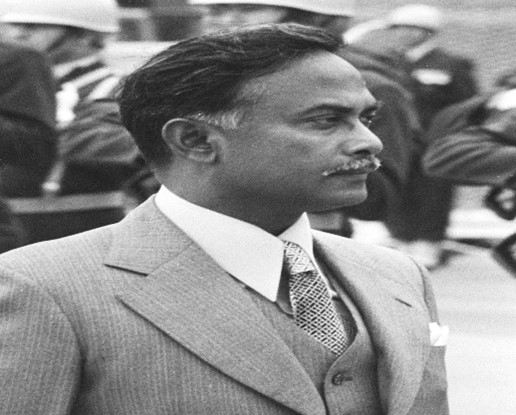
Sheikh Mujibur Rahman, the founding father of Bangladesh

Article 2A of the Constitution of Bangladesh says that Islam is the state religion of the country, but will also ensure equal status and equal right in the practice of other religions, such as Hinduism, Buddhism, and Christianity. Also, Article 12 of the same Constitution declares that Bangladesh is a secular country, and the Constitution counts secularism as among the Fundamental Principles of State Policy. We can see that two contrasting positions are operating at the same time, a country having an official state religion, yet declaring itself as secular. However, complexity is something that is synonymous with Bangladesh, and it has been more or less the same case with regards to secularism in the country. Recent political trends in the country suggest that the national political parties are kowtowing to Islamist fundamentalist groups in order to either come to power or stay in power. In theory, the state is secular, but in practice, the line between religion and the state has been considerably blurred. In this paper, we will look at how secularism has panned out in Bangladesh. 

Secularism, and its sowing in Bangladesh

Secularism essentially refers to the state dissociating itself from religion and not interfering in the religious matters of citizens. The concept took shape in Europe during the modern period, when the newly-emerging nation-states were trying to break free from the control of the Church. The Western model of secularism involved “a separation between ‘the secular,’ which is state, economy, science, art, entertainment, health and welfare, and ‘the religious,’ which are ecclesiastical institutions and churches.” (Wohab, 2021) Through the 19th and 20th centuries, secularism got exported to the rest of the world, but it had to adapt with the local conditions. In the South Asian context, the Western version of strict separation between religion and the state was not feasible, hence secularism had to be remodelled, wherein it was not based on a “strict wall of separation,” rather on a principle of distance between religion and state. (Bhargava, 2011, as cited Wohab, 2021)

Bangladesh became independent in 1971, following the Liberation War, wherein it separated from Pakistan. As erstwhile East Pakistan, the region had a substantial Hindu minority population, as well as other religions, while Pakistan as a whole was an Islamic Republic, with no real provision for secularism. The political establishment in West Pakistan viewed the eastern wing with suspicion and distrust for many reasons, one of them being the considerable non-Muslim population there, and treated them as second-class citizens. Prior to the 1971 War, the Pakistani Army committed genocide on the people of East Pakistan, particularly the minorities, in order to quell the secessionist movement. After independence, Sheikh Mujibur Rahman, the founding father of Bangladesh, decided that secularism would be one of the fundamental pillars of the nation-state. This decision was made based on the Pakistan experience and the horrors of the genocide. Thus, secularism became enshrined in the 1972 Constitution, and Islamic-based political parties were banned due to their pro-Pakistan leanings. There are also arguments about external imposition of secularism on Bangladesh. “According to this argument, political pressure, especially from India due to its support for Bangladesh during the liberation war, played an important role in determining Bangladesh’s secular identity.” (Mostofa, 2021) The model of secularism in Bangladesh is similar to that of India, which is that the state maintains a principled distance from all religions and views all religions as equal. “Bangladeshi secularism translates into Dharmanirapekkhata (religious neutrality). The Bangladeshi state does not disassociate itself from religion; rather it accepts the role of religion in public spheres. And in the eyes of the state all religions are equal.” (Mostofa, 2021) During his tenure as Prime Minister, and later President, Sheikh Mujib allowed the broadcasting of verses from the holy texts of the country’s four main religions over national television and radio.


Sheikh Mujibur Rahman, the founding father of Bangladesh

Sheikh Mujibur Rahman, the founding father of Bangladesh


The Islamist turns during military rule and beyond

After the assassination of Sheikh Mujib in 1975 and the subsequent military coup, secularism took a major hit in Bangladesh. Taking a leaf out of the book of General Zia-ul-Haq of Pakistan, the military regimes of Major-General Ziaur Rahman and General Hussein Muhammad Ershad resorted to Islamic appeals in order to legitimise their rule. Zia removed secularism from the Constitution in 1977, and replaced it with ‘Absolute Trust and Faith in the Almighty Allah,’ along with revoking the ban on religious parties. “The military regime succeeded in bringing Islam into political discourse and public life, facilitating the legitimacy of the Islamists both constitutionally and politically… The state-controlled media began to broadcast Islamic programmes and devoted more time to religious issues.” (Wohab 2021) The Islamisation trend continued further under General Ershad, who made Islam the state religion in 1988. Ershad’s promotion of the Islamisation process was a “naked political ploy to use Islam as a policy of statecraft (which was) to gain more friends and allies among Islamic countries as well as to legitimise his autocratic rule.” (Guhathakurta, 2012) During the period of military rule, the Jamaat-e-Islami, who had notoriously supported the Pakistani Army during the 1971 War, became the prominent Islamist political party.

Democracy returned to Bangladesh in the 1990s, but the two leading parties of Bangladesh, the Awami League led by Sheikh Hasina, the daughter of Sheikh Mujib, and the Bangladesh Nationalist Party led by Khaleda Zia, the wife of Major-General Ziaur Rahman, continued to appease the Islamist parties and groups, particularly the Jamaat-e-Islami. The parties wanted the support of the Islamists “either to gain power or to remove a democratically elected regime. Both parties became successful in gaining support from JI when they needed to form a government or organise a political movement.” (Wohab, 2021) The influence of Islamists in the government led to national policy being a reflection of their interests, as evidenced by the proliferation of madrasas and growth of Islamist organisations. The trend continued into the 21st century as well, and the role of Islamist parties as kingmakers got further entrenched, with many fundamentalist leaders becoming cabinet ministers.

Major-General Ziaur Rahman, former military ruler of Bangladesh

Major-General Ziaur Rahman, former military ruler of Bangladesh


The secularist-Islamist dynamic 

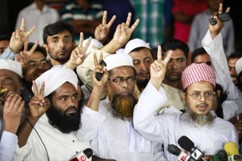
In 2009, the Awami League under Sheikh Hasina came to power, with one of its electoral campaign promises being the restoration of the secularism provision in the Constitution. Two years later, secularism was back in the Constitution, but Islam continued to remain the state religion of Bangladesh. This became symptomatic of a new trend: theoretically the state is secular, but the government would continue to pander to the Islamist demands. Many recent incidents point towards this trend. In 2013, the Shahbagh Movement took place, in which people demanded death penalty for the 1971 Liberation War criminals, many of them belonging to Islamist organisations. In response, the Islamists, led by Hefazat-e-Islam, launched a counter-movement against Shahbagh, branding the participants of the Shahbagh Movement as atheists and accusing them of blasphemy. The Awami League government kept vacillating between the two, and had caved into the demands of Hefazat by withdrawing their support to the Shahbagh Movement. In 2017, the government made changes to the school curriculum by removing chapters written by secular and atheist writers such as Humayun Azad and Rabindranath Tagore, and replacing them with overtly religious lessons, under pressure from Islamic fundamentalists like Hefazat. At the same time, the government banned a number of radical Islamist organisations who were involved in terrorist attacks across the country, such as the Hizb-ut-Tahrir and Ansarullah Bangla. However, religious minorities continue to feel threatened in Bangladesh due to the emboldened Islamist groups. According to the human rights group Odhikar, “Between 2007 and 2019, 12 people belonging to minority faith communities were killed, 1,536 injured, seven abducted and 19 raped, while 62 pieces of land and 40 houses were grabbed, 1,013 properties and 390 temples were attacked, and 889 idols damaged or destroyed.” (Ahmad, 2020) Coming to freedom of expression on religious matters, the stance of the government is once again ambiguous. “For instance, a number of official statements on the recent murders of online activists were ambiguous. While condemning the threats and acts of violence, Government representatives also admonished individuals expressing critical views on religion, asking them not to go ‘too far’ in their criticisms.” (Bielefeldt, 2015, as cited in Office of the High Commissioner for Human Rights, 2015) Hence, we can see here that the state is trying to keep up a secular façade, while also ensuring that they do not lose out on the support of the Islamists, for they constitute an important source of political support. A paradoxical dynamic is at play here.


Members of the Hefazat-e-Islam, a religious fundamentalist organisation in Bangladesh

Members of the Hefazat-e-Islam, a religious fundamentalist organisation in Bangladesh

Conclusion 

In conclusion, Bangladesh started out with the intent of not repeating the same experience which it faced when it was a part of Pakistan. The constitution makers enshrined secularism as one of the fundamental pillars of the state. However, after the assassination of Sheikh Mujibur Rahman, the military regime moved away from the secular premise, and explicitly resorted to Islamisation in order to legitimise their rule. This unleashed the religious fundamentalist forces into the body politic of Bangladesh, whose effects can be felt to the present day. Secularism effectively got removed from the Constitution of Bangladesh. After the return of democracy, the leading national parties of Bangladesh continued to seek the support of Islamist parties like the Jamaat-e-Islami, and these parties went on to become kingmakers. They also influenced national policy, as governmental initiatives often reflected their interests. In the present century, even though the Hasina government restored secularism in the constitution in 2011, Islam continued to remain the state religion of Bangladesh. This created a contradictory situation, wherein the state was committed to secularism on paper, but in reality, continued to appease Islamist interests. This has reflected in incidents such as the Shahbagh Movement and the revision of school curriculum in 2017. Moreover, this ambiguity has affected the condition of religious minorities, as they have been subjected to numerous human rights abuses by the Islamist organisations. Therefore, secularism in Bangladesh today is stuck in a paradox.

___________________________________________________________________________

References

Ahmad, A. (2020, December 16). Secularism in Bangladesh: The troubled biography of a constitutional pillar. The Daily Star. https://www.thedailystar.net/supplements/news/secularism-bangladesh-the-troubled-biography-constitutional-pillar-2011933

Office of the High Commissioner for Human Rights. (2015, September 9). Bangladesh: a secular State with a State religion? https://www.ohchr.org/en/press-releases/2015/09/bangladesh-secular-state-state-religion

Guhathakurta, M. (2012). Amidst the winds of change: the Hindu minority in Bangladesh. South Asian History and Culture, 3(2), 288-301. https://www.tandfonline.com/doi/abs/10.1080/19472498.2012.664434

Mostofa, S. M. (2021, December 6). Bangladesh’s Identity Crisis: To Be or Not to Be Secular. The Diplomat. https://thediplomat.com/2021/12/bangladeshs-identity-crisis-to-be-or-not-to-be-secular/

Wohab, A. (2021). “Secularism” or “no-secularism”? A complex case of Bangladesh. Cogent Social Sciences, 7, 1-21. https://www.tandfonline.com/doi/epdf/10.1080/23311886.2021.1928979?needAccess=true

___________________________________________________________________________

Debendra Sanyal

Intern, Asia in Global Affairs

The views, thoughts, and opinions expressed in the text belong solely to the author, in his personal capacity. It does not reflect the policies and perspectives of Asia in Global Affairs.

/ Secularism in Bangladesh: A Paradox

Women’s role in Parenting

Posted on : May 13, 2024
Author : Borus Thongam

Parenthood is the state of being a parent or one who is either a father or mother. A parent is responsible for the well-being, education and care of a child while the child is a minor, or under the age of 18. Parenting is a process of raising, promoting, and supporting the physical, emotional, social, and cognitive development of a child to adulthood and across the lifespan. First of all, Mothers are life givers, they are the ones who are there to hold our hands when we take our first steps, they help us understand the world around us but most of all a mother plays the role of a child’s teacher. “The first teacher of the child. The message she gives that child, the child gives to the world”. A mother is a protector, disciplinarian and friend. Napoleon Bonaparte the great French Emperor said- “Give me good mothers and I shall give you a great nation”. Mother has a major role to play in the physical, psychological and social development of a child. Parents have a significant role to play in inculcating, preserving and enhancing the values of children to assimilate into their family, which is one of the most important institutions for socialization and development of personality.

From the perspective of traditional view, people believe that women play an irreplaceable role in raising children because they have instincts as mothers while men just take responsibility for working to earn money. However, others suppose that men also become good parents as well as women. Many people believe that women are better parents than men and that is why they have a greater role in raising children in most societies. Others claim that men are just as good as women at parenting. Parental responsibilities and roles are very important for parents to make their children prepared for the future. The way a father or mother treats a child affects greatly his/her future growth both mentally and physically. Every mother and father loves his/her children more than anything in this world and they expect them to be great persons and well-established in future. Throughout human history, mothers mainly take care of the children and do most of the work for the children. On the contrary, men are mainly busy outside the home to earn a living for the whole family.

This is not to say that men are not of importance in children caring and they do not know their kids. They are most necessary if children are to appreciate fully the roles of both sexes. But women have proven themselves superior parents as a result of their condition, their less aggressive natures and they are generally better at communicating with kids. Men remain busy at their work and have to stay outside the home most of the time, but women have lots of spare time to share with their children. Obviously, in raising children, a more patient, gentle manner is preferable to a more aggressive one. Although there certainly exists gentlemen and aggressive women, by and large, females are less likely to resort to violence in attempting to solve problems.

But if we consider that all women are good for their children and men can not raise a kid properly then perhaps it would be a partial judgment. Is there any family where the mother has died or is not present and it’s the father who takes care of kids as well as does jobs outside? Certainly, there are lots. In third-world countries, fathers are comparatively more educated than mothers and they take care of the kids’ education greatly. A kid needs the affection and caring of both father and mother.


Mother and father both play a crucial role in the upbringing of children. Some people assert that women triumph over men to make better parents. To irony this, others claim that men are as good as women. This is very perplexing for anyone to choose one. According to me, women are better parents. In support of my point of view, the mother is one of the first persons who gets attached to a child from birth. A child spend most of the time, in’s childhood with their mother. So the child is more influenced by the mother. Secondly, the mother is the only person who takes care of the child like feeding, bathing etc. Thus, the mother occupies most of the child’s time. This makes a strong bond between them.


When a child becomes a little older and starts to go to school, a mother takes care of the child’s studies like homework, study, and projects. By this, the mother plays a crucial role in a child’s education. In addition, the child learns moral values which are the main ingredients to become a good human from the mother only. In our society, usually, we find that women spend most of their time at home and men are only breadwinners. But in the case of a single-parent family, the man has become a breadwinner and a housewife. In our society, commonly, the person who can spend a chunk of the time on the child for its nourishment is a woman. Thus, women can keep their eyes on every small activity of a child. Apart from that, owing to a closer relationship children share their emotions and  problems with their mother first. Thus, it creates a closer bond between a mother and her Child.


Moreover, from the time they are little girls, females learn about nurturing. First with dolls and later perhaps with younger brothers and sisters; girls are given the role of career. Girls see their mothers in the same roles and so it is natural that they identify this as a female activity. Boys, in contrast, learn competitive roles far removed from what it means to nurture. While boys may dream of adventures, girls’ conditioning means they tend to see the future in terms of raising families. The reason that men are usually not present at children’s bedtime is because of one simple fact: money. The single most important contribution the majority of men believe they can make to the well-being of their family is to be an effective financial provider. They try to earn money to make sure that their family has a prosperous life, and their children are educated well. Men have been more responsible to their families financially, so they can transfer their experience to their children far better than women can.

Gender is one of the most significant factors influencing human development from conception to death, particularly in Indian civilisation. This factor comes into play even when parenting. The reason behind the importance of this in Indian society is we have a collectivistic culture that has set roles for males and females. These roles have long been embedded in Indian society, with women serving as primary carers and men serving as breadwinners. Gender roles are the cultural expectations and standards allocated to people based on gender. When this intersects with parenting, it can have a significant impact on the child’s formative years. It has an impact on their values, beliefs, and general development.


Women have historically been assigned the position of primary carers in Indian society. They are supposed to be in charge of nurturing and rearing children, as well as guaranteeing their well-being and handling household issues. From infancy to puberty, women are expected to offer physical care, emotional support, and guidance to their children. They are in charge of tasks such as feeding, bathing, and consoling the child, as well as educating and instilling values in them. Women are frequently in charge of home chores such as cooking, cleaning, and household organisation. They often take care of ageing parents, in-laws, and other relatives in addition to their family. All of this adds to their responsibilities and places more demands on their time and energy.

Girls are socialised from a young age to believe that their primary function in life is to become brides and mothers. The role of women as primary carers in Indian society is heavily impacted by cultural and societal conventions. Indian society has traditionally followed a patriarchal system in which men hold dominating positions and decide household decisions. The reason behind the curtain of the patriarchal system is Gender stereotypes reinforce the notion that women are inherently more loving, compassionate, and suited to caregiving responsibilities. These misconceptions impede women’s prospects for personal and professional development outside of the home.


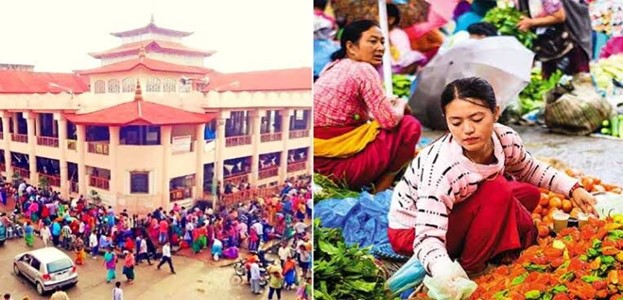
Asia's largest women's market(Ima Keithel, Imphal ):

Asia’s largest women’s market(Ima Keithel, Imphal ):

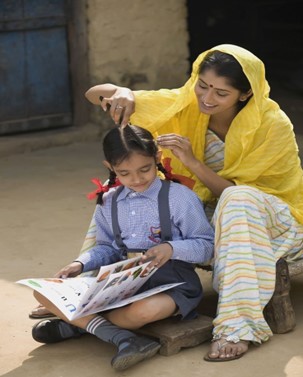
Let’s take a case study about the role of women in parenting from a region of northeastern India. In Northeast India, there is a forgotten kingdom in South East Asia, that is, Manipur, a sovereign kingdom from 33CE until its annexation into Indian territory in 1949. In the state of Manipur, manipuri women play a principal role in parenting as both a housewife and a breadwinner. In manipuri society, women are symbolized by tradition as Mother figures in society and placed in high esteem by the title, ‘Eema’ and Yumburembi’ (female head of the house). She takes care of the family as a mother, wife, daughter, sister and daughter-in-law in such a way that bringing up children, inculcating proper value in their minds, looking after the comforts of the husband, children, and relatives, and helping them to find fulfilment in the family life. As a wife and mother, the woman carries the infant feeds it for nine months, derives joy in the suffering involved and engages in childbearing and child-rearing. She transmits social heritage to the child. It is from the mother the child learns the law of the race, the manner, moral code, and ideals. Proper breastfeeding for the infant, proper immunization, health care during illness, feeding home-based supplementary diets, encouraging children and adolescents not to consumption of junk food or fast food, dietary diversification through consumption of protective food, nutritionally enriched foods among family members, and reproductive health care, etc. are all major responsibilities of women. These are not only the things that a manipuri woman does for parenting. Manipuri women also play a breadwinner role in the family welfare.


The women of Manipuri are involved in the daily requirements of the family by cooking, cleaning, collecting fuel, and fetching water but they also help to look after poultry cattle, raise crops, and often contribute to family income. Moreover, they do not completely depend on man for their living condition and financial support. Manipuri women are engaged in different areas such as doing small trades and business in the market, weaving, engaging themselves in handloom and handicrafts, pottery, mat making, construction work, cultivation, etc. There is a Manipuri Proverb, “A man who does not go to Loishang (Office), and a woman who does not go to Keithel (market) both are worthless”. The three Emma Keithels or Women’s Market of Manipur is a glaring example that women took a vital financial role in the management of income. Thus women play a significant role in parenting both a housewife and breadwinners in Manipur society.


References:


1)The impact of Gender roles on raising children

https://www.linkedin.com/pulse/impact-gender-roles-raising-children-aljanat-sanni


2)Women’s Role and Responsibility in the family: A Manipur perspective

https://globaljournals.org/GJHSS_Volume22/5-Womens-Role.pdf


3) Women’s role in parenting

https://www.ipl.org/essay/Women-In-Parenting-PJECV8Z5VVU


4)Women as a symbol of Motherhood, Love and Peace : The Manipur Narrative

https://www.renupublishers.com/images/article/IJPEDv7n2c.pdf


5)Impact of Gender Roles on Parenting in Indian society

https://www.psychologs.com/impact-of-gender-roles-on-parenting-in-indian-society/?amp=1#origin=https%3A%2F%2Fwww.google.com%2F&cap=swipe,education&webview=1&dialog=1&viewport=natural&visibilityState=prerender&prerenderSize=1&viewerUrl=https%3A%2F%2Fwww.google.com%2Famp%2Fs%2Fwww-psychologs-com.cdn.ampproject.org%2Fc%2Fs%2Fwww.psychologs.com%2Fimpact-of-gender-roles-on-parenting-in-indian-society%3Fusqp=mq331AQIUAKwASCAAgM%25253D&amp_kit=1


Borus Thongam

Intern, Asia in Global Affairs


The views, thoughts, and opinions expressed in the text belong solely to the author, in his personal capacity. It does not reflect the policies and perspectives of Asia in Global Affairs.


/ Women’s role in Parenting

Rising Sea Levels and the Threat Posed to South and Southeast Asia

Posted on : April 20, 2024
Author : Debendra Sanyal

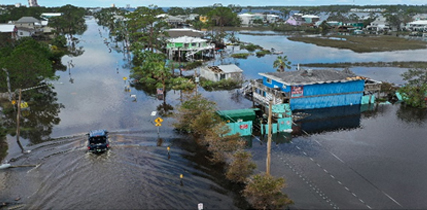
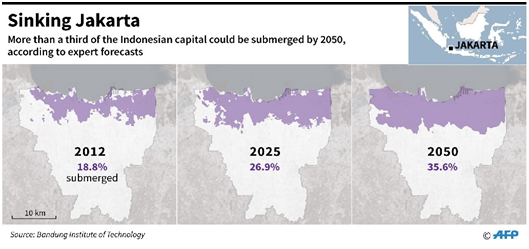
In 2019, Joko Widodo, the President of Indonesia, announced that the capital city of Indonesia would be shifted from Jakarta to a site in the East Kalimantan province. Three years later, following pandemic-induced delays, site inspections and legislative formalities, it was announced that the new capital will be named Nusantara. On 17 August 2024, on the anniversary of the country’s independence, Nusantara will officially replace Jakarta as the national capital of Indonesia. The move to shift the national capital was influenced by many factors, primary among them being that Jakarta was sinking at an alarming rate, with parts of the city having sunk by more than 4 m since the 1970s.(Doman et al., 2019)
This is a malaise which affects not just Jakarta, but also numerous cities, provinces, islands and countriesaround the world. The dangers posed by global warming and climate change are well-documented and need no further emphasis. In this paper, we will focus on a specific outcome emerging out of climate change, that is, rising sea levels, and how this poses a grave threat to countries, with the region of South and Southeast Asia serving as the case study for the paper.

Rising sea levels of Jakarta

Global warming and rising sea levels

Global temperatures have been on the upswing for the past few centuries, owing to increased accumulation of greenhouse gases in the atmosphere, which is a result of increased industrialisation, over-reliance on fossil fuels for energy needs, and man-made factors like deforestation reducing the green cover which act as heat absorbers. The world’s oceans comprise around 70% of the earth’s area, and the heat from the atmosphere gets transferred to the oceans. As heat storage increases, the oceanic temperatures increase, which lead to thermal expansion of sea water, and thereby, rise in the levels of sea water. According to a study published in January 2023 in the Advances in Atmospheric Sciences, ocean temperatures have reached their highest-ever level in 2022 and are expected to continue rising, with the five hottest years for oceans being in the past six years.(Bhandari, 2023)
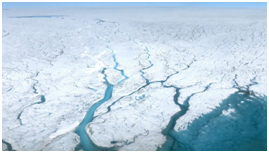
Additionally, rising atmospheric temperatures also lead to the melting of large glaciers and ice caps, which contribute massively towards increase in sea levels. The water content stored in glaciers is considered to be equivalent to 0.5 m of global mean sea level rise.(Mimura, 2013) Also, ice sheets, such as those found in Greenland and Antarctica, contain ice equivalent to about 7 m and 3–5 m sea-level rise, respectively. (Mimura, 2013)Cumulatively, all these factors have resulted in alarming levels of rise in sea water. According to United Nations estimates, by 2100, there would be a projected increase of 2.5 degrees Celsius in the global average temperatures, and an increase between the range of 18-59 cm in global mean sea level, as per the fourth Assessment Report of the Intergovernmental Panel on Climate Change. (Mimura, 2013)

Melting ice glaciers of Greenland

Impact on South and Southeast Asia

Rising sea levels pose grave risks to many cities and countries in South and Southeast Asia. These regions possess some of the longest coastlines in the world, and also, happen to be among the largest carbon emitters, thereby contributing massively to global warming, and consequently, towards the rise in sea levels. The region is home to bustling coastal megacities like Mumbai, Chennai, Singapore, Jakarta, Manila, etc., and low-lying countries and island-states like Bangladesh, Maldives, Indonesia, Philippines, etc. According to a 2021 ASEAN State of Climate Change report, with an estimated 77% of the population living in coastal areas, Southeast Asia is one of the world’s most vulnerable regions.(Bhandari, 2023)With continued rising sea levels, the threat and frequency of urban flooding in coastal cities and low-lying areas will greatly magnify. According to a report published in the Nature Climate Change journal, several Southeast Asian megacities would become hotspots of high sea-level rise. For example, in Manila, coastal flooding events within the next century will occur 18 times more often than before, solely because of climate change. But factoring in naturally-occurring fluctuations in sea level increases the frequency of coastal flooding up to 96 times more often than before, the study found.(Subramaniam, 2023) Then there are low-lying countries and island states like Maldives, whose highest points barely exceed 2 m above the sea level, and face the risk of being completely inundated. Some other megacities in the region which face the threat of being partially or completely inundated by the end of the century include Chennai, Bangkok, Jakarta, and Ho Chi Minh City. Moreover, climate change also increases the frequency of natural disasters like floods and typhoons, which would lead to further coastal erosion and depletion of natural barriers such as mangroves. The triple whammy of depleting barriers, rising sea levels and natural disasters would make coastal cities and infrastructures extremely vulnerable. A case in point is the Sunderbans of India and Bangladesh, which suffered immense damage during Cyclone Amphan in 2020, and has borne the brunt of a few more cyclones since then. Rising sea levels have also led to substantial depletion of the mangrove forests. The Sunderbans act as a natural defensive shield against extreme weather events like cyclones, and its depletion would lead to increased vulnerability for vast areas of Bangladesh and the Indian city of Kolkata.

Cyclone Mocha approaching Bangladesh

The existential threat aside, there are socio-economic dangers also associated with rising sea levels. For example, in Bangladesh, more than 100 million hectares of arable land is vulnerable to saline water intrusion, which would adversely impact drinking water supply, agriculture, and aquaculture.(Shrestha et al.,2013) The coastal regions serve important economic functions, such as tourism, trade, and fisheries, and many coastal cities serve as economic hubs of their countries, like Mumbai and Jakarta.This economic dimension amplifies the threat of rising sea levels. Governments would have to allocate significant chunks of their national budget towards combating the effects of global warmingand adaptation measures. “By 2100, the mean cost of climate change for Indonesia, the Philippines, Thailand, and Vietnam could be equivalent to losing 6.7% of combined GDP each year, more than twice the global average loss.”(Asian Development Bank, 2009) Also, with cities and island states facing the threat of inundation, governments would be left with no alternative but to relocate entire populations elsewhere, which would put a huge burden on the receiver regions/states. If such migration remains domestic or internal, “it will come with significant costs and it could lead to internal political instability if not handled effectively.” (Ahluwalia, 2023) However, in a scenario where cross-border migration takes place, regional security problems could potentially arise, as maritime boundaries could collapse and states would get flooded with an influx of refugees, putting a massive strain on the host country’s resources.

According to Verónica Nataniel MacamoDlhovo, Minister for Foreign Affairs and Cooperation of Mozambique, “The international community must consider how to reaffirm the self-determination principle and the continuation of statehood after loss of territory.”(United Nations, 2023)


Furthermore, there are legal and geopolitical implications associated with rising sea levels, such as the demarcation of maritime boundaries and Exclusive Economic Zones. The coastlines of countries serve as baselines, from which the maritime boundary of a state is determined. According to the 1982 United Nations Convention on the Law of the Sea, maritime jurisdictions of a state are of the following categories: territorial waters (12 nautical miles), contiguous zones (24 nautical miles), and Exclusive Economic Zones (200 nautical miles). However, rising sea levelslead to coastal erosion,which would affect the baseline, and thereby a state’s extent of its maritime jurisdiction. “The problem of moving coasts and baselines conflict with the fixity of geopolitical borders, and 1 metre of vertical change can make a disproportionately large difference in terms of sovereignty, territory and access to resources.”(Sammler, 2020) Any changes in the state’s maritime boundaries would affect its access to marine resources like fisheries and underwater minerals, which could have adverse economic impact on the state.“As coasts are pushed landward, affecting baselines and the maritime zones that are measured from the baselines, there will be increased competition over natural resources, forced migration and displacement of populations.” (UN, 2023)In Southeast Asia, states like Philippines, Vietnam, and Indonesia have territorial disputes with China over the issue of maritime jurisdiction claims in the South China Sea. With many of the Southeast Asian states suffering from coastal erosion, this would impact their maritime jurisdiction in the South China Sea, which would have massive implications for them in terms of access to marine resources.

On a broader level, rising sea levels also raise questions about some fundamental assumptions in geopolitical thinking, such as stable physical environment and natural boundaries. “We are likely headed into an era in which new questions of responsibility, liability and justice will be raised – questions that will blur traditional foreign/domestic policy distinctions resulting from new or dynamic geopolitical instabilities.” (Hommel & Murphy, 2013)

Conclusion

In conclusion, rising global temperatures have led to an increase in sea levels over the years, which now pose grave risks to the regions of South and Southeast Asia. For low-lying countries and island states like Bangladesh and Maldives, they face a threat to their very survival. Existential threats aside, there are social, economic, and political challenges as well, such as infrastructural damage, loss of arable land, impact on fisheries and tourism, mass displacement, economic costs of adaptation to climate change, and a lot more. There are serious implications for international law as well, pertaining to statehood, territorial jurisdictions and access to resources. All in all, rising sea levels pose a multidimensional threat,and the countries of South and Southeast Asia need to come together in order to stave off the impending crisis.

References


Debendra Sanyal

Intern, Asia in Global Affairs


The views, thoughts, and opinions expressed in the text belong solely to the author, in his personal capacity. It does not reflect the policies and perspectives of Asia in Global Affairs.


/ Rising Sea Levels and the Threat Posed to South and Southeast Asia

Environmental Challenges in Northeast Asia and their Impact

Posted on : March 27, 2024
Author : Borus Thongam

Environmental Challenges in Northeast Asia and their Impact

Northeast Asia, as generally defined, includes North and South Korea, Japan, Mongolia, the northeast part of China, Siberia, and the Far East part of Russia. This area covers more than 9.6 million km2 of land and comprises 318 million, or one-twentieth, of the world’s population. The end of the Cold War has softened bilateral hostilities and nurtured bilateral relations, including between China and South Korea, between China and Russia, and between Russia and its Northeast Asian neighbours.

Northeast Asia has plentiful natural resources, including minerals, energy, water, farmlands, and forests. Even more important is this area’s great mutual complementarities in terms of natural resources, labour force, and industrial structure by region. For example, Japan and South Korea, with the most dense populations and developed manufacturing industries, as well as abundant capital, technology, and information sectors, have relatively limited land area and scant natural resources. The vast and resource-rich Siberia and Far East of Russia have a sparse population and are far away from their European core. Northeastern China, with a relatively appropriate size of land area, population density and physical environment, faces a lack of resources, especially capital and technology. The uneven distribution of natural resources and industrial sectors implies a great potential for cross-border cooperation among these countries.

Northeast Asia also faces several serious environmental challenges, whose causes and effects are local, regional, and global. Three of the main challenges include dust and sand storms resulting from desertification, air pollution, and marine pollution in adjoining sea areas. Dust and sand storms (DSS, also referred to as yellow dust or Asian dust) are the major environmental concerns in the region. The main cause of DSS is the rapid expansion of desertification in China and Mongolia, due to the over-degradation of land from overgrazing by livestock, deforestation, the gathering of fuelwood, and mismanagement of water resources. In China alone, areas prone to desertification account for 34.6 per cent of the total territory. DSS have significant impacts on human health (they are linked to respiratory and skin diseases), the environment, and the economy; such storms may damage buildings and land, as well as paralyze infrastructure such as transportation hubs (in particular airports), communication networks, and power and water supply systems. Unlike dust and sand storms, fine dust, an air pollutant that was included as a Group 1 Carcinogen in 2013 by the World Health Organization (WHO), primarily originates from the combustion of fossil fuels from coal-fired thermal power plants and transportation. In particular, ultrafine dust known as PM2.5 (particulate matter with a diameter of 2.5 micrometres or less) can easily penetrate human skin and the respiratory system, thus causing respiratory, cardiovascular, and cerebrovascular diseases. According to a study conducted by the research organization Berkeley Earth in 2015, it is estimated that 17 per cent of all deaths in China are attributable to air pollution.

Northeast Asian seas comprise the Yellow Sea (including the Bohai Sea), the East China Sea, and the East Sea (also referred to as the Sea of Japan). All seas are witnessing increasing levels of marine degradation. The primary challenges faced by the seas in the region include harmful algal blooms, maritime environmental accidents such as oil spills, increasing threats to biodiversity and marine litter. It causes massive deaths of marine animals due to oxygen depletion and toxins produced. This phenomenon also represents a threat to human health through bioaccumulation of toxins in the food chain. Marine biodiversity in the region is also decreasing over time. It is estimated that 60 of 194 species are at risk of extinction because of the Invasion of alien species, overfishing, warming sea temperatures, aquaculture etc. Indeed, the fast growth of fishery and aquaculture in the region is profoundly changing the ecosystem and food chain patterns. Finally, marine litter is a significant problem in Northeast Asian seas. It is reported that between 1.32 and 3.53 million tons of plastic waste reportedly entered the ocean from China’s coastal area in 2010 – the highest of any country.

Dongbei (formerly known as Manchuria), the northeastern Chinese part along with other Northeast Asia regions such as eastern Inner Mongolia, the Russian Far East south of the Amur River, the Korean peninsula and the Japanese islands are varied in geology but connected by coastlines and much early contact was probably by boat. The Dongbei and its surroundings are more continental. Chonji, the Heavenly Lake, occupies a large crater in mountains called Changbaishan (Ever White Mountains) in Chinese and Paektusan (Whitehead Mountain) in Korean. Lower mountains separate northeastern China from the Russian Far East and eastern Inner Mongolia from the Do,ngbei. None of the mountains made impenetrable barriers. The Northeastern China, or Dongbei in Chinese, has always been unique. It is not only a region in a geographical sense, but also in a cultural sense. It consists of three provinces and the northeastern part of Inner Mongolia, and the people who live there have a strong self-identity and think of the region as a collective whole. Mao Zedong, the founding father of modern China, called the region the “eldest son” of the People’s Republic of China. In a family, the eldest son Shoulders more responsibility in securing the family’s future. And that was exactly the role of Dongbei in the development of the People’s Republic during the first three decades of its establishment.

The lives of people there in Northeastern China or Dongbei are impacted by many factors of various prevailing situations, environmental conditions, and impacts from other neighbouring countries etc. Now we can discuss about the environmental factors that assist the living conditions of people in Northeastern China, also called Manchuria in history. The Northeastern is an important breadbasket region of China, as the Northeast China Plain has the largest stretch of arable flatland in the country, with an abundance of fertile black soil. The region is, on the whole, more heavily urbanized than most parts of China, largely because it was the first part of the country to develop heavy industry owing to its abundant coal reserves. The northeastern region has long served as China’s production base for food, important raw materials, equipment manufacturing and heavy chemical industries. The rural population is heavily concentrated in the warmer southern part of the Northeast, where very warm to hot summer weather permits crops such as maize and millet to be grown with high yields. Soybeans and flax are also very important, as are wheat and barley. The region possesses large flocks of sheep, and pigs are abundant in the more densely settled southern part. The northern half of Heilongjiang is so cold and poorly drained that agriculture is almost impossible; however, the Amur River provides very rich fisheries, and sheep are even more abundant than in southern Heilongjiang.

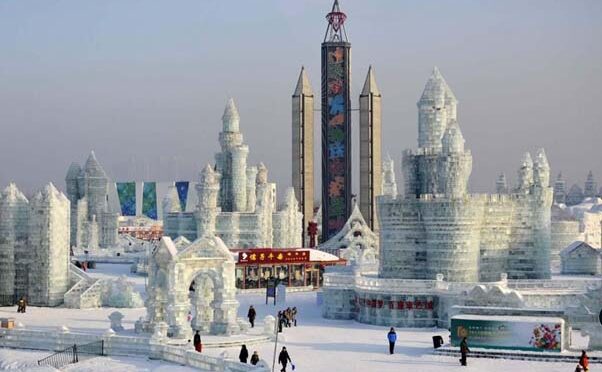
Three provinces of Northeast China namely Heilongjiang, Liaoning and Jilin province attract tourists from all over the world. Harbin, the ice city of China’s northeast Heilongjiang province, is no doubt the hottest spot in winter, attracting visitors not just from other parts of China but also overseas. The Harbin phenomenon has even sparked a ripple effect. The city’s popularity has brought attention to the other two northeastern provinces, Jilin and Liaoning; both are also experiencing a tourism boom. The ice and snow in the Heilongjiang region have indeed turned into silver and gold through tourism motives. Today, this “Rust Belt” region of China is undergoing revitalization and has become popular with tourists. A reliable source reported that since the 2023 Ice and Snow Festival, the number of tourists and tourism revenue in Heilongjiang have increased by 332.5 per cent and 898.3 per cent, respectively. Over the New Year’s Day holiday this year, Jilin province received more than 6 million domestic tourists and collected tourism revenues of 5.3 billion yuan (US$737 million), a year-on-year increase of 406.69 per cent and 659.06 per cent respectively. Over the same holiday in Liaoning, the province received over 7 million tourists and nearly 5.2 billion yuan in revenues, a rise of 157.6 per cent and 203.8 per cent respectively. Thus the environmental conditions provide a means for the livelihoods of the people living there to a high standard.

However, those assisting environmental conditions will not always be a factor in supporting its living conditions. Due to its harsh winters, people in Northeastern China experience long, cold winters with heavy snowfall and freezing temperatures. This poses a difficulty in transportation, agriculture and overall daily life. Residents are required of heating systems, winter clothing and altered travel plans in order to adapt to its environmental conditions. Industrial activities and coal burning contribute to severe air pollution in the regions, resulting in respiratory health issues and related diseases. Therefore residents are prone to respiratory illness and reduced outdoor activities during periods of heavy pollution. It is estimated that China’s air pollutants significantly contribute to the air pollution of both South Korea and Japan. According to a 2010 report of the Long-range Transboundary Air Pollutants project, China accounts for approximately 70 per cent of atmospheric nitrogen oxides (NOx), especially during the winter season. Pollution from industrial activities and agricultural runoff can contaminate water sources, impacting drinking water quality and access to clean water for households and agriculture. Water scarcity and pollution are also significant issues in some parts of Northeastern China, Dongbei. Multiple regions in Northeastern China have raised the level of emergency response to flooding and issued meteorological warnings as some areas are facing challenges caused by intensified floods that have endangered people’s lives, homes, as well as farmland. Known as the country’s “grain barn,” Northeastern China’s Heilongjiang Province has released a disaster relief plan for flood-hit agricultural production, recently. Northeast Asia is prone to natural disasters such as earthquakes and typhoons, which can cause widespread damage to infrastructure, homes, and livelihoods. Dongbei, although less prone to typhoons, can still experience their effects indirectly, such as heavy rainfall and flooding. In Heilongjiang Province, 12 rivers have exceeded the warning level, and 26 reservoirs were operating over the limit by 0.03 to 1.95 meters last year. Heilongjiang, which accounted for 11.3 per cent of the country’s total grain output in 2022, vowed to ensure agricultural production targets through a disaster relief plan, in which it called for multiple measures, including speeding up field drainage to minimize the time of waterlogging, strengthening control of pests and diseases and farmland management and scientific prevention. Along with Heilongjiang, Northeast China’s Jilin Province has also been heavily hit by flooding which claimed the lives of 14 people last year.

Overall, the environmental conditions in Northeast Asia ( especially Northeastern China, Dongbei) have significant implications for the daily lives, health, and economic well-being of the people living in the region. Adaptation strategies and efforts to mitigate environmental challenges are essential for improving quality of life and promoting sustainable development.

References :

1.Northeast Asia in regional perspective

https://www.tandfonline.com/doi/full/10.1080/10225706.2021.1952778

2.Environmental Challenges and Corporation in Northeast Asia

https://isdp.se/publication/environmental-challenges-cooperation-northeast-asia/


3.China Northeast is finally turning ice and snow into silver and gold-some help

https://www.scmp.com/comment/opinion/article/3250574/chinas-northeast-finally-turning-ice-and-snow-silver-and-gold-some-help

4.Environmental Issues and Regimes in Northeast Asia

Environmental Issues and Regimes in Northeast Asia

5.Northeast Plain, China ( also known as Dongbei Pingyuan, Manchurian Plain)

https://www.britannica.com/place/Northeast-Plain

Borus Thongam

Intern, Asia in Global Affairs


The views, thoughts, and opinions expressed in the text belong solely to the author, in his personal capacity. It does not reflect the policies and perspectives of Asia in Global Affairs.


/ Environmental Challenges in Northeast Asia and their Impact

Key Themes in the Biden-Xi Meeting ahead of APEC Summit

Posted on : December 11, 2023
Author : AGA Admin

That great powers fear each other is a central aspect of life in international politics. The United States for example, invested enormous resources to deterring Soviet Union from starting a war in Europe during the Cold War, not because of some deep-seated commitment to promoting peace around the world, but because American regime feared that a Soviet victory would lead to a dangerous shift in the balance of power (Mearsheimer 2001). US presidents engaged in scores of meetings with their counterparts, albeit irregularly. President Ronald Reagan called the Soviet Union an “evil empire” (Warner 2023), but he also understood the importance of dialogue and cooperation with the main adversary that helped end the Cold war.

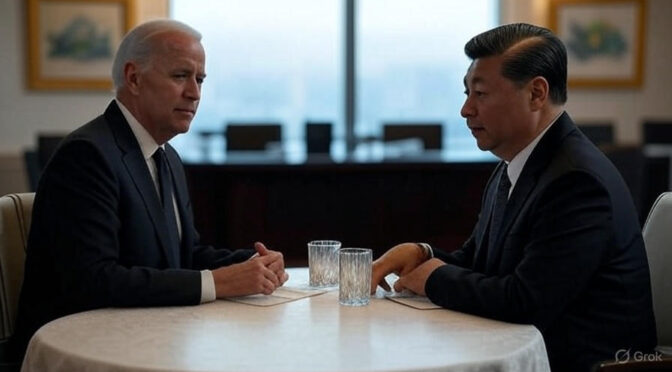
Now the situation has changed, China is the new superpower that threatens U.S. global domination. Hence, the meeting between Chinese President Xi Jinping and American President Joe Biden in San Francisco during the Asia-Pacific Economic Cooperation summit (APEC) on November 15, 2023 was closely observed by the world. This marked Xi’s first visit to the U.S. in six years and the second meeting between the two leaders as the last one between them ahead of the G20 summit in Bali in November 2022. Three key points were identified by experts from the meeting between China and the US.


First is the economic front.  Xi emphasized China’s support for more open trade policies and said that “Planet Earth is big enough” for both superpowers and that their countries were very different but should be “fully capable of rising above differences” (CGTN 2023). The American president in response did not appear conciliatory. Yukon Haung pointed to the “anti-China sentiments of both Republicans and Democrats” (Haung 2023).  Biden underscored the United States’ endorsement of a free and open Indo-Pacific that is viewed by Beijing as part of a containment strategy. President Xi made it clear that he wanted to stabilise the relationship with the United States, the official said, adding that Mr. Biden was very direct with Mr. Xi and told him that China did not provide a level playing field to the U.S. companies (Hindu, 2023). China has agreed to clamp down on the production of fentanyl precursors, a critical step towards addressing the rampant opioid crisis in the US


Second focus of the discussion was the military front. The two leaders engaged in a significant conversation about Taiwan, with President Xi characterizing it as the most precarious aspect of U.S.-China relations. China has consistently found the United States’ support of Taiwan problematic, as China regards the self-governing island nation as an integral part of its territory. Mr. Biden said the U.S. “believes in the status quo, Mr. Xi said peace is good, but at some point, they need to move towards resolutions of the issue” (The Hindu 2023). The two leaders also discussed the Ukraine conflict. The US spearheaded Western initiatives to support and arm Ukraine, whereas China extended diplomatic support to Russia, even assisting its economy when the West aimed to impose economic sanctions on Moscow. A noteworthy milestone has been the reinstatement of the Beijing–Washington hotline—a direct communication system facilitating dialogue between the leaders of the United States and China. Originating in November 2007, the establishment of this hotline was announced as a measure to create a military communication channel. Its purpose is to prevent misunderstandings between the two nations’ militaries, particularly during critical moments in the Pacific region (Gramer 2023).


Third focus of the meeting was on the issue of Artificial Intelligence (AI).  China is among the first countries to introduce binding regulations on artificial intelligence (AI). These regulations specifically address recommendation algorithms for content dissemination, synthetically generated images and video, and generative AI systems such as OpenAI’s ChatGPT. However, the West has disregarded them as inconsequential or viewed solely within the context of geopolitical competition to establish AI rules. This meeting marked the acknowledgment.  This meeting marked the much needed step of mutual awareness and exchange of ideas on best practices.  According to White Office press release, “The leaders affirmed the need to address the risks of advanced AI systems and improve AI safety through U.S.-China government talks” (White House 2023). Matt Sheehan points out that “For the time being, the two countries should focus on understanding the nature of those constraints in the other country and exchanging best practices on technical and policy interventions for the safe deployment of AI” (Huang 2023). Overall the meeting discussed a range of  issues and Chinese media described the meetings in very general terms, saying Xi and Biden will talk about “strategic, global, and directional issues concerning China-U.S. relations as well as major matters related to world peace,” US officials said that topics will include the Israel war against Palestinians, Taiwan, and the war in Ukraine. (Koetse 2023).


Most talked about moment of the meeting was shown in a video also surfaced online showing the two leaders talking about their respective cars. Biden compliments Xi on his Hongqi N701 Limo, “It’s a beautiful vehicle!” Xi Jinping then replied through an interpreter “Show the president”. Biden then looked inside the Chinese car, and then gestured to his own ride, a Cadillac built like a rolling bunker. “You know what they call that car?” President Biden asked his Chinese counterpart, adding, “They call it ‘The Beast.'” This interaction generated different responses from observers. After the end of the meeting, Biden called Xi a dictator reminding us of President Ronald Reagan characterizing the Soviet Union as “evil empire”.

To some observers the meeting showed the limits of success in US-China ties as the positive outcome did not go beyond focus on XI’s car (Hashmi 2023). For others the meeting “added an extra layer of significance, making it a noteworthy and promotion-worthy moment” (Koetse 2023). There is no doubt that conflict resolution among great powers is a long term process and only possible when the meetings are both content-centred to relationship-centred. Being great powers with greater consequences for peace and stability in the world, they need to avoid ignoring or talking away each other’s perceptions. Instead, they must try to understand where the conflict is rooted in the relationship. This meeting could be counted as one of such efforts.


References


Rashid Abbasi

Intern, Asia in Global Affairs

The originality of the content and the opinions expressed within the content are solely the author’s and do not reflect the opinions and beliefs of the website.


/ Key Themes in the Biden-Xi Meeting ahead of APEC Summit

A TUSSLE OVER THE MOTHERLAND WITH A DISMAYED MOTHER IN GRIEF

Posted on : November 28, 2023
Author : Atrayee Pal

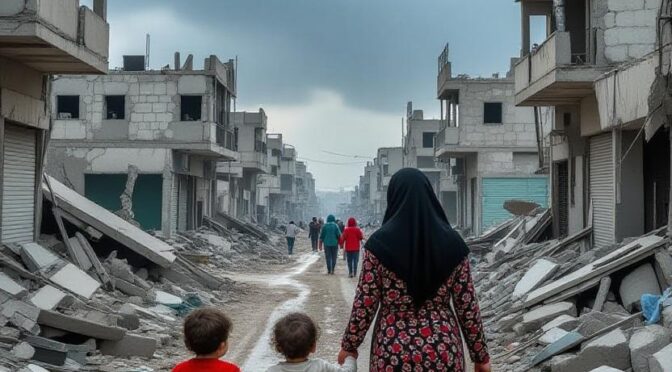
“On 18th November, the Israel army besieged and hunted the patients of the biggest hospital in Gaza al-Shifa. As per Al Jazeera, Israeli forces raided the medical compound, threatening critically conditioned patients to evacuate or be killed at their hands mercilessly. Along with patients were 39 premature babies out of which four died and the rest, seriously ill due to the lack of oxygen and electricity. “[i]Taken out of their incubators, their lives were mercilessly taken before even attaining any national identity. According to the Beirut-based representative of the Palestinian group Hamas, Osama Hamdan, “What unfolded at al-Shifa is another episode in a series of Israeli crimes’. [ii]Hundreds and thousands of amputated patients were forced to be executed without any transportation means in al-Rashid Street – which is a war crime and a crime against humanitarian rights. Currently, women and girls in the Gaza Strip are seeking refuge in overcrowded shelters that lack essential provisions. Due to the lack of basic amenities, their bodies are getting fragile and infected with diseases as a result of which affecting a host of pregnancy problems. On top of that, according to UN reports, even prior to the crisis, the situation in Gaza was different, with 97 percent of men and 98 percent of women fearing for their safety.[iii] This was followed by rapid levels of depression and hopelessness which culminated at its peak following the rampant slaughter of children and premature babies in the incubator. Since the onset of the current crisis, UN Women have been playing an important role in the coordination of the UN body’s humanitarian response on gender equality. The Women’s Peace Humanitarian Fund, which is in partnership with the United Nations, Member States and civil society to support women are also working toward the alleviation of suffering and giving support to the local Palestinians of the Gaza Strip and West Bank. [iv]However, according to several UN agencies like UNICEF, WHO, UNRWA, UNFPA, even though  men are the prime battle combatants in this fissure between two nationalities, women and children are targeted the most, taking 67%of the total brunt of the war. Dr. Dabney Evans, an associate professor in the Rollins School of Public Health at Emory University claims that the ‘blockades might be preventing people from accessing care and this may overwhelm the hospital staff to take care of the severely injured lot and miss certain areas like prior or post pregnancy problems or traumatic stress that might cause harms to both the mother and child. [v]

The UN, however, through its social media posts, is much more inclined to the alleviation of the pregnant women and children which, according to successive reports, have appeared as the targeted population. ‘In Palestine Refugees: Mythology, Identity, and the Search for Peace(2003),Robert Bowker emphasises the influence of mythologies and collective memory on the identity and consciousness of Palestine refugees which anchor the present in the past.’ [vi]According to Zionist discourse, that viewed the Zionist as the virgin land, that needs to be fertilised however after the Israel conquest of 1947, the whole meaning got reversed as the Palestine motherland got raped and hence impure and contaminated. As a result, Palestine, which was both the virgin and mother, came to be synonymous with the bearing of sons which would fecundate the nation as well as protect the Palestinian blood through the paternal side. [vii]Hence, according to Massad, ‘The disqualification of the land as mother in her national reproductive role, in the Charter, does not deny the land, as mother, can produce children, but rather that, since the rape, it can no longer be relied upon to reproduce legitimate Palestinian children. ‘[viii]Their role thus becomes secondary and supportive in the narrative of nationalism’.[ix] Their roles thus become mere extensions of their sons and brothers and their ‘act of supporting the males in the house’ thus becomes an entrenched act of masculine nationality in tandem with historical shifts. According to the UN Beirut reports of 2021, starting from Hebron to women living in occupied East Jerusalem were recorded as the most vulnerable section not because of their fear and psychological conditions but rather, eroding women’s productive role and participation in the community by confining them to the home. [x] And with the 2023 reports, completely eliminating this very entrenched quality of the Palestines by committing mass genocide of the children and pregnant women by bombing hospitals.  Nadia – a 13 year old Arab Israeli woman born and raised in Jerusalem, remarks that “Social media is definitely doing more harm than good as each individual’s algorithm is feeding them more and more content to support what they believe in[xi] and hence are turning the viewers as zealous social – fanatics like the Hamas as in his book ‘How to Cure Fanatics, Amos Oz remarks how “very often the fanatic can only count up to one, two is too big a figure for him or her.”[xii]

The  Hamas with their extremist anti-Semitist ideals has thus solidified their fanatical image compared to Fatah’s negotiating image. The media has thus changed the wars’ three dimensional  perspective to a very warped and twisted two-dimensional space. According to Noa, a 27-year old Jewish woman from Israel  “That the most absurd phenomenon is the virtual war taking place in parallel with the actual war, where the winner appears to be the one with most child casualties.”[xiii] The Hamas, attack, on the other hand, on October 7th  claimed more than 1400 lives, abducted more than 200 women and children and frequent rapes have been reported out of which one German-Israeli woman was paraded naked and unconscious through the streets by a group of men in the back of a pickup truck.[xiv] This again goes back to how women and children are getting raped or abducted or bombed to death on both sides as a tussle over the conquer of the dignity of the nation at its roots. The UN Secretary General, Antonio Gueterres has said that he is ‘shocked ‘by the misinterpretations that are taking  place in this ‘virtual war ’on the social media platforms. [xv]Since he remarked that the political unrest that has spread wildfire among the Palestines didn’t happen in “vacuum” rather was triggered equally by the Israeli push. He hence equally condemned the acts of Hamas as well as the gruesome response of the Israeli forces on the fellow Palestinians. Since the Oslo Accords, the grievances on both sides have been taken  a front seat  in the age of political warfare. Hence, within this tussle of ‘oppressor’ and ‘oppressed ‘the women are becoming the prime victims of a male antagonism of ‘saving the motherland ‘by cleaning the dirt while the mother in Gaza is grieving over her lost child and none is there to justify her

[i]Panic as Gaza’s al-Shifa evacuate, Israel army denies ordering it to do so ’18 Nov, 2023 https://www.aljazeera.com/news/2023/11/18/israel-gives-gazas-al-shifa-hospital-one-hour-to-evacuate

[ii] Ibid, 18 Nov, 23

[iii] Press release:’ Women report reveals devastating impact of the crisis in Gaza on women and girls’, 20 Oct, 2023 https://www.unwomen.org/en/news-stories/press-release/2023/10/press-release-un-women-report-reveals-devastating-impact-of-the-crisis-in-gaza-on-women-and-girls#:~:text=Currently%2C%20women%20and%20girls%20are,women%20fearing%20for%20their%20safety

[iv] Ibid, 20 Oct, 2023

[v] Mary Kekatos, ‘Why Women, children are disproportionately impacted by the conflict in Gaza:Experts’. Nov 7,2023 https://abcnews.go.com/International/women-children-disproportionately-impacted-conflict-gaza-experts/story?id=104655493

[vi] Robert Bowker, ‘Palestinian Refugees :Mythology, Identity and Search for Peace ‘2011,p.233 cited in Mohammed S. Dajani Daoudi, ‘Palestinian Refugees ‘, in the book, ‘Israel – Palestine Conflict :Parallel Discourses,edited by Elizabeth G. Matthews, Routledge, London, 2011,p.38

[vii] Joseph Massad, ‘Conceiving the Masculine :Gender and Palestinian Nationalism’, Souce: Middle East Journal, Summer 1995,Vol.49,No.3,pp.472,url :https://www.jstor.org/stable/4328835,p.471

[viii] Massad, p.472

[ix] Ibid, 472

[x] ‘Social and economic situation of Palestinian Women and Girls’, Jul 2020-22,Pub. ESCWA Reports, UN Beirut, p. 13

[xi] Sarah Little, ‘Palestinian and Israeli Women Speak :Regaining Humanity at a Time of Violence ‘, Pub. Enheduanna, Middle East Program, Oct 30,2023 https://www.wilsoncenter.org/blog-post/palestinian-and-israeli-women-speak-regaining-humanity-time-violence

[xii] Amos Oz, How to Cure a Fanatic, Princeton University Press, Princeton, 2006,p.51 cited in Menachem Klein, ‘Hamas in Power’. Souce:Middle East Journal, Summer 2007,Vol 61,No.3,Pub.Middle East Journal, p. 1,url.https://www.jstor.org/stable/4330419

[xiii] Little, 30 Oct, 2023

[xiv] Ibid

[xv] BBC News, https://youtu.be/vMURQJGUBqY?si=IJ98rxRDuwBrQW0Z

Atrayee Pal

Intern, Asia in Global Affairs


The originality of the content and the opinions expressed within the content are solely the author’s and do not reflect the opinions and beliefs of the website.


/ A TUSSLE OVER THE MOTHERLAND WITH A DISMAYED MOTHER IN GRIEF

Delhi’s Dhaka Dilemma

Posted on : November 23, 2023
Author : Dwaipayan Sinha

Abstract: Tensions are on the rise in the US-Bangladesh relations as the Biden government has adopted a strong stance against Hasina’s human rights records. This puts the India-Bangladesh ties under stress as Hasina has been one of the strongest Indian allies. With the domestic opposition parties in Bangladesh, gaining ground, India is concerned that its interests in Bangladesh and in the neighbourhood would be compromised if the Biden administration continues with the anti-Hasina overtures. India, which has seen its own ties with the US rapidly change in recent years, faces the dilemma of managing hostile ties between its eastern neighbour and its Quad partner.


Keywords: Modi, Biden, Hasina, BNP, Awami League, China, Russia, Xi Jinping


On March 26, 2023, Bangladesh’s Prime Minister Sheikh Hasina Wajed was greeted by the United States president Joe Biden to commemorate 52 years of independence of Bangladesh. “As Bangladesh approaches its next election, I am reminded of the deep value both of our nations’ people place on democracy, equality, respect for human rights, and free and fair elections,” Biden remarked.[i] This is not the first time that the US government has censured the Hasina administration on the issue of violation of human rights. Former and serving officials of Bangladesh’s elite paramilitary force RAB (Rapid Action Battalion) were earlier sanctioned by the US Treasury Department. It has been alleged that the RAB’s intimidation tactics and abuse of power have been behind the political dominance of Hasina’s Awami League. Taking cognizance of this, the Biden administration has even threatened to impose visa sanctions against individuals who are found to be responsible for manipulating elections. This will eventually hurt the booming garment industry of Bangladesh.


The US human rights reports of 2021 and 2022 have shed light on the gross violation of human rights in Bangladesh.[ii] The  Digital Security Act has been used to stamp out any dissenting voice. Biden did not invite Bangladesh to the Summit of Democracy even though other countries with similar human rights concerns like Pakistan received invitation. Hasina’s visit to the World Bank in Washington DC in May was ignored by the Biden administration. This shows that there is a shift in US’ policy on Bangladesh.


Hasina, the longest serving female head of any state, on her part, has alleged that the US government intends to usher in regime change in Bangladesh. “America can change power in any country it wants. They want to bring such a government here which will not have any democratic existence,” she said in parliament.[iii] She has also alleged that Muhammad Yunus, who is being investigated by the anti-graft agency of Bangladesh for corruption, is being favoured by the US government.


Opposition Feeling Empowered


The US’ interference in Bangladesh’s domestic matters has bolstered Hasina’s political opponents, who have been on the margins for the last few years. Khaleda Zia-led Bangladesh Nationalist Party (BNP) organised many rallies against the Hasina government, criticising the incumbent government’s handling of economic issues and the authoritarian functioning of the administration. Islamist groups like Jamaat-e-Islami (JeI) have also grown popular, particularly among the youth as the young voters feel the economic pinch. Transnational Islamist groups like Al Qaeda and Islamic State (IS) see Bangladesh as a fertile ground for recruitment. The Pakistan-based Al Khidmat Foundation has been accused by the Bangladeshi government of radicalising Rohingya refugees in the Chittagong area.


The sudden upsurge in the popularity of JeI and BNP has distressed both the Indian and the Bangladeshi governments. Bangladesh’s national elections are to be held in January 2024 and it is quite possible that the BNP-JeI alliance comes to power. This would be counterproductive to India’s ambitions in the Indian Ocean Region (IOR) as the previous Zia government was known to patronise fundamentalist groups like Lashkar-e-Toiba (LeT), Jamaat-ul- Mujahideen Bangladesh (JMB) and Harkat-ul-Jihad-al Islami Bangladesh (HuJI–B).[iv]


Burgeoning India-Bangladesh Ties


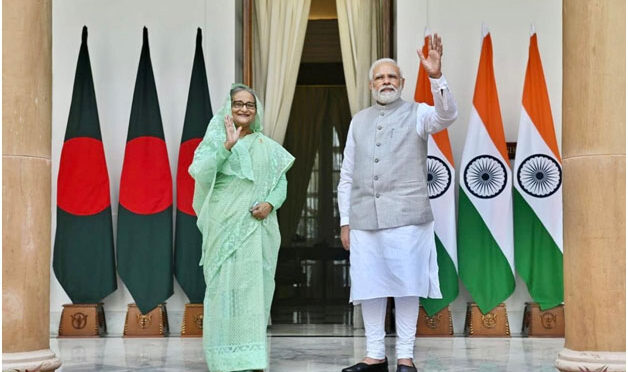
India-Bangladesh ties have been strengthened in the Modi regime under India’s “Neighbourhood First” policy.[v] Modi and Hasina have agreed to improve connectivity, ensure security, and border management, expand trade in power and energy sector and engage in river water distribution discussions which will deepen friendship between the two nations. Bangladesh’s exports to India have doubled over the past year and is currently valued at $2 billion. India’s exports to Bangladesh are currently valued at $16 billion and have seen an increase of 70 percent. The Akhaura-Agartala rail and the Shahojadpur-Kulaura rail line are to be launched soon strengthening the connectivity between the two neighbours.


A Taka-Rupee dual currency card that allows Bangladeshi nationals who visit India to spend in rupees and avoid the interim US dollar convertibility is to be launched soon in Dhaka. The two neighbours are engaged in discussions on importing electricity from Nepal and Bhutan through India. The Bangladesh government has been unable to meet the rising demand for electricity- which has been a major concern of the garment industry that generates foreign revenue. 1600 MW of electricity is currently imported by Bangladesh from India.[vi] It is expected that other South Asian countries like Sri Lanka will also enter into such agreements where energy trade will be conducted via India.


Even though the sharing of Teesta river water has been a major bone of contention between the two Bengals, satisfactory solutions have emerged regarding water sharing arrangements of other rivers. A memorandum of understanding has been signed between India and Bangladesh regarding Feni river water sharing. The two governments have decided to set up a framework for an interim agreement on how to share water of Manu, Mahuri, Khowai, Gomti, Dharla and Dudhkumar.


India played a crucial role in the Bangladeshi independence movement of 1971 and was generally viewed positively. Internal political turmoil in Bangladesh and the harbouring of several anti-India groups by consecutive Bangladeshi regimes spawned distrust between the neighbours.[vii] Insurgent groups like National Liberation Front of Tripura (NLFT), United Liberation Front of Assam (ULFA) and National Democratic Front of Bodoland (NDFB) were given shelter by the previous Zia government. After assuming power, Shaikh Hasina adopted a pro-India stance and weeded out anti-India groups from Bangladeshi soil.


Bangladesh’s Balancing Act


Sheikh Hasina’s government is the most trusted partner of India in South Asia- a region where India considers itself to be the leading power. However, the Chinese government has made major inroads in the South Asian countries with many traditional friends of India looking for alternative partners as they are disgruntled with the “big brother” attitude of the Indian governments.


Biden government’s anti-Hasina stance have set alarm bells ringing in New Delhi as the Indian officials fear the Delhi-Dhaka relationship will be endangered by such moves. The US government’s own record in ensuring human rights in allied countries is questionable as it has historically supported autocratic regimes though it professes to be concerned about human rights.


Bangladesh under Hasina has made rapid economic progress with the Asian Development Bank (ADB) ranking Bangladesh as the fastest growing economy in the Asia-Pacific region ahead of India, Vietnam, and China in 2019. It has targeted to become a developed nation by 2041- which will mark 70 years of Liberation War. Bangladesh’s geographical location ensures that it becomes a crucial ally for all nations vying for influence in the Indian Ocean Region.[viii] Both the United States and China, who are engaged in the “new Cold War”, are seeking to increase their footprint in Bangladesh. The India-China relationship is also under strain due to prevailing border tensions between the two. This has forced Bangladesh to walk on the tightrope in maintaining cordial relations with all the major powers under the “friendship with all and malice for none” policy.[ix] Dhaka knows that maintaining strong ties with India, China and United States is essential for the infrastructural and economic development of the nation.


Chinese and Russian Interests in Bangladesh


The friction between the governments of Hasina and Biden has seen Bangladesh grow closer to China and Russia. The Chinese government was quick to back Bangladesh against “external interference.” “China supports Bangladesh in safeguarding national sovereignty, independence and territorial integrity, and in opposing external interference, so that the country can maintain domestic unity and stability, and achieve development and revitalisation,” remarked Chinese premier Xi Jinping. He added that Beijing was “willing to continue to work with Bangladesh in firmly supporting each other in issues involving their respective core interests.”[x]


Bangladesh formally joined Xi’s dream project Belt and Road Initiative (BRI) during his visit to Bangladesh in 2016. China has since invested $38.05 billion in Bangladesh. China has emerged as the biggest trading partner, foreign direct investor, trade importer and defence hardware supplier to Bangladesh.[xi] Bangladesh has decided to use the Chinese yuan as an alternative currency to the US dollar in international transactions. Bangladesh has informed Russia that it will use Chinese yuan to pay $12.65 billion for the civil nuclear plant that is being set up by Rosatom (the Russian atomic company) in Rooppur. China today is the solitary nation with which Bangladesh has a defence agreement. China is engaged in building bridges, ports, airports, roads, railways and power plants in Bangladesh. Hasina was forced to abandon the Chinese project of building Sonadia deep-sea port, keeping in mind Indian sensitivities. China has sought to increase its goodwill in Bangladesh by providing scholarships to Bangladeshi students to study in China. Moreover, it has encouraged Bangladeshis to learn Chinese, which has seen the establishment of a Bangladesh army- run Chinese language centre in Bangladesh University. Additionally, Xi has cultivated ties with BNP as well, ensuring that Chinese interests would be protected even if Hasina is out of power.


Sergei Lavrov, the Russian foreign minister, visited Dhaka in the first week of September 2023 just before attending the G20 summit in Delhi. This marked the first time that a Russian foreign minister paid a visit to Bangladesh since 1971. There have been numerous attempts to solidify the Russo-Bangladesh relationship through trade, defence and energy ties. The Bangladeshi administration expects the Russians to deepen economic ties and share critical military technology which would enhance Bangladesh’s military capabilities. Additionally, Russia’s international influence is expected to bring in more foreign investments into Bangladesh. Lavrov criticised US’ views on the Hasina government. “Despite pressure exerted upon Bangladesh by the United States and its allies, our Bangladesh friends are guided exclusively by their national interest in their foreign policy,” Lavrov said. “We can clearly see the United States and its allies are truly trying to promote their interests in the region by using the so-called Indo-Pacific strategy: their goal is clearly both to deter China and to isolate Russia in the region,” he added.[xii] This has come as a major boost to the Hasina administration.


Challenges Ahead


It is believed that the purpose behind US’ political hounding of Hasina is that it considers Hasina to be closer strategic ally of China. It wants Bangladesh to sign the General Security of Military Agreement (GSOMIA) and the Acquisition Cross-Servicing Agreement (ACSA) which it considers “essential to enable a close relationship.”[xiii] The US is hedging its bets on the return of Zia to power as Hasina is reluctant to sign the two agreements. It hopes that egging the opposition parties will oust Hasina from power and enable the US to curtail Chinese influence in Bangladesh. Awami League ally Jatiya Samajtantrik Dal president Hasanul Haque Inu has alleged that the US administration seeks to take control of Saint Martin’s Island.[xiv]


The US’ objectives in Bangladesh runs contrary to those of India. India does not want Hasina to lose power as that might destabilize the poverty-stricken neighbourhood and give political space to Islamist forces. Hasina is aware that she needs Indian support to remain in power. She expects India to bat for her given New Delhi’s growing bonhomie with the United States. India is in a fix as China has already started courting Bangladesh and New Delhi must act to save its influence in the region.


India invited Bangladesh to the G20 summit as one of the guest nations- the sole nation from South Asia. The summit saw Biden and Hasina having an informal talk and taking a selfie (which also included Hasina’s daughter) initiated by Biden himself. This is being widely seen as a thawing of relations between the two nations.


-Dwaipayan Sinha

Asia in Global Affair

References

[i]A hitch in Bangladesh-US relations?(https://www.orfonline.org/expert-speak/a-hitch-in-bangladesh-us-relations/)

[ii] U.S. Government Releases Bangladesh Human Rights Report

(https://bd.usembassy.gov/29443/)
[iii]Sheikh Hasina accuses US of seeking regime change in Bangladesh
(https://scroll.in/latest/1047161/sheikh-hasina-accuses-us-of-seeking-regime-change-in-bangladesh)
[iv]Bangladesh: The Wind in Jamaat-e-Islami’s Sails is Worrying For India
(https://www.thequint.com/opinion/bangladesh-the-wind-in-jamaat-e-islamis-sails-is-worrying-for-india)
[v] Neighbourhood First: Bangladesh PM to visit India, focus on deepening ties
(https://www.financialexpress.com/business/defence-neighbourhood-first-bangladesh-pm-to-visit-india-focus-on-deepening-ties-2654504/)
[vi] Adani Group offers to export another 1,600 MW electricity to Bangladesh: Sources
(https://en.prothomalo.com/business/local/u4g9ohewhc)
[vii]India must continue to support Hasina, but should not write off Khaleda Zia(https://www.orfonline.org/research/india-must-continue-to-support-hasina-but-should-not-write-off-khaleda-zia/
[viii] B3W-A Viable Alternative to BRI?

(https://english.khabarhub.com/2022/03/230067/)


  Bangladesh’s Balancing Act Under Pressure

(https://niice.org.np/archives/7540)
[x] China opposes external interference in Bangladesh: Xi
(https://en.prothomalo.com/bangladesh/8j5r5v6xw7)
[xi]China in South Asia: Bangladesh is Tilting towards China
(https://southasianvoices.org/china-in-south-asia-bangladesh-is-tilting-towards-china/)
[xii]Russia woos Bangladesh
(https://www.manilatimes.net/2023/09/09/world/asia-oceania/russia-woos-bangladesh/1909235)
[xiii]Bangladesh mulls information-sharing agreement with the U.S.(https://ipdefenseforum.com/2019/10/bangladesh-mulls-information-sharing-agreement-with-the-u-s/
XIV https://en.prothomalo.com/bangladesh/parliament/kxhetel0ld

(https://en.prothomalo.com/bangladesh/parliament/kxhetel0ld)


The originality of the content and the opinions expressed within the content are solely the author’s and do not reflect the opinions and beliefs of the website.


/ Delhi's Dhaka Dilemma

GENDER QUOTAS IN THE SOUTH ASIAN CONTEXT

Posted on : November 3, 2023
Author : Ahana Roy

The passing of the Women’s Reservation Bill in India this September, twenty seven years after it was first introduced has once again brought to the forefront the pertinent and running issue of women’s representation in politics in general and reservations in particular. The understanding of women as an undifferentiated, homogenous category and their abilityto representa unified, women’s perspective has been brought into question, and correctly so. Anne Phillips explores the distinction between politics of ideas and politics of presence, where the contestation is around the focus of representation- whether the issue, ideology or ‘what’ is being represented is to be given priority over ‘who’ does the representation. The politics of presence gives higher value to shared experience andnecessitatesthat representatives mirror characteristics of those represented.[1]Nivedita Menon criticizes the neat dichotomy between the two, stating that identity does not exist independently of ideology and is created and mobilized in and through politics.[2]

The presence of strong and popular women leaders in the nation states of South Asia from the very onset of their creation gives the illusion that the glass ceiling has been broken and women have equal access to political spaces and leadership positions within it. However the overall political participation of women still lags much behind.The percentage of women in national parliaments of South Asia have been dismally low, with India, Bangladesh, Pakistan, Afghanistan, Maldives and Bhutan recording numbers lower than the global average of  26.5%, with only Nepal achieving the 30% critical mass of female parliamentarians.[3]SDG 5.5 aims to ensure women’s full and effective participation and equal opportunities for leadership at all levels of decision making in political, economic and public life. Other international and national documents such as the CEDAW also have similar targets, and nations that are signatories to these need to implement mechanisms to bring about transformation. Decades of women’s movements demanding for voice and visibility, sectional party interests, shifting nature of political systems and normative pressure to follow international democratization trends have together culminated into demands for greater women’s representation in politics and is the context in which reservations become crucial.

Quotas alone are rarely enough to bring positive change in women’s position because of the presence of structural barriers and inequalities and because it often allows monopolization by sub-elites within the marginalized group, and need to be bolstered by other supportive measures. Yet, quotas can be seen as affirmative actions to ‘fast-track’ women into politics.[4]These are ‘preferential’ corrective legislations or accelerating measures to create an equal and just society for women by recognizing their presence explicitly and an acknowledgment of their historical social and political exclusion.[5]Quotas can be of several kinds including legislated candidate quotas, legislated reserved seats and voluntary political party quotas. Here we focus only on the second kind.

The examples of Nepal, Bangladesh and Pakistan are particularly important here as they comprise the only South Asian states that have functioning gender quotas in their parliaments. The interim constitution of Nepal promulgated in 2007 provided for the proportional representation of women in the parliament, with the finalized constitution requiring that at least one third of the Federal Parliament be comprised of women.[6]Similarly, in the National Assembly of Pakistan, 60 seats were added to the directly elected seats and allocated to parties in proportion of their results in the general election.[7]In Bangladesh, the quota system was first introduced in 1972, with 15 seats reserved for women, which has been subsequently enlarged. Presently, the reservation for women members of Parliament at the national level is 50 seats out of a total of 350 seats as per the 15th Amendment to the Constitution. It is worth mentioning here that Afghanistan had similar provisions for reservation of seats for women in the upper house as well as at sub-national levels, however these provisions have since been scrapped by the new Taliban government.

Introduction of the quotas for women in these countries has led to a shift in policy priorities. The examples listed here as well as those in other parts of the world indicate that having more women in legislative institutions results in more gender-friendly policies with more social funding on issues related to women, children and social protection. In the Pakistani parliament, Majlis-E-Shoora, private member’s bills introduced by women alone or in a group heavily prioritized issues that affected women, children and vulnerable groups compared to bills introduced by groups that included men. Women MPs also tend to strategically use femininity and motherhood, emphasizing the caring, compassionate and humane qualities of women as something that sets them apart from their male counterparts. At the same time, once in power women resist being relegated to the “politics of care”. This problem is accentuated by the voting systems in place in Bangladesh and Pakistan, where quotas for women consist of reserved seats allocated on the basis of party lists and the proportion of votes the respective party wins. As a result, women elected on the basis of reserved seats do not have a territorial constituency, limiting their ability to build patron-client relationships. Women in general also poll lower than men, effectively making quotas their only prospect at getting elected.[8]Furthermore, those who are nominated are likely to have connections to the party leadership, making it exceedingly difficult for women not related to politicians to directly contest and win elections. (Chowdhury) As a result of their dependency, women elected through quotas are bound to be under stronger influence from their party, and are often accused of being the lackeys of party leaders, since they cannot rely on the direct vote of the people. Additionally, women’s wings within these parties are not considered at par with the rest of the party, and their issues are generally marginalised in favour of more ‘important’ party matters.[9]The party system also has negative implications for women’s ability to form a caucus that cuts across party lines, impeding their ability to mobilise and push forward bipartisan legislation. As Anne Phillips says, with the presence of larger proportions of women in politics, they would find it easier to transcend party lines and speak more comfortably as a unified group with certain commonality in their outlook.

Objections have been raised against these quotas for extending dynastic politics to women, which even if true, is not limited to women but a general characteristic of South Asian politics.[10]Undifferentiated reservations for women, without considerations of caste, class or religious marginalization would, however ensure reproduction and reinforcement of existing inequalities and power dynamics.[11]In light of these criticisms, it is essential to chalk out the best form of affirmative actions for women depending upon national contexts and create substantial ways of holding them up. The reservation of seats for women should be a moral imperative for states which have political equality enshrined as a tenet in their constitutions. Creating spaces for women in mainstream politics as a step to establish formal legal equality is absolutely essential to close the gender gap and move towards an egalitarian society.

[1]Anne Phillips, “Dealing With Difference: A Politics of Ideas Or A Politics of Presence?,” Constellations 1 (October 27, 2006): 88–91, https://doi.org/10.1111/j.1467-8675.1994.tb00005.x.

[2]Nivedita Menon, “Elusive ‘Woman’: Feminism and Women’s Reservation Bill,” Economic and Political Weekly 35, no. 43/44 (2000): 3835–44.

[3]“Country Data | International IDEA,” accessed November 2, 2023, https://www.idea.int/data-tools/data/gender-quotas-database/country?country=19.

[4]Tan, “Are Gender Quotas Helping Female Politicians in Asia?,” East Asia Forum, June 24, 2016, https://www.eastasiaforum.org/2016/06/24/are-gender-quotas-helping-female-politicians-in-asia/.

[5]Shirin M. Rai and Kumud Sharma, “Democratising the Indian Parliament: The ‘Reservation for Women’ Debate,” in International Perspectives on Gender and Democratisation, Women’s Studies at York (Macmillan Press Ltd, 2000), 149–65, https://doi.org/10.1007/978-1-349-62879-7.

[6]Reena Burathoki, “The Quota Story: Reservation for Women in Parliament of Nepal” (Barcelona, Central European University, 2020).

[7]Virginie Dutoya, “From Women’s Quota to ‘Women’s Politics’: The Impact of Gender Quotas on Political Representations and Practices in the Pakistani National Parliament,” Femina Politica – Zeitschrift Für Feministische Politikwissenschaft 22, no. 2 (2013): 17–34.

[8]Burathoki, “The Quota Story: Reservation for Women in Parliament of Nepal.”

[9]Dutoya, “From Women’s Quota to ‘Women’s Politics.’”

[10]Gail Omvedt, “Women in Governance in South Asia,” Economic and Political Weekly 40, no. 44/45 (2005): 4746–52.

[11]Mallikarjun I Minch, “Women and Politics,” The Indian Journal of Political Science 73, no. 3 (2012): 489–92.


Ahana Roy

Intern, Asia in Global Affairs

The originality of the content and the opinions expressed within the content are solely the author’s and do not reflect the opinions and beliefs of the website.

/ GENDER QUOTAS IN THE SOUTH ASIAN CONTEXT

G20 Summit and its wider implications upon the Asian Political Framework

Posted on : October 10, 2023
Author : Debanjana Chakraborty

Krishna Priya Pallavi, in her article for ‘The Hindustan Times’, described the beautiful attires that the British Prime Minister Rishi Sunak and the First Lady Akshata Murty upon their visits during the historic G20 summit held in Delhi in September 2023. Pallavi wrote that ‘since she arrived in the country, Akshata’s simple yet elegant and bright coloured wardrobe has captured everyone’s attention.’ The attires of different dignitaries, be it the leaders of Great Britain or the Leaders of Japan, have garnered much attention and adoration in the widely discussed G20 Summit. This G20 Summit was held between September 9th and 10th of 2023 in the Indian Capital of Delhi.

The 18th G20 Summit marks India’s very first attempt at Presidency and focussed on the theme ‘Vasudevam Kutumbakam’. The Prime Minister of India, Narendra Modi, gladly greeted eminent leaders from different parts of the world. This include the following:-

  • Rishi Sunak, Prime Minister of Britain
  • Alberto Fernandez, President of Argentina
  • Anthony Albanese, Prime Minister of Australia
  • Louis Inacio Lula Da Silva, President of Brazil
  • Justin Trudeau, Prime Minister of Canada
  • Li Qiang, Premier of the People’s Republic of China
  • Emmanuel Macron, President of France
  • Olaf Schloz, Chancellor of Germany
  • Georgia Meloni, Prime Minister of Italy
  • Fumio Kishida, Prime Minister of Japan
  • Raquel Buenroshtro Sanchez, Mexican Economist
  • Yoon Suk-yeol, President of South Korea
  • Sergey Lavrov, Foreign Minister of Russia
  • Mohammad Bin Salman, Crown Prince and Prime Minister of Saudi Arabia
  • Cyril Ramaphosa, President of South Africa
  • Recep Tayyip Erdrogen, President of Turkey
  • Joe Biden, Prime Minister of the United States of America
  • Sheikh Hasina, Prime Minister of Bangladesh
  • Azali Assoumani, President of Comoros
  • Abdel Fatteh Al-Sisi, President of Egypt
  • Pravind Jugnauth, Prime Minister of Mauritius
  • Mark Rutte, Prime Minister of Netherlands
  • Bola Tinubu, President of Nigeria
  • Assad Bin Tariq, Deputy Prime Minister of Oman
  • Lee Hsieg Loong, Prime Minister of Singapore
  • Mohammad Bin Zayed Al Nayhan, President of United Arab Emirates.

There were many key issues that were brought into discussion by the participants which include climate change, food crisis, and World Economy along with Global Security concerns. Firstly, the Russia-Ukraine Conflict had been discussed at length by the members. There should be complete adherence to the norms and regulations of the UN Charter regarding armed aggression and ‘all states shall thereby refrain from the use or force to seek territorial acquisition and territorial integrity and political independence of any state’. Ukraine’s condition was seen with considerable precision and care. The members thus reached a diplomatic conclusion whereby they refrained from directly ‘criticizing’ Russia but wanted to take steps that ensured safer solution for Ukraine. Secondly, there was profound focus on the issue of climate change and therefore there should be greater acceleration of the objective of UNFCCC and effective implementation of the Paris Agreement (2015). Apart from this, a unanimous decision was also made on the sustainable consumptions of energy resources in a manner that enable the future generations to use them. Thirdly, another crucial issue that was discussed was Gender Equality and Women Empowerment. There shall be greater emphasis upon the provision of job opportunities, steadfast achievement of the Brisbane Goal that aimed towards the reduction of gap in labour participation along with a goal that is geared towards imparting education across all levels and spheres.

Lastly, there was also significant steps towards the creation of greater inclusivity so that more representations shall be ensured. Thus, it read:-


‘Recalling our collective actions to stem earlier global crises, we are determined to steer the world out of its current challenges and build a safer, stronger, more resilient and inclusive and healthier future for our people and the planet’.


IMPACT OF G20 SUMMIT UPON ASIAN POLITCAL FRAMEWORK


The G20 Summit, first and foremost, had been a huge sense of pride for India as this was her first ever attempt at assumption of Presidency of such a historic event. This has happened in a perfect conjunction to the successful landing of the Chandrayan-3 that found its way into the South Pole of the Moon on 23rd August 2023. The event, in fact, happened closer to the 2024 General Election and therefore seems a victorious situation for the Modi Government that claimed that ‘India is entering a period of strategic opportunity or what Modi has referred to as the Amrit Kaal’. The Russia-Ukraine Conflict and the G20 members’ diplomatic criticism of the Russian Aggression showcased the rise of a New Asian Power. It actually refer to the broadening role of India in the larger Asian Political Framework. Secondly, the overwhelming participation of a significant number of Asian Countries in this historical summit shall lead to a bigger cognizance upon the problems that plague them. With the promotion of greater economic stability and greater sense of co-operation, one can find the Asian countries coming together again to tackle the issues of Climate Change, Gender inequality as well as attempt to mediate armed aggression between countries. Thirdly, the UPS (Unitary Patent System) initiative that provides investors, businesses and different research organizations with a cost-effective and streamlined patent protection can also be adopted across Asian countries. This initiative, in the long run, will ensure Asian Unity and Oneness.


CONCLUSION


The G20 Summit stands out a ground-breaking event in the history of the World Politics. It, above all, marked the rise of India as a Global Power, in a group of rapidly emerging Developing countries. It also ensured a crucial step into Asian Unity in terms of the oneness it developed towards key issues on climate change, foreign aggression and also sustainable forms of energy consumption. Prime Minister of India Narendra Modi rightly argued in the session that:-

‘We need move from ‘I’ to ‘We’ for creation, innovation and viable solutions’


REFERENCES


  1. Prime Minister’s Remarks on the G20 Summit Session 2, Official Website

Link: https://www.g20.org/en/media-resources/speeches/september-23/session-2/


  1. Laksmidevi Somanath, ‘Implementing a Unitary Patent System in G20 countries: A Case Study’ ; 16th September 2023

Link: https://www.barandbench.com/columns/implementing-a-unitary-patent-system-in-g20-countries-a-legal-analysis


  1. Overview of G20, Ministry of Earth Affairs

Link: https://moes.gov.in/g20-india-2023/moes-g20?language_content_entity=en


  1. New Delhi Leaders’ Declaration Final Adoption, Official Website

Link: https://www.g20.org/content/dam/gtwenty/gtwenty_new/document/G20-New-Delhi-Leaders-Declaration.pdf

  1. Krishna Priya Pallavi, ‘G20 Summit 2023: Akansha Murty’s elegant outfits for India Visit with UK PM Rishi Sunak’: 10th September 2023

Link: https://www.hindustantimes.com/lifestyle/fashion/akshata-murty-elegant-outfits-india-visit-uk-pm-rishi-sunak-g20-summit-2023-101694335776111.html

/ G20 Summit and its wider implications upon the Asian Political Framework

Africa Paves the Way for an absolute reform in the UNSC

Posted on : October 3, 2023
Author : Atrayee Pal

“It is only through a reformed and inclusive UN Security Council that we will be able to collectively resolve some if the world’s most protracted conflicts.”

– Cyril Ramaphosa L South African President


For some time now, the UN Security Council’s effectiveness has been questioned by the international community and it’surgent reform has become a prime demand.Calls for the demand grew louder on September 2021 when President Biden asked the General Assembly for the Call for a Reform– specifically mentioning African countries in the P5 members,to eradicate historical exclusion and absolve injustices for a better peace and security system. However, words were never put to action as even in 2023 there was no change in the P5 members. The rotation has been limited only among the non-permanent member seats which is done after every 2 years. However, the P5 members Soviet Russia, France, Republic China, UN and UK have been permenanet members for a long period and the UN Council  is not responding to any commitment for change. While the Council’s prime aim is to achieve peace andwork in tandem with all it’s members for achieving security – the recent lack of response to Libya, Ukraine and Iraq hasquestioned its legitimacy.Internal divides between Russia and China on one side and France, UK and US on the other means that security measures will be neglected as long as the veto powers are involved. Hence, South Africa’s membership in the P5 will not only play a huge role in ending differences but also in reducing the Council’s deadlocks.

Why Africa should be included?

The multilateral system formed by the UN charter failed to meet the expectations of many countries at stake due to fragmented agendas and diplomatic rivalry. Much of it was resolved but after it’s posture towards the Ukrainian war, not just Africa but many countries like Japan and India have demanded a seat in the P5 cabinet. However, the call was directed specifically for Africa. This is mostly because as Derosso says, “Calls for reforming the Council are not new for Africa as their states have already adopted a common position on the issue through the African Union(AU) which also has a longstanding ministerial committee on the topic of the UNSC reform”. On top of that more than 60 percent of the topic of discussion in the UNSC revolves around Africa’s issues but are solved without their direct presence. In contrast to the divergent agendas in the PM5, African countries are using reconciliation and sustainable ways towards achieving lasting peace.Even during the widespread pandemicthe Mozambique Government signed off the Maputo Accord for Peace and National Reconciliation in Maputo on 6th August 2019. Regardless of their former tensions the President of Mozambique, Filipe Jacinto Nyusi and leader of Renamo, Afonso Dhlakama made sustained efforts to demobilise, disarm and reintegrate(DDR) the former combatants and civilians towards a peaceful life which was applaudedworldwide. Sustained efforts in peace making even through inter-African interventions to further resolve regionalchallenges helped them get among the T-10(temporary 10 seats) in 2023.

Lack of consensus on major issues like Ukraine warfare facing criticismin the UNSC and the influence of South Africa in AU through media outlets almost occurred simultaneously.South Africa also had prior experience as they had been elected twice-fewer than a year from 2007-2008 and again resumed from 2011-12. Hence they are already are mature enough to know the “rules if the game” as Carvalho puts it and used it to their advantage to direct the AU and maintain links with UNSC through the A-3 to meet the expectations of the UNSC through concerted efforts on one side and also simultaneously having a greater hand in the bigger picture. If the A-3 bloc continues to work in coherence with the UNSC and the AU under South Africa’s direction then it willsolidifyit’sreputation through breaking the UNSC deadlocks and winning it’s confidence. However, while they are tied to the UNSC they are also acquainted with PSC(Peace Security Council). Though both the PSC and the UNSC aim at maintaining peace,they are different institutions. However sometimes they do overlap but many a times if they diverge in their viewpoints. However regardless of their responsibilities they have successfully proved their competency in upholding major decision making with the UNSC. Hence, Biden used this opportunity at the UNSC General Assembly to bring Africa on their side to use it against the two veto power holders – mainly China and Russia as he came up with a new decision rather than following his predecessor’s footprints.This can also open up new avenues for better decision-making and hence regardless of the geopolitical rivalries and diplomacies, the matter was seen as genuine for the body at large. Making Africa a P-5 member will not only serve in the greater functioning of the Council decision making but also their policies of reconciliation and unification can help resolve geopolitical rivalries and regional upheavals to a greater extent. Further delay and lack of response from the UNSC can lead to their its legitimacy getting tested.

Countries like India and Japan are now impatient with the lack of response from the UN. Angry with reform delays, India calls the U. N. System ‘anachronistic’. Indian ambassador RuchiraKamboj says that UN failed in its handling of COVID, Ukraine, terror, climate change. Therefore all eyes are on the Inter-Governmental Negotiations on way forward for UNSC expansion and UN reform. Two of the states with veto powers haven’t even changed their old names –as Kamboj points out – rather than Russia and China they still recognise as “Union of Soviet Socialist Republics “and the “Republic of China”. The call for redesigning is therefore urgent.


References :

Derosso, SolomonMurithi and TimStignant. ‘Will the U. S. – Africa Summit Address U. N. Security Council Reform? ‘. Dec 8,2022https://www.usip.org/publications/2022/12/will-us-africa-summit-address-un-security-council-reform

De Carvalho, Gustavo and FortiDaniel. ‘Africa can become more influential in the UN Security Council’. Mar 12,2020https://issafrica.org/iss-today/africa-can-become-more-influential-in-the-un-security-council

CampbellJohn.’Africa on the UN Security Council’. Oct 9,2014https://www.cfr.org/blog/africa-un-security-council

De Carvalho, Gustavo and Singh, Priyal. ‘Lessons from South Africa’s Term to the UN Security Council ‘. Jul 28,2021https://www.wilsoncenter.org/blog-post/lessons-south-africas-term-un-security-council

ManzoniMirko. ‘Mozambique embraces dialogue for lasting peace’. May 4,2023https://www.un.org/africarenewal/magazine/may-2023/mozambique-embraces-dialogue-lasting-peace

‘Root Causes of Conflicts in Africa Must be addressed beyond Traditional Response, Special Adviser Tells Security Council Debate on Silencing Guns’. – Marc 30,2023https://press.un.org/en/2023/sc15249.doc.htm

‘African Leaders Call for Permanent security Council Seat ‘_DW Newshttps://youtu.be/ApDEzSk3S-k?si=siaRfmNkjj7Igtgi

HaidarSushani. ‘Angry with reform delays, India calls U. N. System ‘anachronistic ‘. April 27, 2023 https://www.thehindu.com/news/national/angry-with-reform-delays-india-calls-un-system-anachronistic-slams-veto-power/article66781723.ece


Atrayee Pal

Intern, Asia in Global Affairs


The originality of the content and the opinions expressed within the content are solely the author’s and do not reflect the opinions and beliefs of the website.

/ Africa Paves the Way for an absolute reform in the UNSC

India-Middle East-Europe Economic Corridor (IMEC): A Transformative Initiative Connecting Continents

Posted on : September 21, 2023
Author : Abhishek Yadav
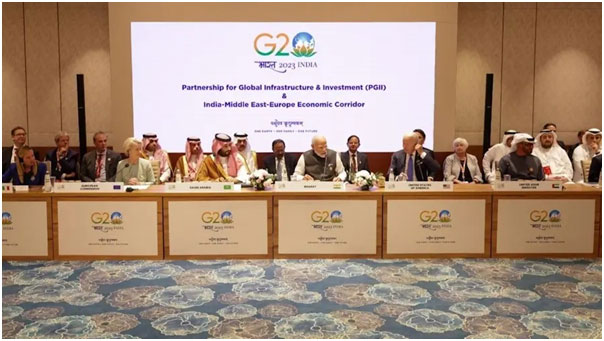
On September 9, 2023, at the G20 Leaders’ event on the Partnership for Global Infrastructure and Investment in New Delhi, leaders from India, the United States, Saudi Arabia, the United Arab Emirates, France, Germany, Italy and the European Union collectively announced a new economic corridor, namely India-Middle East-Europe Economic Corridor (IMEC).[i] IMEC is an initiative under the Partnership for Global Infrastructure and Investment (PGII), launched in 2022 at the 48th G7 Summit in Germany. PGII represents a joint endeavour involving the G7 countries to finance infrastructure ventures in lowand middle-income nations.[ii] The PGII has been actively investing in a range of priority sectors, including tackling climate change and addressing the energy crisis, enhancing the resilience of supply chains, improving connectivity through digital infrastructure and transportation networks, building sustainable healthcare systems, and promoting gender equality and equity.

After the signing of bilateral agreements under the Abraham Accords in 2020 for Arab-Israeli normalisation, prioritisation towards connectivity and regional integration has increased. Thereafter, the White House initiated discussions with regional allies regarding the IMEC and the creation of maps and written evaluations of the current rail infrastructure in the Middle East started.[iii] In May 2023, National Security Advisors of the USA, India, and the UAE held a meeting with the Saudi Prime Minister in Saudi Arabia to further their joint vision of creating a more secure and prosperous Middle East region closely connected with India and the rest of the world. Since then, all parties involved have diligently collaborated to iron out the agreement’s specifics.


Specifications of IMEC

According to the MoU, the IMEC will consist of two distinct corridors: the eastern corridor, which will link India with the Gulf, and the northern corridor, connecting the Gulf to Europe. It will incorporate a railway network that, once entirely constructed, will establish a dependable and cost-efficient cross-border ship-to-rail transport network. This network will complement the existing maritime and road transportation routes, facilitating the seamless transit of goods and services among India, the UAE, Saudi Arabia, Jordan, Israel, and Europe.[iv]

MoU also specifies that along the railway route, the involved parties aim to facilitate laying cables for electricity and digital connectivity and pipelines for exporting clean hydrogen. It has also been specified that the corridor will enhance regional supply chains, boost trade accessibility, improve trade facilitation, and underscore a heightened focus on environmental, social, and government impacts.[v]


Potential Benefits of IMEC

Indian Prime Minister Narendra Modi stressed the project’s importance, foreseeing it as a beacon of cooperation, innovation, and shared progress for India, West Asia, and Europe. Modi also highlighted the project’s significance for connectivity, leading to mutual trade and trust. US President Joe Biden highlighted the corridor’s role in facilitating trade and energy exports. Referring to the cables for transmitting data and electricity, Ursula Von der Leyen, President of the European Commission, described IMEC as a “green and digital bridge across continents and civilisations.” Saudi Crown Prince Mohammed bin Salman expressed confidence that the project would contribute to developing railway networks, infrastructure, and long-term business opportunities.

According to the White House Statement[vi], this envisioned corridor is anticipated to foster economic progress by improving connectivity and economic integration across continents, paving the way for sustainable and inclusive economic growth. Participant countries aspire to establish links through commercial hubs to facilitate the development and export of clean energy. They plan to lay undersea cables and connect energy grids and telecommunication lines to expand access to reliable electricity. IMEC also seeks to foster innovation in advanced clean energy technologies and ensure secure and stable Internet access for communities. It envisions boosting existing trade and manufacturing activities while enhancing the corridor’s food security and supply chains. The approach is designed to attract new investments from various partners, including the private sector, and stimulate the creation of high-quality jobs.

The National Security Strategy of the US was published in October 2022, and it clearly outlined the envisioned role of the US in the Middle East to strive for regional integration through fostering economic, political and security ties among its partner nations. Through the IMEC, the US also seeks to enhance its deteriorating clout in the Middle East, thereby challenging China’s presence. From a Gulf point of view, the new undertaking will reinforce the region’s longstanding role as the leading trade pathway connecting Asia, Europe, and Africa. By focusing on energy trade, the initiative is capitalising on the Gulf’s comparative advantage to offer affordable energy to the global market.[vii] The eight IMEC signatory countries represent roughly 50% of the world’s economy and 40% of its population. Consequently, they possess the potential to significantly influence global trade and development if they are willing to allocate the necessary resources.[viii]

For India, it is a transformative opportunity to diversify its connectivity routes. The projected 40 per cent reduction in trade time between India and Europe[ix] is a substantial benefit that can significantly enhance the efficiency of commerce and boost economic integration between these two regions. This time-saving factor alone can make IMEC a highly attractive proposition for businesses and governments alike. In essence, it can be argued that the participant countries have the aspiration that the corridor will bring about greater efficiencies, cost reduction, enhanced economic cohesion, job creation, and reduced greenhouse gas emissions. IMEC seeks a transformative integration of Asia, Europe, and the Middle East.[x]


Potential Alternative for China’s BRI?

The timing of the announcement of the MoU on IMEC also holds immense significance, especially when China will organise the third BRI conference in October 2023. China is celebrating the 10th anniversary of the BRI by organising this conference titled Belt and Road Forum for International Cooperation (BRF) in Beijing. China has claimed the confirmed participation from 90 countries.[xi] The IMEC announcement indicates a geopolitical and geo-economic competition between the US and China, both vying for influence in the same regions.

With regards to IMEC, China’s Global Times is of the view that there are underlying geopolitical motivations behind this project. The US is aiming to diminish China’s sway in the Middle East and neighbouring areas by constructing extensive economic pathways as a strategic response to the Belt and Road Initiative (BRI).[xii] Terming IMEC as a political instrument, China has argued that the execution of this project is still uncertain and in line with a pattern of many US strategic initiatives. For China, this scepticism arises from the project’s significant political implications, raising concerns about the authenticity of Washington’s offer of infrastructure assistance to developing nations.[xiii]

It is interesting to note that Italy has already signalled to withdraw from BRI. Italy signed a five-year MoU with China in 2019 that needs renewal in March 2024. One of the core goals of the MoU was to address this trade imbalance, but after four years, there has been little to no significant change in the situation. Italy’s exports to China have seen a relatively small rise, going from 14.5 billion euros in 2019 to 18.5 billion euros in 2022. In contrast, Chinese exports to Italy have surged from 33.5 billion euros to 50.9 billion euros during the same timeframe.[xiv] It has resulted in Italy consistently having a substantial trade deficit with China. Italy’s decision to signal its intention to withdraw from BRI underscores the challenges China faces in maintaining the enthusiasm of its partners in long-term projects. Many reports are already providing insights into China’s ‘debt-trap diplomacy’. The trade imbalances and economic concerns associated with BRI have made Italy reassess its involvement, setting a precedent for other nations to reevaluate their participation in Chinese-led initiatives.

IMEC’s emergence highlights the evolving landscape of global infrastructure diplomacy and increasing competition among major powers for influence through such projects. It also serves as a reminder that the success of these initiatives will depend not only on their economic viability but also on their collective ability to address mutual concerns and foster genuine cooperation among participating nations.


Conclusion

IMEC represents an ambitious venture with the potential to reshape not only the economic landscape but also the geopolitical dynamics of the regions it spans. With the participation of major economies and key players like India, the United States, Gulf countries and European nations, IMEC promises to foster enhanced connectivity, trade, and sustainable development. In the context of the Middle East, IMEC offers the opportunity for a positive-sum game. It presents a chance for the Gulf countries to diversify their existing infrastructure and trade routes, providing an alternative option to enhance their economic growth and regional influence.

While IMEC proposes a potentially more transparent approach to infrastructure development than China’s BRI, it doesn’t necessarily need to be viewed as a zero-sum competition. Instead, it can be seen as a constructive force that benefits multiple stakeholders in the Middle East, contributing to the region’s overall prosperity. The US is actively involved in IMEC to support its broader strategic goals, including fostering regional integration and economic growth, countering potential competitors, and strengthening alliances in these vital regions.

Participant countries of IMEC have agreed to prepare an action plan with set timelines within two months, showcasing their paramount priority. However, it is yet to be seen what will be the financial share of each founding member to complete the proposed project. The challenges for IMEC are complex. These include managing logistics and supply chain issues, ensuring smooth implementation across continents to compete with established maritime routes and handling geopolitical tensions diplomatically. Success depends on effectively addressing these challenges while realising its economic and geopolitical potential. The coming years will reveal whether IMEC can fulfil its aspirations and how it will shape the future of trade, connectivity, and global influence.


Abhishek Yadav is a Research Analyst at the Manohar Parrikar Institute for Defence Studies and Analyses (MP-IDSA).

[i]“Fact Sheet: World Leaders Launch a Landmark India-Middle East-Europe Economic Corridor”, The White House, 9 September 2023. URL: https://www.whitehouse.gov/briefing-room/statements-releases/2023/09/09/fact-sheet-world-leaders-launch-a-landmark-india-middle-east-europe-economic-corridor/


[ii] “Fact Sheet: Partnership for Global Infrastructure and Investment at the G7 Summit”, The White House, 20 May 2023. URL: https://www.whitehouse.gov/briefing-room/statements-releases/2023/05/20/fact-sheet-partnership-for-global-infrastructure-and-investment-at-the-g7-summit/


[iii] “Biden, Modi announce economic corridor linking India to Middle East, Europe at G20”, Public Broadcasting Service, 9 September 2023. URL: https://www.pbs.org/newshour/world/watch-biden-modi-announce-economic-corridor-linking-india-to-middle-east-europe-at-g20


[iv]“Memorandum of Understanding on the Principles of an India-Middle East-Europe Economic Corridor”,The White House, 9 September 2023. URL: https://www.whitehouse.gov/wp-content/uploads/2023/09/Project-Gateway-Multilateral-MOU.pdf


[v] Ibid.


[vi]“Fact Sheet: World Leaders Launch a Landmark India-Middle East-Europe Economic Corridor”, The White House, 9 September 2023. URL: https://www.whitehouse.gov/briefing-room/statements-releases/2023/09/09/fact-sheet-world-leaders-launch-a-landmark-india-middle-east-europe-economic-corridor/


[vii]Abdel Aziz Aluwaisheg, “The far-reaching implications of the India-Middle East-Europe Economic Corridor”, Arab News, 12 September 2023. URL: https://www.arabnews.com/node/2372351


[viii] Ibid.


[ix] “G20 summit: Transport project to link India to Middle East, Europe unveiled”, Al Jazeera, 9 September 2023. URL: https://www.aljazeera.com/news/2023/9/9/g20-summit-transport-project-to-link-india-to-middle-east-europe-unveiled


[x]“Memorandum of Understanding on the Principles of an India-Middle East-Europe Economic Corridor”,The White House, 9 September 2023. URL: https://www.whitehouse.gov/wp-content/uploads/2023/09/Project-Gateway-Multilateral-MOU.pdf


[xi] “China says 90 countries have confirmed attendance for Belt and Road Initiative”, Reuters, 7 September 2023. URL: https://www.reuters.com/world/china-says-90-countries-have-confirmed-attendance-belt-road-initiative-2023-09-07/


[xii]“GT Voice: Grand US rail plan might be another road going to nowhere”, Global Times, 11 September 2023. URL: https://www.globaltimes.cn/page/202309/1297999.shtml


[xiii] Ibid.


[xiv] Gabriele Manca, “Italy’s BRI Dilemma”, Italian Institute for International Political Studies, 27 July 2023. URL: https://www.ispionline.it/en/publication/italys-bri-dilemma-137315


The originality of the content and the opinions expressed within the content are solely the author’s and do not reflect the opinions and beliefs of the website.


/ India-Middle East-Europe Economic Corridor (IMEC): A Transformative Initiative Connecting Continents
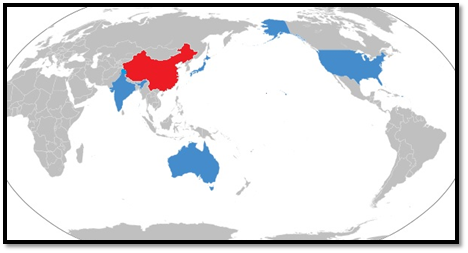
Paying for masks to breathe: Normalcy at risk as Thailand gets engulfed in the deadly haze, choking the lives of millions

Posted on : September 17, 2023
Author : Atrayee Pal

Paying for masks to breathe

Amidst the crowds full of millions of tourists rushing to Thailand every year to experience the sunny beaches, mouth tempting street foods, water sport activities, ornamented temples, lies the hidden abode of suffering of millions of Thai people as air pollution in the northern cities of Thailand exceeds the levels of WHO guidelines and proceeds to engulf the entire bustling place in a matter of few years. According to Thai data, the rapid escalation of pollution levels has mainly been traced on the lines of recurring forest fires, agricultural burning and over population of vehicles emitting carbon dioxide leading to a hazardous culmination of disease and death. A court in Northern Thailand has finally decided to answer the grievances of the local citizens that this air pollution is not responsible for the decrease in the life expectancy of people but also a grave violation of people’s basic rights. According to Mongabay news, “More than 1,700 plaintiffs, including activists, academicians, residents and medical professionals submitted the grievance against Prime Minister Prayut Chan – o-Cha, The National Environmental Board (NEB) and the Securities Exchange Commission (SEC) at the Chiang Mai Administrative Court on April 10,2023. Much of the problem is also due to the prolonged practices of slash and burn agriculture in Laos and Myanmar.

According to Sunat Insao, a Chiang Mai Resident, ‘The air has become so polluted that tourists have stopped coming to the once golden spot of the mountains of this region and every time it stinks her throat due the irritation caused by the inhalation of the toxins in air’. Chiang Mai’s record of air pollution has surpassed the safe threshold and estimated to be 66 times the WHO guidelines and it’s extremely worrying for Thailand as their basic rights to breathe safely is at stake. Not only that, their working status has also declined tremendously as merely a walk in this gas chamber is causing breathing problems.

However, recent national and Bangkok media projects this deep-rooted problem of air pollution within a new found discourse which throws almost the entire blame upon the local practices of agricultural burning. The media feeds the urbanites with brute critiques of trading the country’s health for the burning sensation of the ‘het thop’ mushrooms on a large scale. These mushrooms are favoured by Thai men and women. However, being a rather scarce resource, Karens (the hill uplanders) follow a local tradition of burning the thick leaves to extract the deep-rooted mushrooms from below. The main inductor behind this whole chain of commodification of these local delicacies is the media outlets which once bombarded the minds of the urbanites with their marketization ploys and are now flush with environmental degradation causes. Eating these mushrooms is an age-old local practice. So much so that even on interviews they happily expressed their love for the tastiest mushrooms of all times. According to BBC reports, “On 10th March, Thai health authorities reported that in the first nine weeks of the year, more than 1.3 million people had already suffered in air pollution-related diseases. More than 2 million people were hospitalised and rather than any improvement the situation further worsened with time. “

However, due to the discursive tensions and state incursions following the new trend of opposition from the elitist conservatives and urban environmentalists, blaming the mushroom cultivation has almost become a new found agenda of these groups. This however side-lines various other issues that were also equally to be blamed for this rapid acceleration of PM. 25 particulate matter in the air which are carriers of the toxins that are harmful for human lives. In an interview Wittaya Pongsiri, Vice-President of Chiang Mai Tourism Business Association Chiang Mai, Northern Thailand (which once used to be the 2nd bustling tourist place but has now has turned to an empty town of masked residents) notes that residents are struggling to somehow cope up with their meagre economic means and even sparing it for regular masks for’ JUST TO BREATHE ‘.


However neither this constant blame upon the farmers due to previous feuds and grim tensions with the lowlanders and urbanites nor complete banning of their practices can solve this disastrous life threatening environmental issue. As the independent legal researcher and member of the legal team representing the citizen plaintiffs, Kornakok Wathanabhoom argues shutting even the outlet of scavenging the meagre amount from the mushroom hunting will not just be enough, It would be even worse as it would brutally effect these smallholder farmers as it will enlarge the poverty trap. Not only that, such watertight enclosures by the state can further heighten the anger of peaceful local traditions that have passed since ancient times. The keung meung uplanders believe in the untamed malicious spirits in the forests and hence they bow down to ask for the permission of nature to scavenge the mushrooms by burning the outgrowths. This long lived tradition cannot be shut down with words or brute actions from authority. Hence the matter can only be condensed with sustainable measures such as the decrease in excessive marketization or putting taxes to lower the scale of cultivation.

Not only are the mushroom scavengers at fault, but a major problem of this haze is it’s ‘trans boundary nature’ as air pollution drifts from the maize fields of Laos and Myanmar as a result of their periodic slash and burn agriculture to increase fertility. Not only that, according to the Geo-Informatics’ and Space Technology Development Agency, as of March 25, Thailand is recorded to have 4,376 Hotspot while Laos had double the number and Myanmar nearly triple. However, the border regulations have been virtually impossible both for Myanmar and Laos as the former is currently going through civil war and the latter facing economic crises due to the detachment from China’s maize production trading. Given this condition the state should focus on the utilisation of various sustainable means of solving the problem as the lives of millions in Thailand depend on this. If the measures are not taken correctly, then matters can get worse and the once ‘Land of Smiles‘ can potentially turn to the  ‘Land of Grimace’ within a matter of a few years.


References

Cowan, C. (2023,June 6). Citizens demand sustainable solution to haze crisis in Northern Thailand. Retrieved from news.mongabay.com https://news.mongabay.com/2023/06/citizens-demand-sustainable-solution-to-haze-crisis-in-northern-thailand/#:~:text=Air%20quality%20among%20worst%20in%20the%20world&text=Early%202023%20saw%20readings%20of,polluted%20cities%20in%20the%20world

Footer, M. (2023,April 5). Land of Smiles? Grimaces, more like :how Thailand’s air pollution threatens the health I residents and it’s tourism industry . Retrieved from South China Morning Post https://www.scmp.com/magazines/post-magazine/travel/article/3216032/land-smiles-grimaces-more-how-thailands-air-pollution-threatens-health-residents-and-its-tourism

Lodge, E. (2023,July). Burning for a Beloved Mushroom :Northern Thai Environmentalism and the Contested Narratives of a Wild Delicacy. Retrieved from Jstor.  https://www.jstor.org/stable/27219712

People in Thailand are suffering through some of the world’s worst air pollution., Retrieved from dwnews on Instagram https://www.instagram.com/reel/Cq3ewlGr28C/?igshid=M2MyMzgzODVlNw==

Pajai, W. (2023, April 9). Smog drives away Thailand’s tourists as Laos, Myanmar farmers grow cash crops for China. Retrieved from South China Morning Post :This week in Asia https://www.scmp.com/week-asia/health-environment/article/3216349/smog-drives-away-thailands-tourists-laos-myanmar-farmers-grow-cash-crops-china


Atrayee Pal

Intern, Asia in Global Affairs


The originality of the content and the opinions expressed within the content are solely the author’s and do not reflect the opinions and beliefs of the website.

/ Paying for masks to breathe: Normalcy at risk as Thailand gets engulfed in the deadly haze, choking the lives of millions

Japan and the Satoyama Initiative

Posted on : August 31, 2023
Author : Debanjana Chakraborty

On 23rd January 2023, Japan’s Famous Chef Yoshihiro Narikawa published his much awaited Cookbook titled ‘Satoyama Cuisine’ which is a brilliantly illustrated piece on culinary philosophy.  It draws its inspiration from the Japanese tradition of foraging and gathering of useful ingredients and using them in a sustainable manner. The book is not simply an exploration of gastronomy but assumes an elaborated role in the exploration and Conservation of Japanese landscape and identity. Perhaps, this book is a greater extension of the Initiative that Japan itself orchestrated on the 19th October 2010 as a conscious attempt towards the protection of bio-diversity and the environment. This initiative is known as the ‘Satoyama’ Initiative that aims for a holistic approach towards environmental protection and innovation.

From its beginning, the SatoyamaInitiative has taken a worldwide viewpoint and looked to ensure expertise from around the world with respect to the maintainable utilization of assets in SEPLS. The Initiative’s idea was created in a series of gatherings and counsels. One significant achievement came in January 2010, when the Global Workshop on the SatoyamaInitiative was held at the main Headquarters of the United Nations Educational and Scientific and Cultural Organisation (UNESCO) in Paris. The Global Workshop was based on two preliminary workshops held in Asia, the main in Tokyo, Japan in July 2009, and the second in Penang, Malaysia in October 2009. The goals of the Global Workshop were to examine the Satoyama Drive’s idea and characterize the components of exercises to be considered for the Initiative. The Paris Announcement on the Satoyama Drive was one of the major outcomes of the Paris Workshop. It was subsequently submitted to the CBD’s fourteenth Conference of the Subsidiary Body on Scientific Technical and Technological Advice (SBSTTA-14) as one of the official Documents of the gathering, and turned into a key report that prompted the Initiative’s eventual acceptance during the tenth meeting of the Conference of the Parties to the Convention on Bio-Diversity (CBD COP 10), held in Nagoya, Japan in 2010.

Key Objectives of the Initiative

The Initiative was meant to function in accordance with a three-fold Approach which includes the consolidation of values and wisdom for the appropriate protection of the ecosystem and bio-diversity, it aims at the integration of different innovative policies for the promotion of the protection of Bio-diversity and it also aims towards the creation and exploration of new forms of co-management system that shall lead to the protection of diverse eco-systems while heralding their individualism. Through this three-fold approach, the Initiative essentially tries to ‘create synergy between traditional knowledge and modern science in order to promote innovations’.

Through this three-fold Approach, the Satoyama Initiative essentially is dedicated towards the building and maintenance of the ecological landscape of the various localities and this achieved through the adoption of six main perspectives:

  • The usage of resources keeping in mind the relative durability of the environment it is part of.
  • A renewable pattern of energy use
  • Recognition and preservation of the different forms of local traditions and customs.
  • Multifaceted participation in the processes of different sustainable environmental projects concerning natural resources and ecosystem.
  • Ensuring adequate contributions through poverty alleviation, sustainable livelihood and also local community empowerment.
  • Ensuring the encouragement of greater amounts of ‘Community-resilience’ which also put into its fold numerous ecological, cultural and spiritual ideas and benefits.

Recent Developments of the Initiative

The Satoyama Initiative organises various Conferences, meetings, events in order to bring it’s together for the purpose of imparting and providing experiences and ideas. One of this include the IPSI Conference which is held annually and brings different dignitaries and diplomats into it. It discusses the potential future programmes that ought to be undertaken for the sustainable projects and it also entails the formulation of Policies that is geared towards the same. Apart from the annual IPSI Conference, one of the most recent developments of this Initiative includes the organisation of various which is geared towards the promotion of the Initiative towards the Grassroots Level. For instance, the Agricultural Bio-Diversity and UNESCO Biosphere Reserve: Bridging managed and natural landscapes in Cuba is aimed to ‘reinvigorate and traditional production systems that are compatible with bio-diversity conservation, assessing their multiple values and ensuring that these values are recognised by policy makers and in markets.’Apart from its numerous collaborative endeavours, the Satoyama Initiative is also trying to organise various regional workshops for the raising of Awareness regarding the Environmental issues. One of the most regional workshops occurred in Malaysia on April 2017. It included the formation of four groups that presided over the numerous environmental issues such as ‘Ecosystem Restoration, ‘Economic Incentives, ‘Traditional Knowledge and Communication, ‘Education and Public Health and Awareness’, it also included an exhibition that housed and displayed exotic culinary ingredients, plants, indigenous handicrafts and many more. As mentioned in the beginning of this essay, Satoyama culinary tradition was heralded by chefs like Yoshihiro Narisawa. In 2018, a magnificent exhibition titled ‘Satoyama: Evolving with the Forest’ had been organised by Japan House (Los Angeles) where Satoyama cuisine had been explored and displayed through sixty photographs, objects, writings and also brilliant presentation. Apart from this, there have been many renovation projects under this initiative. For example, the world Renowned Angkor Temple complex in Cambodia had been suffering massively from the ravages of Deforestation and Water Scarcity and the Authority for the Protection of the Site and Management of the Region of Ankgor (APSARA) from 2014-18 initiated the construction of a Park for greater supplies of Groundwater, mitigate floods and also provide irrigation, with the help of this initiative.

The initiative therefore encompasses a multi-faceted approach for the preservation of the bio-diversity and local traditions.

The Satoyama Initiative, thus, include the preservation of not only environmental issues concerning Japan and World but also brings into its fold the preservation and protection of the uniqueness of local cuisines, practices, identities and traditions.

References

  1. Satoyama Initiative Official Website (2023, August 20)

Link:  https://satoyama-initiative.org/concept/satoyama-initiative/


  1. Satoyama Initiative, Document on the ‘Agricultural Bio-Diversity and UNESCO Biosphere Reserve: Bridging Managed and Natural Lanscapes in Cuba’

Link: https://satoyama-initiative.org/wp-content/uploads/2020/03/1-Communities-and-Agricultural-Landscapes-in-Cuban-Man-and-Biosphere-Reserves_Bioversity-International_UNU.pdf


  1. Satoyama: Evolving with the Forest (2023, August 21)


Link: https://www.japanhousela.com/exhibitions/satoyama/


  1. Satoyama Initiative, Document on the Case Study of Effective Water Management for Landscape Management in the Siem Reap Catchment in Cambodia


Link: https://satoyama-initiative.org/case_studies/effective-water-management-for-landscape-management-in-the-siem-reap-catchment-cambodia-sitr7-7/


Debanjana Chakraborty

Intern, Asia in Global Affairs


The originality of the content and the opinions expressed within the content are solely the author’s and do not reflect the opinions and beliefs of the website.


/ Japan and the Satoyama Initiative
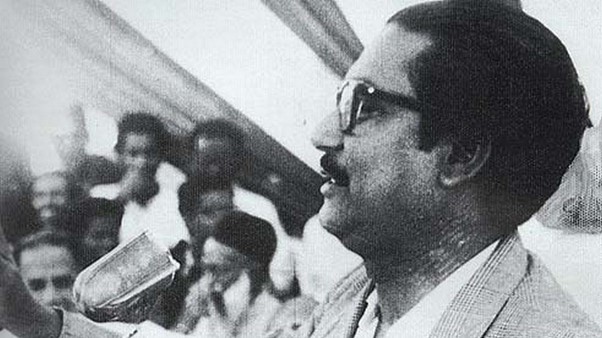
Unravelling the Nexus: Food Insecurity in a Globalized War-Stricken World

Posted on : August 17, 2023
Author : Purnima Prasad

Globalization, is now a contested term, but in simple and lucid terms, itrepresents the interdependence of the world. This can be thought of as the threads of a giant spider web formed over thousands of years, with the number and extent of these threads increasing over time. People, money, goods, ideas, and even disease and devastation are now moving on these threads in ever greater quantity and speed, resulting the world witnessing a Domino-effect, that can be sensed by the people living far away from the region of occurrence.The world has witnessed around 10,624 battles in the history of mankind,but the effects of Ukraine-Russia War is being felt by every country in the world, precisely because of the disruption in the supply chain, resulting in rising fuel prices and increasing food insecurity in an already hunger-stricken world.

Russia and Ukraine, major producers of staple foods, supply 90 percent of Armenia, Azerbaijan, Eritrea, Georgia, Mongolia and Somalia’s wheat supply. Ukraine is also a major source of wheat for the World Food Program, which provides food aid to 115.5 million people in more than 120 countries. And Russia is the world’s third largest oil producer, second largest natural gas producer and largest exporter. These necessities are becoming increasingly scarce as the war disrupts production and export processes. Global access to oil and gas is severely restricted. Much of the world’s wheat, corn and barley remains in Ukraine and Russia. It makes up an even larger portion of the world’s fertilizer supply and is especially important for agriculture. Nonetheless, these bottlenecks have led to record price increases. Grocery costs have increased by 50% since the beginning of 2022. Oil prices, currently up 33%, are expected to rise more than 50% by the end of the year. The cost of transporting fuel, a major contributor to Africa’s inflation in 2021, has risen since the war began. Rising prices have contributed to the global cost of living crisis, disproportionately impacting developing countries. Communities in Africa, Asia, Latin America and the Middle East have been hit hard, with already vulnerable households paying the highest price.

But all of it came to a halt in 2023, whenRussia, refused to renew the Black Sea Grain Initiative, which allowed Ukraine to able to export its grains to the world, with no harm caused by Russia to the needy nations.But according to, a macroeconomist,Mikhail Khan, only 3% of the total grains reached the poor nations. And the rest according to Russia is used by the already well-off countries.However, according to the United Nations, Ukraine is supplying the World Food Program (WFP) with 725,000 tons of grain, which has been sent as humanitarian aid to Afghanistan, Djibouti, Ethiopia, Kenya, Somalia, Sudan and Yemen.  Ukraine shipped more than 80% of its total grain to the UN WFP last year, compared with 50% before the war, according to the EU.  US Ambassador to the UN Linda Thomas Greenfield said Russia’s withdrawal from the grain deal was an “atrocious act”. In Somalia, Kenya, Ethiopia and South Sudan, it is estimated that more than 50 million people are now in need of food aid after years of lack of rain.

Ukraine and Russia said they were looking at alternative ways to maintain grain supplies after a deal allowing exports to Africa, the Middle East and Asia collapsed after Russia refused to rejoin the deal, which is due to expire on July 18.President Zelensky called for the continuation of the Black Sea Grain Export Agreement without Russia’s involvement, and said he had reached an agreement with UN Secretary-General António Guterres to “cooperate with responsible countries towards food security and restoration of food supply through the Black Sea Route”.

Ukrainenow faces limited and more expensive export opportunities. This will inevitably push up world grain prices, exacerbating the already rampant global food inflation.Options include transportation across the Danube or transshipment to ships at the Romanian port of Constanta, which is said to handle one-third of Ukraine’s grain exports since the Russian invasion. Another export opportunity is overland to the west. Both options are significantly more expensive than sea freight across the Black Sea and Bosporus. In a recent report, shipbroker Simpson Spence Young (SSY) assessed the potential impact on the global grain trade. Canada, Russia and the United States could become marginal wheat suppliers, the company said. Corn from Argentina and Brazil. This could lead to increased ton-miles to markets in Africa, the Middle East and Asia. However, the broker said this could be partially offset by faster shipping, without being affected by BSGI’s delays and inefficiencies.

However, the question of food insecurity will not end even if the Black Sea Grain Initiative is resumed as it was initially, the issue needs a multifieldapproach.

First, provide prompt and appropriate assistance to people suffering from food insecurity through humanitarian assistance such as the World Food Program and effective domestic financial measures. Policymakers around the world should prioritize fighting inflation and protecting the most vulnerable to reduce the burden of the cost-of-living crisis. Short-term social assistance should focus on providing emergency food aid and cash transfers to the poor, as recently announced by Djibouti, Honduras and Sierra Leone. Where that is not possible, temporary relief is available through subsidies and tax measures. Increase food production and improve distribution, including by ensuring adequate access to fertilizers and crop diversification. Expanding trade finance and strengthening supply chains are essential to address the current food price shocks. The World Bank and other multilateral development banks play a key role in expanding trade finance for agricultural and other food products and helping countries make critical logistical and infrastructure improvements. Second, investing in climate-resilient agriculture is essential to boosting future yields. More intense and unpredictable weather events increase food insecurity. Low-income countries, especially sub-Saharan Africa, are the least prepared for the impacts of climate change. Solutions must be tailored to national contexts and focus on low-cost, high-impact actions such as investing in new crop varieties, improving water management and disseminating information. For example, Ethiopia, Kenya and Rwanda are using mobile technology to provide farmers with rainfall forecasts to help grow crops and obtain crop insurance.

Some organizations and individuals have devised innovative solutions. Rice and grain ATMs. Similar to traditional ATMs, these machines distribute rice and other grains to those in need, helping combat food insecurity in a sustainable and efficient manner. The organization’s main purpose is to provide free rice to people facing financial difficulties due to the COVID-19 pandemic. Rice ATM has installed over 50 of his vending machines across Vietnam to provide free rice to thousands of people who have lost their jobs or are struggling to make a living due to the pandemic. Rice ATM is helping achieve Sustainable Development Goal. Partnerships for the Goals – by facilitating collaboration between local businesses and communities to address  food insecurity.  Overall, Rice ATM is an innovative solution to address food insecurity during the COVID-19 pandemic while promoting sustainable practices and community involvement. The idea is to provide easy and affordable access to essential grains for those in need, especially those who cannot afford to buy grains on a regular basis. Like rice ATMs, grain ATMs are designed to combat food insecurity and support sustainable food systems. For example, in 2020, the Indian government launched a similar program called Annavitran Portal to provide subsidized food grains to migrant workers during the COVID-19 pandemic. These machines will help address some of the key challenges facing the world today, including food insecurity, poverty and climate change.  Such innovations by the global community can make food more accessible and affordable for those in need, helping to reduce hunger and malnutrition while promoting sustainable agriculture and circular economy principles. And lastly, it’s time to diversify the sources of import and keep aside the ‘Bad Blood’ aside for humanity.


References

Bartlett, P. (2023, July 19, ). What are the alternatives to the Black Sea grain corridor? Retrieved from Sea Trade Maritime News.: https://www.seatrade-maritime.com/dry-bulk/what-are-alternatives-black-sea-grain-corridor

Innovative Solution to Food Insecurity in Developing Countries. (2023, April 3). Retrieved from Global Society : https://www.globalsociety.earth/post/innovative-solution-to-food-insecurity-in-developing-countries?gclid=Cj0KCQjwwvilBhCFARIsADvYi7JROamK6jU7wxxmEJ5vmytPz3EczRdQuj4NHcW5iLTec7EYFKM2K00aAku0EALw_wcB

Kristalina Georgieva, S. S. (2022). Global Food Crisis Demands Support for People, Open Trade, Bigger Local Harvests. Retrieved from IMF Blog: https://www.imf.org/en/Blogs/Articles/2022/09/30/global-food-crisis-demands-support-for-people-open-trade-bigger-local-harvests

Nichols, M. (2023, July 21, ). ‘Many may die’ warns UN after end of Black Sea grain deal. Retrieved from Reuters: https://www.reuters.com/world/europe/many-may-die-warns-un-after-end-black-sea-grain-deal-2023-07-21/#:~:text=Russia%20quit%20the%20Black%20Sea,had%20reached%20the%20poorest%20countries.

Society, N. G. (, 2022, May 19). Globalisation. Retrieved from National Geography: https://education.nationalgeographic.org/resource/globalization/

Ukraine and the food and fuel crisis: 4 things to know. ( 2022, SEPTEMBER 22). Retrieved from UNWomen: https://www.unwomen.org/en/news-stories/feature-story/2022/09/ukraine-and-the-food-and-fuel-crisis-4-things-to-know?gclid=Cj0KCQjwwvilBhCFARIsADvYi7LyaIeuU06XzzAC1vOem5ffj0cS1X_FjiO5lVCPQlaFtfmmpso4hesaAl9OEALw_wcB

Ukraine grain deal: What has happened to food prices since it ended? (2023, july 20). Retrieved from BBC World: https://www.bbc.com/news/world-61759692

Ukraine, Russia Seek Alternatives After Collapse Of Black Sea Grain Deal. (n.d.). Retrieved from Radio free Europe.: https://www.rferl.org/a/ukraine-russia-alternatives-black-sea-grain-deal/32508910.html


Purnima Prasad
Intern, Asia in Global Affairs

The originality of the content and the opinions expressed within the content are solely the author’s and do not reflect the opinions and beliefs of the website.

/ Unravelling the Nexus: Food Insecurity in a Globalized War-Stricken World