Holding on at the Edge
Posted on : April 8, 2026Author : Priya Singh
“I wake up every morning feeling as if Israel is fighting me, not Hezbollah or Iran.”[i]
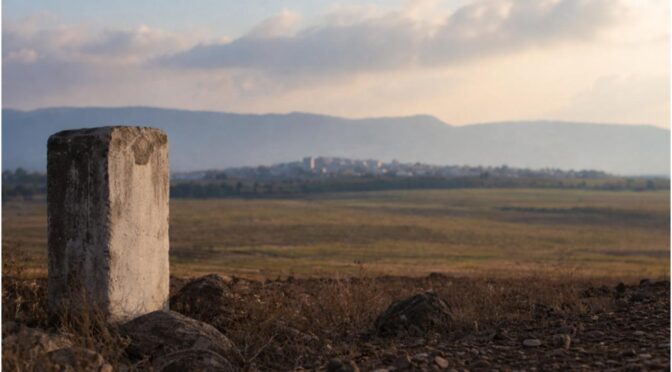
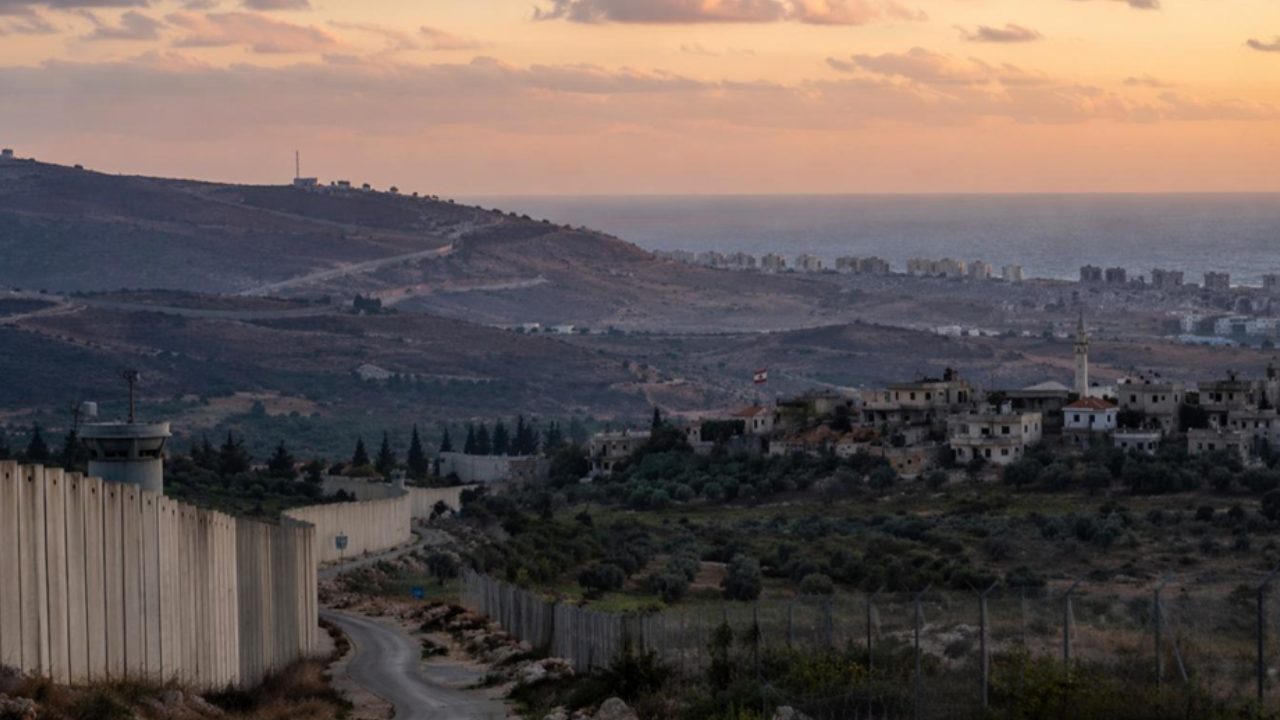
In Kiryat Shmona,[ii] at Israel’s northern edge in the Upper Galilee, just a few kilometres from the Lebanese border, Mayor Avichai Stern captures the present mood with clarity, the deepest fear is not only incoming fire, but the possibility of being asked once again to leave. This reflection, based on recent reporting in Haaretz, begins from that sense of uncertainty, where everyday life is shaped as much by anticipation as by experience. War here appears less as an event than as a condition, settling into routines, pauses, and the quiet recalibration of ordinary acts. Streets are not fully empty, yet not fully alive, shops reopen but without certainty, conversations are brief, often interrupted by alerts. Residents speak of familiarity with danger, a learned calm in the face of sirens, yet this familiarity does not resolve anxiety. It sits alongside a more unsettled awareness, that home itself may not hold, that continuity is contingent. Staying becomes less a decision than a practice, repeated daily, negotiated between attachment and doubt. The experience of the border is therefore not only spatial but temporal, shaped by memory of past evacuations and the anticipation of possible repetition. The ordinary becomes shaped by the possibility of interruption.
What emerges is not a withdrawal of attachment, but a quiet strain within it. Border towns have long stood as markers of presence and resilience, yet they also reveal the limits of that promise. In moments of crisis, gaps become visible, in support, in infrastructure, in the timing of decisions that determine whether people remain or leave. Pride persists, but it is accompanied by a recognition of vulnerability that is difficult to set aside. The relationship to the state becomes more complex, not broken, but altered, carrying within it both reliance and unease, continuity and questioning. These experiences are held within a moral language that remains deeply embedded. The idea of inhabiting and sustaining a land continues to shape how people understand their place, not only politically, but historically and ethically. It is evident in the insistence on return, in the quiet labour of rebuilding, in the refusal to relinquish everyday life. Yet this language is being reworked, often without explicit articulation, as the distance between what is expected and what is lived becomes more visible. Responsibility and obligation are encountered not in abstract debate, but in the small decisions that structure daily existence, whether to reopen a shop, to repair a home, to stay despite uncertainty.
In such conditions, identity appears less as a fixed attribute and more as something continually formed in relation to circumstance, shaped through interaction, recognition, and the need to sustain a coherent sense of self amid uncertainty.[iii] To stay is not only to remain physically present, but to hold together a narrative of belonging, even as the ground beneath it shifts. Identity becomes less declarative and more reflexive, something that is quietly adjusted in response to events that cannot be fully anticipated or controlled.
The period following October 7 brought these tensions into sharper view. The shock of the attacks was followed by a sustained demand for accountability, expressed through protests that were measured but insistent. These calls were not only about security, but about responsibility, about the need to acknowledge failure as a step towards restoring trust. The moral dimension of politics becomes more visible here, not as an abstract principle, but as a lived expectation that institutions should respond, explain, and repair. The language of protest reflects not only anger, but a desire to re-establish coherence between state action and public expectation. More recent protests against the war with Iran extend this concern into the workings of democracy itself. The regulation of assembly, the uneven space for dissent, and the growing reach of security frameworks into civilian life raise questions about how democratic practice is sustained under prolonged strain. The issue is not only whether dissent is permitted, but how it is accommodated within a society shaped by continuous emergency. The balance between protection and participation becomes more difficult to maintain, and the terms of that balance are increasingly contested.
Within political discourse, there is no singular direction. Some advocate for expanded military action as a means of securing long-term stability, others caution against the costs of such an approach, both immediate and cumulative. These positions do not resolve easily, they reflect a society negotiating its path without clear consensus, where different understandings of security and responsibility remain in tension. The leadership of Benjamin Netanyahu becomes a point where these tensions converge, drawing criticism from multiple directions, for some the government acts too forcefully, for others not decisively enough. This duality reflects a deeper uncertainty, where expectations themselves are unsettled. In Kiryat Shmona, these broader dynamics take on a more immediate form. The geopolitical is not distant, it is lived through decisions about reopening, repairing, continuing. Residents speak of strain, economic and psychological, but also of persistence, a commitment to staying that is neither declarative nor dramatic, but rooted in the necessity of living. Staying becomes an act of continuity, even as its terms remain uncertain. It is less a statement than a habit, less an assertion than a form of endurance shaped by everyday necessity.
The connection between the everyday and the regional is constant. Developments beyond the border shape the rhythms of life within it, influencing movement, work, and interaction. At the same time, these lived experiences seem to shape wider debates, giving them a more grounded, human dimension. The border is not simply a line on a map, but a lived space where global and regional tensions are translated into the rhythms of daily life. What appears as strategy at one level becomes routine at another. What becomes visible is a condition that is both continuous and unsettled. Established narratives remain, but they are being quietly reworked through experience. The sense of threat endures, yet it is accompanied by an awareness of internal strain, political, institutional, and social. It is within this context of lived uncertainty that the present reflection is situated. The focus here remains on the lived experiences of residents in Kiryat Shmona, rather than on addressing the question of justice in relation to Palestine or advancing broader state narratives within Israel.
Priya Singh
Associate Director
Asia in Global Affairs
[i]Statement by Avichai Stern, mayor of Kiryat Shmona, March 2026. The remark is indicative of a moment in which the distinction between external threat and internal governance becomes blurred, bringing into focus how borderland subjectivities are shaped not only by geopolitical tensions but also by perceptions of state abandonment and uneven protection
[ii] The author visited Kiryat Shmona in 2011. Kiryat Shmona, located in the Upper Galilee at the northern edge of Israel near the Lebanese border, lies within the Hula Valley and takes its name from the eight defenders of nearby Tel Hai, killed in 1920. Established in 1950 as a transit camp (maʿabara) for immigrants on the site of the former Arab village of Khalasah, it gradually developed into the principal urban centre of the valley. Its early growth was shaped by agricultural and public works in the surrounding region, later supplemented by light industry and technology-related sectors. Over time, it has remained closely connected to nearby collective settlements (kibbutzim) and regional development initiatives, while its location has also positioned it within broader strategic and political shifts in northern Israel.
[iii] See discussion on identity as reflexive, socially constructed, and interactional. Kire Sharlamanov and Natalija Shikova, eds., Contemporary Challenges to Identity Politics (Cham: Springer Nature Switzerland, 2025), chapter “Ontology of Identity.” Pp. 1-18.
The reflections offered here are strictly personal and interpretive and do not represent the views of Asia in Global Affairs or any other affiliated institution.


Leave a Reply