Living Across the Line
Posted on : April 14, 2026Author : Priya Singh
Living Across the Line
Dialogues from Lebanon and Palestine
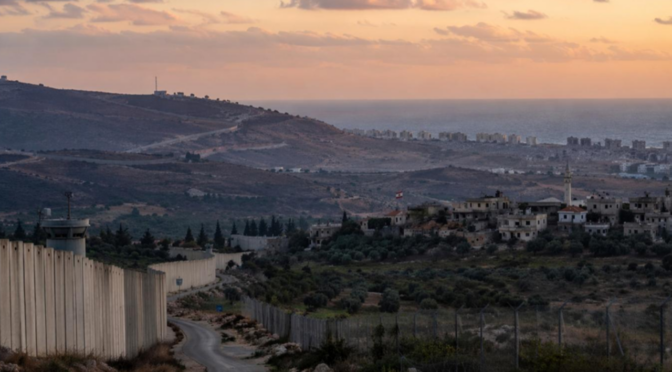
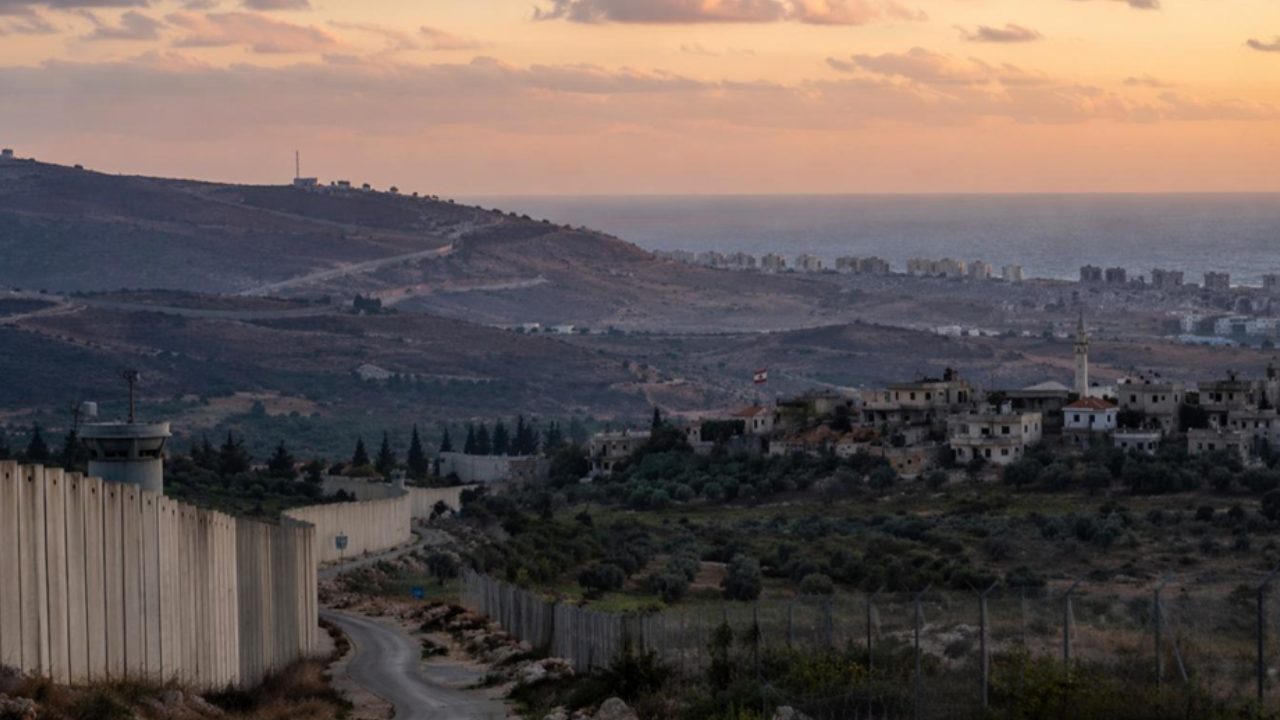
The preceding reflection, Holding on at the Edge,[i] captures a particular sensibility of life in Kiryat Shmona,[ii] where war settles not as rupture but as condition, shaping the rhythms of the everyday. What it leaves open, deliberately and with care, is the question of the other side of the border, not as a corrective, nor as a moral counterweight, but as a necessary extension of the same inquiry. If the border is lived as condition, then it must be understood in its multiplicity, in the ways it produces parallel yet unequal experiences, distinct yet entangled forms of waiting, endurance, and uncertainty. Across the northern boundary, in southern Lebanon, life under strain carries its own temporality. Reporting over the past months, including from L’Orient-Le Jour[iii] and Al Jazeera,[iv] has documented the steady displacement of civilians from villages near the Israeli border, the intermittent destruction of homes, and the quiet dispersal of communities into Beirut or further north, yet what is striking is not only the scale of disruption, but the manner in which it is absorbed. As in Kiryat Shmona, there is no singular moment that defines the crisis; rather, it unfolds incrementally, through warnings, departures, partial returns, and renewed departures, such that the village is neither entirely emptied nor fully inhabited, but exists in suspension. In places such as Marjayoun or Bint Jbeil, as well as villages closer to the border such as Rmeish, Ain Ebel, Debel, and Qlayaa,[v] residents speak less of war as an event and more as a recurring horizon, something that shapes decisions without always materialising fully, where to leave is rarely definitive and to stay is rarely secure, and where the language of attachment persists, marked by a different inflection, less tied to the promise of state protection and more to the continuity of land, family, and memory. In several of these villages, residents have continued to remain despite escalating violence, often framing their position not as defiance but as necessity, a holding on to place even as conditions become untenable. At moments, this attachment takes on a starkly human form, as in the case of local clergy and community figures who refused evacuation in order to remain with their congregations, pointing to a wider sentiment that the war is not always experienced as one of their choosing, even as its consequences are borne most directly by them.[vi]
Where the Israeli border town negotiates its relationship to a state perceived as unevenly protective, the Lebanese border village often confronts a more fragmented terrain of authority, where the presence of the state is partial and other actors, including Hezbollah, operate as both protectors and sources of risk, thereby complicating any straightforward reading of agency. The decision to remain cannot be reduced to resilience, nor the decision to leave to vulnerability; both are structured by constraints that exceed individual choice, and, as Sune Haugbolle’s [vii] work on memory and conflict in Lebanon suggests, the experience of war is sedimented into everyday life, shaping not only how events are interpreted but how they are anticipated, such that the past is not a closed chapter but informs the present as a repertoire of expectations. Evacuation is not unprecedented but remembered; return is not guaranteed but hoped for, producing a condition in which anticipation and recollection fold into one another. If southern Lebanon reveals a condition of suspended habitation, Gaza[viii] presents a far more acute and compressed form of border life, where the line is not only external but internalised, and where, since October 2023 and intensifying through subsequent months, the scale of destruction has been documented extensively by organisations such as the United Nations Office for the Coordination of Humanitarian Affairs[ix] and Human Rights Watch.[x] Yet beyond the metrics of damage and displacement, what emerges is a transformation of everyday temporality itself, where time becomes fractured and residents speak of days measured not by routine but by intervals between strikes, by the availability of water, and by the uncertain arrival of aid.
The ordinary markers of life, work, schooling, and sociality are displaced by a more immediate calculus of survival, and yet even here there are traces of continuity, as families reconstitute themselves in temporary shelters, informal markets reappear in fragments, and conversations persist, often revolving around the question not of whether to stay or leave, but of where one might go within an enclosed space. The border in Gaza is therefore not experienced as a distant line but as an enclosing condition that structures movement not only across territory but within it, and, as Sara Roy[xi] has long argued, represents a form of de-development in which the systematic erosion of economic and social infrastructure produces a condition of enduring precarity, now intensified to the point where the distinction between crisis and normalcy collapses almost entirely. It would be important here to recognise that this is not simply a moment of disruption, but the continuation and deepening of a longer structural trajectory, where erosion precedes destruction and shapes its effects. In the West Bank,[xii]the experience differs again, marked less by total destruction than by fragmentation and encroachment, where the proliferation of checkpoints, settlements, and restricted zones produces a geography of interruption, and movement becomes contingent, subject to delays, denials, and rerouting, such that the border is dispersed and embedded within the landscape rather than confined to its edges, appearing in the form of a roadblock, a permit regime, or a sudden closure. Scholars such as Eyal Weizman[xiii] have described this as a form of vertical occupation, where control operates through multiple layers, spatial, legal, and temporal, producing a particular form of everyday negotiation in which individuals learn to navigate uncertainty as routine, and where the act of commuting, visiting family, or accessing services becomes an exercise in anticipation and adjustment.
What connects these distinct yet overlapping experiences is not symmetry, for the conditions are not equivalent, nor should they be rendered as such, given the significant differences in the scale of violence, the distribution of power, and the forms of governance, but there is nevertheless a shared quality that emerges at the level of lived experience, a condition of suspended certainty in which the future cannot be fully anticipated and the present must be continually recalibrated. In Kiryat Shmona, this appears as the possibility of evacuation and the question of whether home will hold; in southern Lebanon, it is the oscillation between departure and return within a fragmented landscape of authority; in Gaza, it is the compression of life into a series of immediate contingencies within an enclosed space; and in the West Bank, it is the fragmentation of movement and the embedding of the border within everyday geography. These are not identical conditions, but they resonate in their temporal structure, as war, in each case, is not only an event but a duration that extends into the everyday, shaping habits, expectations, and forms of attachment, producing a form of waiting that is not passive but active, a continuous adjustment to circumstances that cannot be fully controlled.
Yet this waiting is not empty, for it is filled with practices of continuity, as shops reopen, even if intermittently, schools resume, even if partially, and families maintain routines even as they are disrupted, such that these acts do not resolve uncertainty but sustain a sense of coherence, allowing individuals to inhabit the present even as the future remains unsettled. At the same time, there is a quiet reworking of political expectation, which in Kiryat Shmona appears as a demand for accountability and a questioning of state responsibility; in Lebanon takes the form of an ambivalent relationship to multiple authorities; and in Palestine is expressed through a complex interplay of resistance, adaptation, and critique directed both outward and inward. The moral language of belonging, so evident in the Israeli context, finds echoes elsewhere, though articulated differently, as in Lebanon it is tied to land and memory and the continuity of village life, while in Palestine it is bound up with a longer history of displacement and dispossession in which the idea of return carries both symbolic and material weight.
To write across these contexts is to engage in a form of dialogue not between states or official narratives but between lived experiences, recognising that the border does not produce a single story but multiple intersecting ones, each shaped by its own conditions yet implicated in a broader regional dynamic. The challenge is therefore not to reconcile these narratives into a unified account but to hold them in relation, to acknowledge both their connections and their differences, resisting the impulse to flatten complexity into equivalence while also avoiding the isolation of each experience into its own closed frame. What emerges consequently is a more stratified/multi-scalar understanding of the border as lived space, not merely a line of division but a site of interaction where global, regional, and local dynamics converge, where strategy becomes routine, policy becomes practice, and abstract categories take on concrete form. In this sense, the border is not only a site of conflict but also of knowledge, revealing the limits of existing frameworks and the inadequacy of categories that fail to capture the lived complexity of these spaces, and calling for a mode of analysis attentive to nuance, to the interplay of structure and agency, and to the ways in which individuals and communities navigate conditions not of their own making. The account offered here does not seek to resolve the questions it raises, but remains, like the conditions it describes, open and unsettled, pointing toward a way of understanding the border not only in terms of lines and territories but in terms of lives and temporalities, as a condition that is lived, negotiated, and continually redefined, where meanings of home, belonging, and continuity are constantly reworked, and where the dialogue across edges, multiple and uneven, remains ongoing.
Priya Singh
Associate Director
Asia in Global Affairs
Disclaimer
The reflections presented here are interpretive and personal, grounded in publicly available reporting and academic scholarship, and do not represent the views of Asia in Global Affairs or any affiliated institution.
Endnotes
[i] Singh, Priya. “Holding on at the Edge,” Asia in Global Affairs, accessed April 13, 2026,
https://www.asiainglobalaffairs.in/reflections/holding-on-at-the-edge/
[ii] Kiryat Shmona, Upper Galilee, northern Israel, located near the Lebanon–Israel border in the Hula Valley.
[iii]L’Orient-Le Jour, reporting on civilian displacement in southern Lebanon, 2024–2025, accessed April 13, 2026, https://today.lorientlejour.com/search?search=South%20Lebanon%20displacement
[iv]Al Jazeera English, “Mapping Israeli Attacks and the Displacement of One Million in Lebanon,” 2026, accessed April 13, 2026 https://www.aljazeera.com/news/2026/3/17/mapping-israeli-attacks-and-the-displacement-of-one-million-in-lebanon.
[v] Southern Lebanon border and near-border localities referenced here include Marjayoun and Bint Jbeil (district towns within the border region), alongside villages closer to the Blue Line such as Rmeish, Ain Ebel, Debel, and Qlayaa, all of which have historically functioned as frontline or near-frontline communities in successive phases of the Lebanon–Israel conflict.
[vi]The Beiruter, “The Christian Villages of the South Face Displacement,” accessed April 13, 2026, https://www.thebeiruter.com/article/the-christian-villages-of-the-south-face-displacement/1272
[vii] Haugbolle, Sune. War and Memory in Lebanon. Cambridge: Cambridge University Press, 2010.
[viii] Gaza Strip, Palestinian territory along the eastern Mediterranean coast, bordered by Israel and Egypt.
[ix]United Nations Office for the Coordination of Humanitarian Affairs (OCHA), Occupied Palestinian Territory Situation Reports, 2024–2025, accessed April 13, 2026, https://www.ochaopt.org
[x]Human Rights Watch, Gaza: Civilian Harm and Infrastructure Damage Reports, 2024–2025, accessed April 13, 2026, https://www.hrw.org/middle-east/north-africa/israel/palestine
[xi] Roy, Sara. The Gaza Strip: The Political Economy of De-development. Washington, DC: Institute for Palestine Studies, 1995.
[xii]West Bank, Palestinian territory bordered by Israel and Jordan, comprising a fragmented landscape of Areas A, B, and C under varying administrative and military control.
[xiii] Weizman, Eyal. Hollow Land: Israel’s Architecture of Occupation. London: Verso, 2007.


Leave a Reply